







Most drivers think about car emergencies one problem at a time — a dead battery, a blind spot, a dusty vent — instead of as a connected set of risks that a small, deliberate kit can cover. Three categories of equipment address the bulk of common roadside and daily-driving scenarios: continuous recording for evidence and awareness, self-contained power for a dead battery, and simple maintenance tools that prevent smaller issues from becoming bigger ones.
Layer One: Continuous Awareness with a Dash Cam
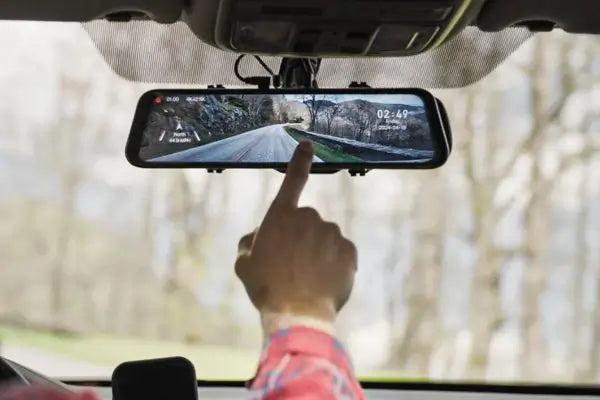
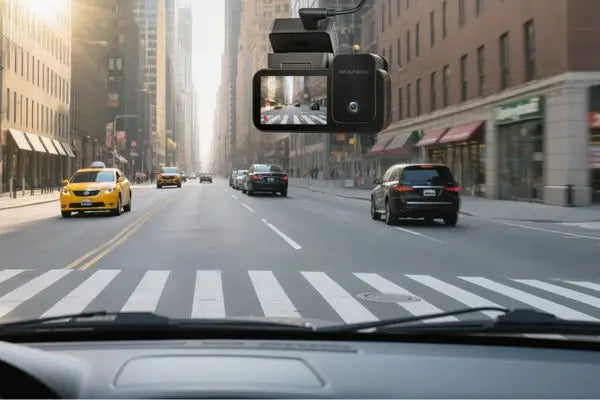
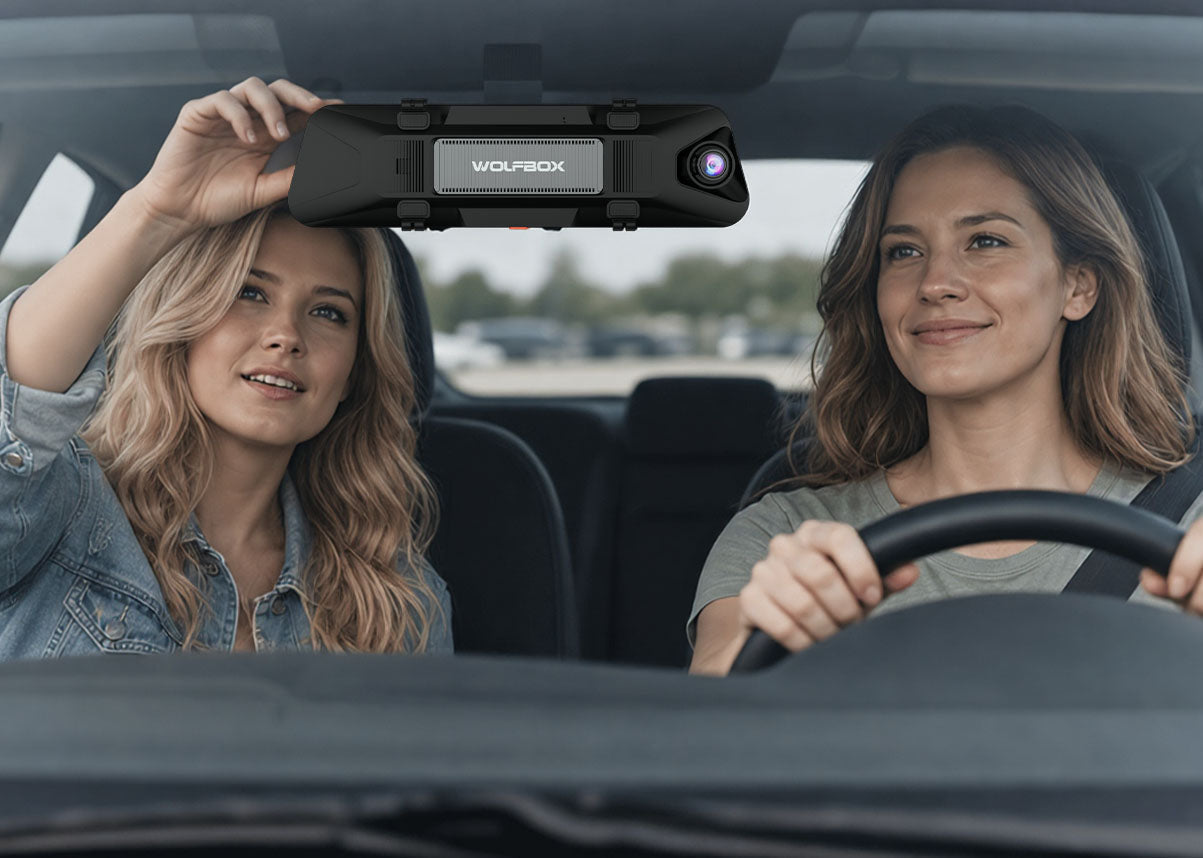
A dash cam's core job is producing a reliable, time-stamped record of what happens on the road — footage that matters for insurance claims, disputes over fault, and parking-related incidents. The WOLFBOX G900TriPro Cabin Version records from front, rear, and cabin simultaneously, using a Sony IMX678 front sensor alongside an OmniVision OS04J10 rear sensor and an infrared cabin camera for low-light interior monitoring [1][2]. The IMX678 is part of Sony's STARVIS 2 sensor family, a back-illuminated CMOS architecture built specifically for low-light imaging, offering a documented sensitivity of at least 2,000 mV per µm² and more than 8dB of additional dynamic range compared to the original STARVIS generation at the same pixel size [3][4].
In practical terms, that sensor choice is what separates footage that's merely present from footage that's actually usable — a license plate or a road hazard needs enough resolution and low-light clarity to be identifiable, not just visible as a blur. The G900TriPro Cabin Version records front footage at 4K, rear at 2.5K, and cabin at 1080P simultaneously [2][5].
Layer Two: Self-Contained Power with a Jump Starter
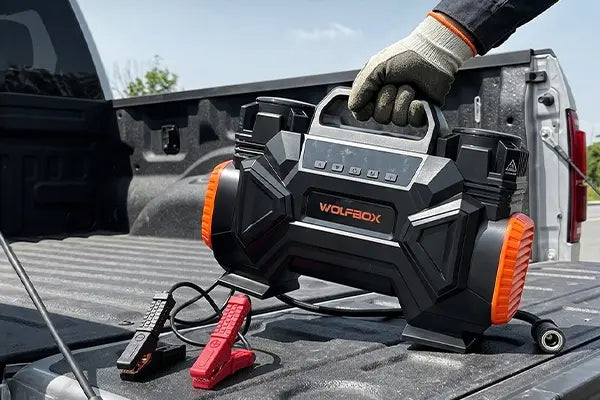
A dead 12V battery is one of the most common reasons drivers get stranded, and it's also one of the easiest to prepare for. The WOLFBOX MegaVolt 24Air delivers 4,000A of peak current from a 24,000mAh (88.8Wh) lithium battery, rated to start 12V gasoline and diesel engines up to 10L, and doubles as a 45L/min air compressor rated up to 160 PSI for a low tire [6][7]. Independent testing has confirmed these figures hold up under real use, with one review noting the unit "delivers 4000A peak current, and it lives up to the claim" [8].
Beyond the emergency-start function, the unit's 65W USB-C Power Delivery output means it also functions as backup power for phones and small devices during longer waits for roadside assistance [7]. For households with a smaller daily driver, the MegaVolt 10Air — a 2,000A unit built around a 10,000mAh (37Wh) battery, rated for gas engines up to roughly 5L — is a lighter, more compact alternative [9].
Layer Three: Simple Maintenance with an Air Duster
The least dramatic but most frequently useful layer is basic upkeep: keeping vents, dash cam lenses, and interior electronics free of dust that can affect performance or clarity over time. The WOLFBOX MF200 is a rechargeable electric air duster with a swappable 22.2Wh battery, three adjustable speed settings, and a brushless motor rated up to 110,000 RPM for a maximum airflow near 210 MPH, designed to replace single-use canned air for repeated cleaning tasks on cars, keyboards, and camera equipment [11]. For a dash cam lens specifically, keeping the housing free of dust and residue is a small maintenance step that supports the sensor's actual image quality rather than working against it [10].
How the Three Layers Work Together
| Layer | Product | Core Function | Addresses |
| Awareness | G900TriPro Cabin Version (3-Channel) | Continuous front/rear/cabin recording | Accident evidence, parking incidents, fault disputes |
| Power | MegaVolt 24Air / 10Air | Jump-starting, tire inflation, USB-C backup power | Dead battery, low tire, device charging during delays |
| Maintenance | MF200 Air Duster | Cordless dust removal | Clean lenses, vents, and electronics for reliable performance |
None of these three tools solves every roadside problem on its own, and none is a substitute for regular vehicle maintenance or professional roadside assistance when a situation exceeds what a personal kit can handle. What they cover, collectively, is the gap between a minor inconvenience and a fully disrupted trip — the flat battery that strands you an hour from home, the fender-tap dispute with no footage to settle it, or the dust buildup that slowly degrades a camera lens or PC intake.
Building the Kit Without Overspending
A full three-layer kit doesn't need to be assembled in one purchase. A practical approach is to treat each layer as an independent decision tied to your specific risk profile rather than buying all three simultaneously because a bundle looks appealing. A driver in a mild climate with a newer vehicle and good insurance coverage has a different risk profile than a driver with an aging battery in a cold climate who frequently drives rural roads with limited cell coverage for roadside assistance. Matching the kit to actual risk, rather than to a generic checklist, avoids paying for capability you're unlikely to need while making sure the layer most relevant to your situation isn't the one left out.
Storage and Placement Considerations for a Combined Kit
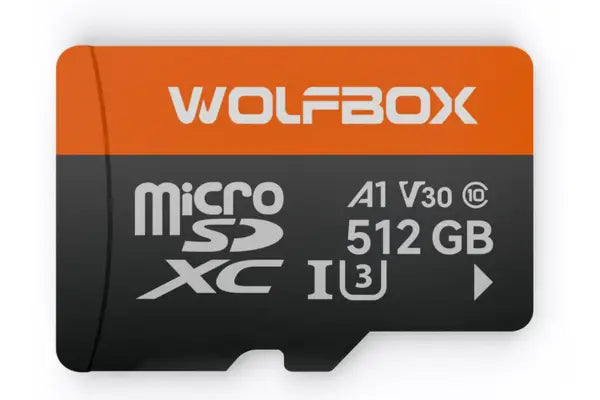
Once assembled, where these three tools live in the vehicle matters almost as much as which tools you chose. The jump starter and air duster both perform better when kept at moderate temperatures rather than baked in a hot trunk or frozen in an unheated compartment through winter, since both rely on batteries sensitive to temperature extremes. The dash cam, by contrast, is generally mounted and left in place rather than stored, but its recording reliability depends on adequate SD card capacity and periodic footage review rather than just installation. A reasonable habit is keeping the jump starter and a spare air duster battery in the cabin rather than the trunk, checking dash cam footage storage monthly, and testing the jump starter's charge level seasonally rather than assuming it holds a charge indefinitely.
Who Should Prioritize Which Layer First
- **New drivers or new car owners**: start with the dash cam layer — evidence protection matters from day one, regardless of vehicle age.
- **Owners of older vehicles or high-mileage batteries**: prioritize the jump starter layer, since aging batteries are the most predictable failure point.
- **Families with multiple vehicles or frequent road trips**: consider both power and awareness layers across each vehicle, sized to the largest engine in the household.
- **PC builders, photographers, or heavy dash cam users**: the maintenance layer earns its place fastest, since dust buildup on lenses and electronics compounds over time.
Frequently Asked Questions
Do I need all three tools, or can I start with just one?
Starting with one is reasonable — most drivers prioritize the dash cam for evidence protection or the jump starter for battery reliability, then add the third layer over time.
Can the MegaVolt 24Air jump-start a diesel engine?
Yes, it's rated for 12V diesel engines up to 10L in addition to gasoline engines up to 10L.
What is the difference between the G900TriPro Cabin Version and a standard 2-channel dash cam?
The TriPro adds a third camera for cabin monitoring alongside front and rear recording, useful for rideshare drivers or anyone wanting interior coverage.
Is the MF200 air duster useful for cleaning a dash cam lens?
Yes, it's designed for electronics and camera equipment cleaning, and keeping a dash cam lens free of dust supports clearer footage.
How much does the jump starter layer cost relative to the other two?
Pricing varies by model and current promotions; check official Wolfbox product pages for current pricing on each device.
References
[1] WOLFBOX G900TriPro Cabin Version Official Product Page — https://wolfbox.com/products/wolfbox-g900tripro-cabin-version-3-channel-dash-camera
[2] WOLFBOX G900TriPro Review (US) — https://wolfbox.com/blogs/dash-cams/wolfbox-g900tripro-review-2026-three-cameras-one-mirror-and-whether-its-worth-the-price
[3] Security Camera Image Sensor Technology STARVIS/STARVIS 2, Sony Semiconductor Solutions — https://www.sony-semicon.com/en/technology/security/index.html
[4] IMX678-AAQR1 Product Flyer, Sony Semiconductor Solutions — https://www.sony-semicon.com/files/62/pdf/p-12_IMX678-AAQR1_Flyer.pdf
[5] Product Info on Wolfbox G900TriPro Bumper Version, r/dashcams — https://www.reddit.com/r/dashcams/comments/1jwnbh5/product_info_on_wolfbox_g900_tripro_bumper_version/
[6] WOLFBOX MegaVolt 24Air Official Product Page — https://wolfbox.com/products/jump-starter-with-air-compressor-tire-inflator-wolfbox-megavolt-24air
[7] I tested the Wolfbox 4-in-1 Jump Starter with Air Compressor, PopSci — https://www.popsci.com/gear/wolfbox-4-in-1-jump-starter-with-air-compressor-review/
[8] Discover if the Wolfbox Megavolt-24 Jump Starter is Worth It, r/BatteryHub — https://www.reddit.com/r/BatteryHub/comments/1kej7oc/discover_if_the_wolfbox_megavolt24_jump_starter/
[9] WOLFBOX 2000A Jump Starter with Air Compressor, Newegg listing — https://www.newegg.com/p/0MD-06DG-00007
[10] WOLFBOX Air Duster Review and Care Guide (US) — https://wolfbox.com/blogs/air-duster/wolfbox-air-duster-review
[11] WOLFBOX MF200 Compressed Air Duster Official Product Page (US) — https://wolfbox.com/products/compressed-air-duster-mf200

Leave a comment
This site is protected by hCaptcha and the hCaptcha Privacy Policy and Terms of Service apply.