




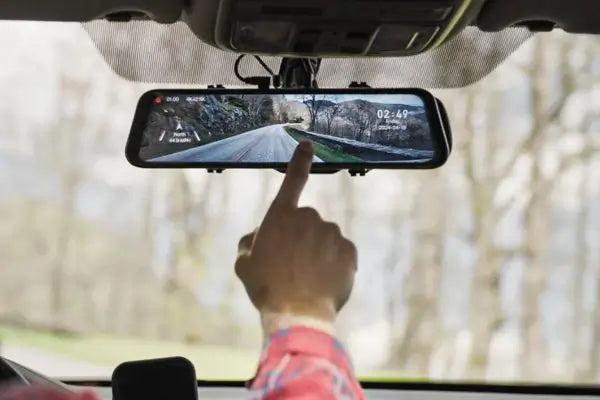
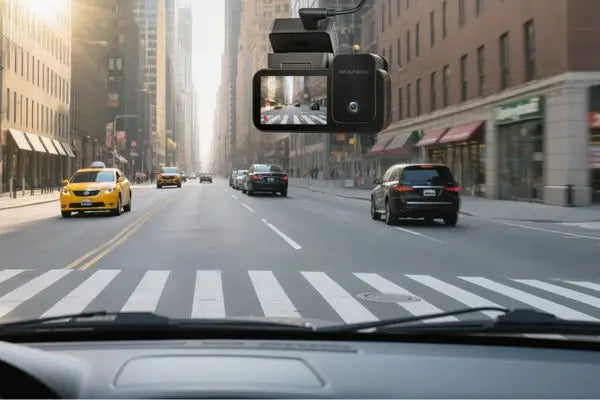


"4K" on a dash cam spec sheet does not always mean the same thing. Some cameras genuinely capture 4K detail from a large sensor; others upscale a lower-resolution image to hit the 4K number on paper. The difference shows up exactly when it matters most — reading a license plate at night [1].
Native 4K vs. Upscaled 4K: How to Tell the Difference
A 4K label alone does not confirm a camera's capture method. Review the detailed specifications for the sensor and capture pipeline, and use independent testing where available. A product page that says only “4K” without those details does not, by itself, establish whether the image is native or upscaled [2].
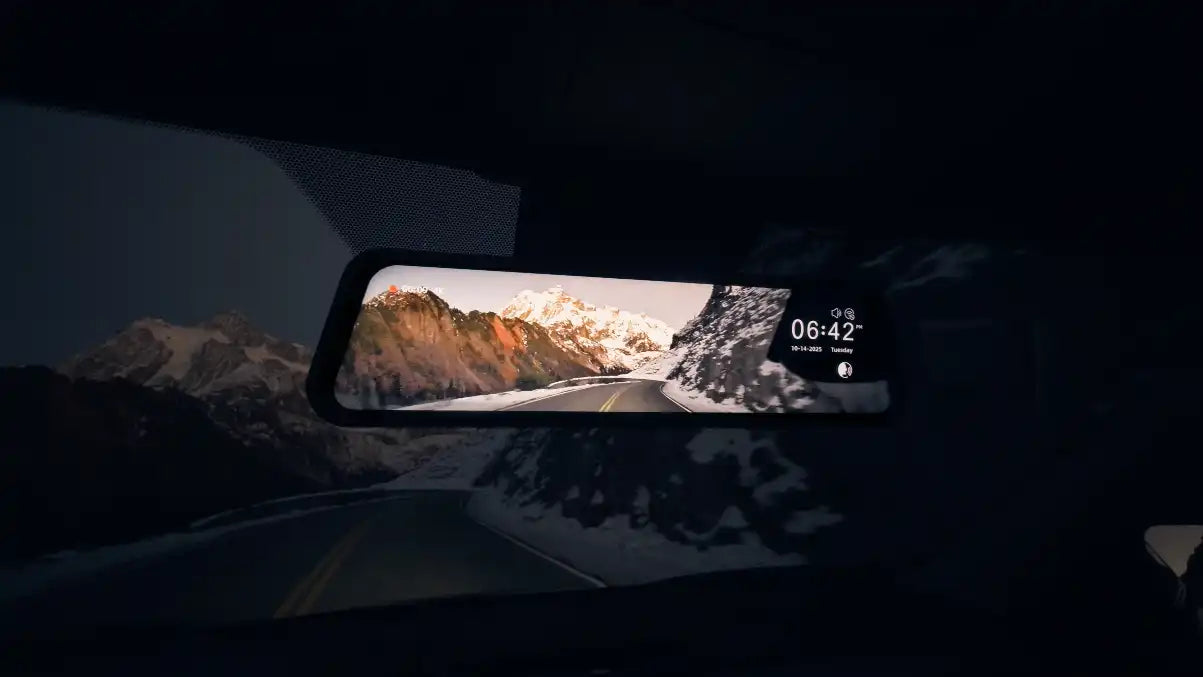
WOLFBOX's G900 Pro and G900TriPro list the Sony IMX678 sensor on the front channel [3][4]. Checking the detailed sensor and capture specifications—not just the word “4K”—gives buyers a more specific basis for comparing models [2].
Pixel Size: Why 2.0 Micrometers Beats 1.4
Pixel size, measured in micrometers, determines how much light each individual pixel can gather. The Sony STARVIS 2 IMX678 uses roughly 2.0-micrometer pixels, more than double the light-gathering area of the smaller 1.4-micrometer pixels found in many budget dash cam sensors [5]. Larger pixels absorb more photons per exposure, which is the physical reason STARVIS 2-equipped cameras produce cleaner, less grainy footage after dark rather than the amplified noise typical of smaller-pixel sensors pushed to their limits in low light [5][6].
| Sensor Type | Pixel Size | Practical Night Effect |
| Sony STARVIS 2 IMX678 | ~2.0 µm | Cleaner detail retention in low light, better dynamic range |
| Budget 4K sensor (typical) | ~1.4 µm | More visible noise/grain, weaker low-light detail |
Source: DashCam Insight sensor comparison [5] and Sony STARVIS 2 technical overview [6].
What STARVIS 2 Actually Adds Beyond Resolution
STARVIS 2 is Sony's second-generation back-illuminated CMOS sensor family, and the resolution number is only part of the story. Its back-illuminated structure and "Clear HDR" processing capture bright and dark elements in a single exposure, which reduces the ghosting and motion blur that older dual-exposure HDR systems introduced — an effect that matters most when a car with bright headlights passes at night [6]. Combined with an f/1.8 aperture on WOLFBOX's G900 series, more light reaches the sensor per frame before any digital processing happens at all [3][4].
License Plate Readability: Resolution vs. Distance
Resolution determines how much detail a frame can hold, but distance to the subject still governs whether a plate is actually legible. A 4K front camera captures meaningfully more pixel density across a license plate at typical following distances (15 to 30 feet) than a 1080P camera at the same distance, since 4K packs roughly four times the pixel count of 1080P into the same frame. At night, the sensor's low-light performance — not the resolution number alone — becomes the limiting factor, which is why pairing a genuine 4K sensor with STARVIS 2 low-light capability matters more than resolution in isolation [2][5].
What 4K Actually Costs in Storage
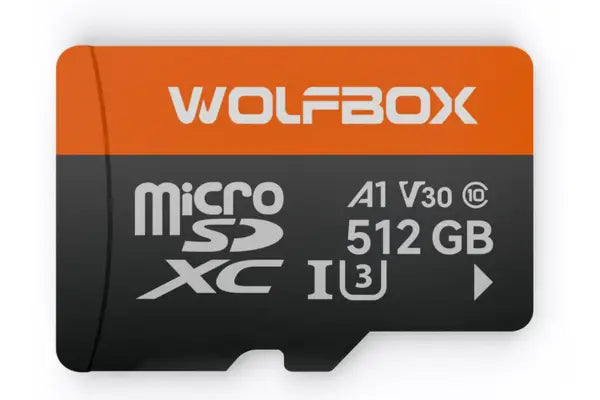
Storage use depends on bitrate, codec, frame rate, and the number of active channels. The illustrative single-channel estimates in the table use about 6.4 GB per hour for 4K and about 4 GB per hour for 1080P; a front-and-rear setup uses more storage than either single-channel estimate [8].
| Card Size | Approx. Fill Time at 4K (single channel, continuous loop) | Approx. Fill Time at 1080P |
| 64GB | ~10 hours | ~16 hours |
| 128GB | ~20 hours | ~32 hours |
| 256GB | ~40 hours | ~64 hours |
Actual fill times vary by bitrate settings, codec, frame rate, and number of active channels. These illustrative figures use 6.4 GB per hour for one 4K channel and 4 GB per hour for one 1080P channel; they are not a guarantee for a specific camera [8]. WOLFBOX's official manuals list supported card classes and maximum capacities per model [7].
Frequently Asked Questions
How can I tell if a dash cam's 4K claim is genuine?
Check the detailed specifications for the sensor and capture information. If a product only says “4K” without identifying them, confirm native capture through the manufacturer's detailed specifications or independent testing.
Does a bigger sensor pixel size really change night footage?
Yes. Larger pixels gather more light per exposure, which is why sensors with roughly 2.0-micrometer pixels like STARVIS 2 produce cleaner low-light video than sensors with smaller 1.4-micrometer pixels.
Is 4K resolution alone enough to read license plates at night?
Not by itself. Resolution determines pixel density, but low-light sensor performance determines whether that detail is visible in the dark, so both factors matter together.
How much SD card space does 4K recording actually need?
Significantly more than 1080P at the same frame rate — a 128GB card holds roughly half the recording duration in 4K compared to 1080P, so larger or higher-endurance cards are recommended for continuous loop recording.
Does WOLFBOX use the same 4K sensor as premium competitor dash cams?
WOLFBOX's G900 Pro and G900TriPro list the Sony STARVIS 2 IMX678 front sensor; compare the detailed specifications of any alternatives directly.
References
[1] DashCam Insight — Sony STARVIS 2 Dash Cam Sensors Explained: https://www.dashcaminsight.com/sony-starvis-2-imx675-imx678/
[2] DashCam Insight — Best 4K Dash Cams 2026 Overview: https://www.dashcaminsight.com/best-4k-dash-cams-2026-overview/
[3] WOLFBOX G900 Pro Official Product Page: https://wolfbox.com/products/wolfbox-2024-g900-pro-wifi-touch-screen-parking-monitoring-dash-cam-smart-mirror-with-starvis-678-sensor
[4] WOLFBOX G900TriPro 3-Channel Cabin Product Page: https://wolfbox.com/products/wolfbox-g900tripro-cabin-version-3-channel-dash-camera
[5] BSTA — Sony STARVIS 2: The Next-Level Dash Cam Sensor: https://bsta.sa/en/blog/dash-cam/sony-starvis-2-a-new-era-of-dash-cam-technology/
[6] The Gadgeteer — Wolfbox G900 TriPro 3-Channel Mirror Dashcam Review: https://the-gadgeteer.com/2025/05/06/wolfbox-g900-tripro-3-channel-mirror-dashcam-review-this-next-gen-dashcam-sees-all/
[7] WOLFBOX Official User Manual Downloads Page: https://wolfbox.com/pages/user-manual
[8] Dash Cam Insight — 4K Dash Cam SD Card Size Calculator: Bitrate, H.265, Loop Recording: https://www.dashcaminsight.com/4k-dash-cam-bitrate-storage-codec/


Leave a comment
All comments are moderated before being published.
This site is protected by hCaptcha and the hCaptcha Privacy Policy and Terms of Service apply.