WOLFBOX Brands
WOLFBOX Brands


WOLFBOX offers a professional car jump starter that serves as your all-in-one standby solution. Whether you need to start any 10L/12V vehicle, charge your everyday devices, or handle unexpected situations on the road, it’s always ready to deliver. Now backed by a 30-Month Extended Warranty, it gives you confidence and protection on every journey.

 30-Month Extended Warranty
 30-Day Money-Back
3 products

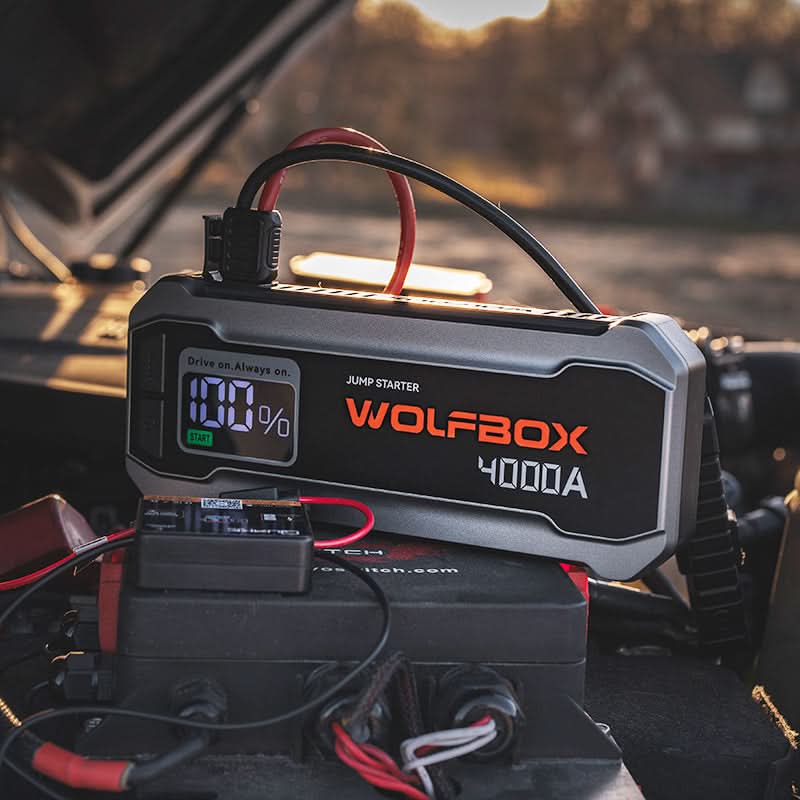
A dead car battery can happen anywhere — at home, in a parking lot, or on the road. That’s why more drivers are turning to car jump starters as a reliable, portable solution. Unlike traditional jumper cables, a jump starter lets you restart your vehicle anytime, anywhere, without needing another car or a roadside service.
When choosing a jump starter, understanding the main types helps you pick the best fit.
A portable jump box is compact, lightweight, and easy to store in your glove box. It’s ideal for everyday drivers who want a quick, simple way to jump start a car in minutes.
A battery jump starter typically offers higher power output and is suitable for larger engines, SUVs, trucks, or vehicles that require more cranking amps.
Designed for commercial or large vehicles, heavy-duty models deliver maximum peak current and are suitable for diesel engines or fleets.
Traditional jump-start machines are heavy, bulky, and impractical to carry around. In contrast, a portable jump starter is lightweight, compact, and designed for real on-the-go emergencies.
Unlike bulky traditional equipment, a portable jump starter is lightweight and easy to store in your glove box or trunk—yet strong enough to start most cars, SUVs, and even small trucks.
Portable jump starters give you the freedom to start your vehicle anytime without relying on roadside assistance or another car. They're perfect for emergencies at home, on the road, or in remote areas.
No need for jumper cables or a second vehicle. Just connect, power on, and start your engine—simple, safe, and efficient for drivers traveling alone.
Modern portable jump starters feature built-in safeguards such as reverse-polarity, overcurrent, and short-circuit protection, making the whole process safer than traditional methods.
Many models include LED flashlights, USB charging ports, and even air inflators, making them a versatile all-in-one solution for road trips, camping, and unexpected emergencies.
Most portable jump box can start a car almost instantly. Once connected properly, the engine typically starts within a few seconds. The entire process—from opening the hood to starting the vehicle—usually takes 1–3 minutes.
If the car doesn’t start right away, wait 30 seconds and try again. If multiple attempts fail, the battery or vehicle may require professional inspection.
In most cases, yes—a portable jump starter can start a battery that appears completely dead. However:
✅ If the battery still has minimal voltage, a jump starter can deliver the power boost needed.
❌ If the battery is severely damaged or won’t hold a charge at all, even a jump starter may not work.
If your car starts but dies again, the battery or alternator may need replacement.
With so many portable jump starters available, selecting the right one can feel overwhelming—here’s how to make a smart, confident choice.
Recommended Peak Amps
Notes
800–1200A
Suitable for compact cars and small sedans.
1200–1500A
Works for most sedans, hatchbacks, and small SUVs.
1500–2000A+
Ideal for heavier vehicles and larger engines.
2000–3000A
Provides stronger boosts for bigger engines.
Diesels require higher amps due to higher compression.
For large trucks, vans, and performance vehicles.
(These protect both the car and the user.)
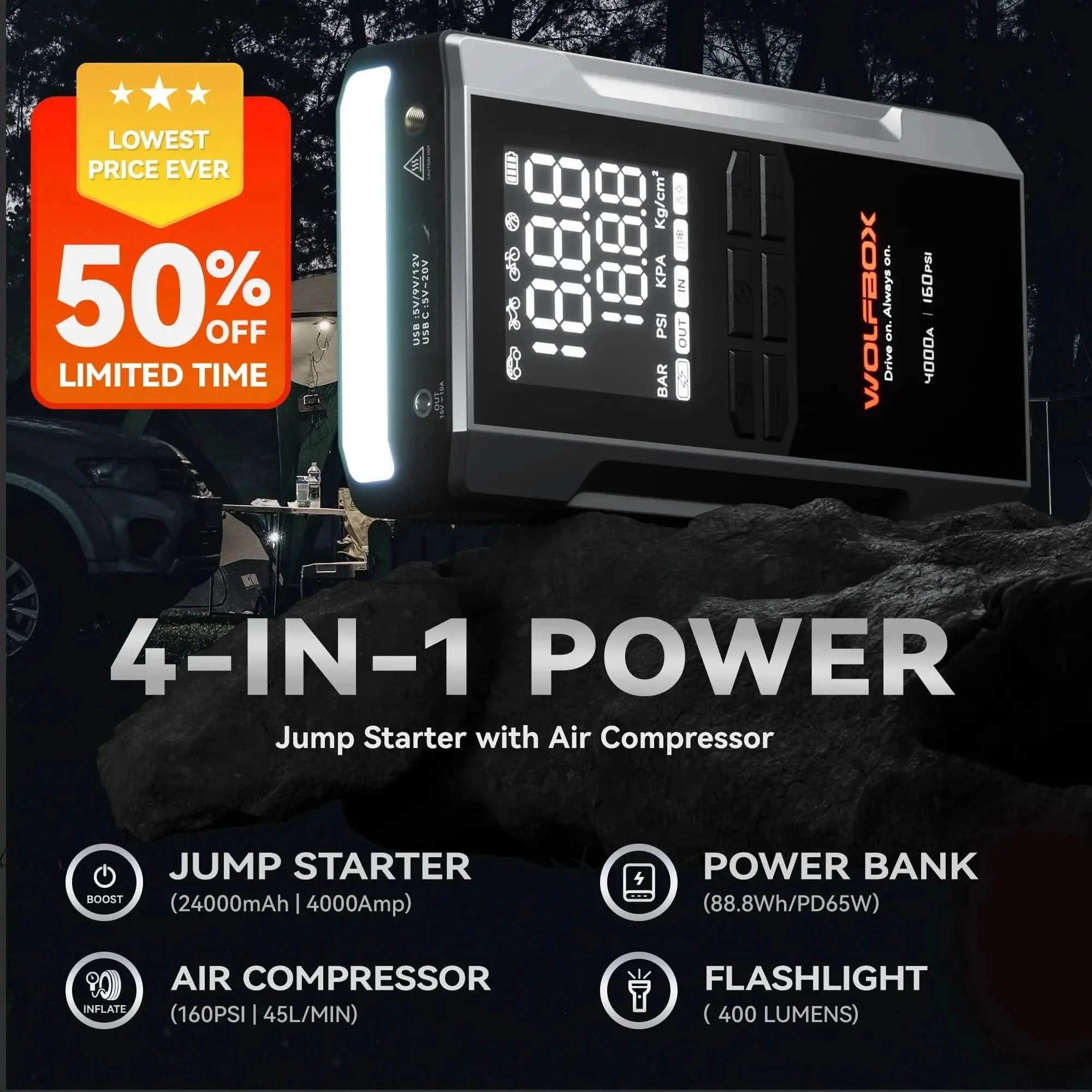
The WOLFBOX MegaVolt 24 jump starter is built to deliver strong, reliable power whenever your vehicle needs it. As a Top Rated Car Jump Starter, it provides a high peak current to start most 12V vehicles with ease—whether it's a car, SUV, or truck. Its compact and portable design makes it easy to store and ideal for roadside emergencies.
Beyond jump-starting, the MegaVolt 24 also functions as a powerful power bank with fast USB-C charging, along with a built-in LED flashlight for nighttime situations. It’s a practical, all-in-one tool that keeps you prepared anytime, anywhere.
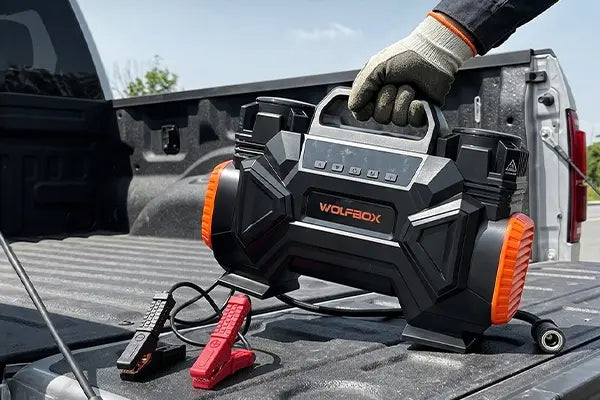
For drivers looking for a more versatile emergency solution, Wolfbox also offers jump starters with air compressors that combine battery assistance, tire inflation, and additional roadside functionality in one portable device.
Beyond jump-starting solutions, Wolfbox provides a range of car maintenance tools designed to help drivers stay prepared and handle everyday vehicle care needs.
The amount of amperage needed to jump start a car depends mainly on the engine size and type. Small cars with 1.0–2.0L engines typically require around 300–600 amps, while standard sedans and compact SUVs with 2.0–3.0L engines often need between 600 and 1000 amps. Larger SUVs and trucks with 3.0–5.0L engines generally require 1000 to 1500 amps to start reliably. Diesel engines usually demand even more power—often 1000 amps or higher—because they require higher starting torque. In very cold weather or when the battery is deeply discharged, a higher-amp jump starter may be necessary to ensure a successful start.
A 1000-amp jump starter is sufficient for most everyday gasoline cars, including small vehicles, sedans, and compact SUVs. However, it may not provide enough power for larger SUVs, trucks, diesel engines, or vehicles in very cold climates, where higher starting power is required. In those situations, a device rated between 1200 and 2000 amps offers a more reliable starting performance. While 1000 amps work well for the majority of standard vehicles, choosing a higher-amp model generally results in easier and faster starts—especially under tougher conditions.