








Your hybrid won't start, and you're stuck in a parking lot, wondering if you can even jump-start it. Hybrids run on two batteries, which can confuse many drivers when something goes wrong.
The good news: a jump starter for hybrid cars works in almost every situation. All you need is to know where to connect it and what to avoid. And this insightful guide covers exactly that.
Can You Use a Jump Starter on a Hybrid Car?
It's the question most hybrid owners search first. Yes, you can safely use a jump starter on a hybrid car, but it only works on the 12V auxiliary battery, not the high-voltage hybrid battery system.
Hybrids Have Two Separate Batteries, and You Only Jump One
Every hybrid and plug-in hybrid contains two distinct battery systems. The first is the high-voltage hybrid battery pack. It ranges from 100V to 400V or more to power the electric motor and store regenerative braking energy.
The second is a conventional 12V auxiliary battery. It powers the vehicle's electronics, infotainment, lights, and the systems needed to start and wake up the car.
When a hybrid car won't start, it's almost always the 12V auxiliary battery. And you can jump-start it exactly the way you would any other 12V automotive battery. Never connect a jump starter to the high-voltage system.
Why Does the 12V Auxiliary Battery Fail in Hybrids More Often
The 12V battery in a hybrid has a shorter service life than the same battery in a conventional car. It's because of how hybrids use it. The hybrid's engine frequently shuts off, and the 12V battery may not receive consistent charging.
Thus, it remains more prone to deep discharge, especially in cold weather or after the vehicle sits unused. Hybrid owners should keep a quality portable jump starter for hybrid cars at all times. Treat it like your spare tire.
Hybrid Models and Jump-Start Compatibility
|
Hybrid Type |
Inclusion of a 12V Battery? |
Jump-Start Possible or Not? |
|---|---|---|
|
Toyota Prius / RAV4 Hybrid |
Yes (standard 12V auxiliary) |
Yes (via 12V jump terminals) |
|
Ford Escape / F-150 Hybrid |
Yes (standard 12V auxiliary) |
Yes (same as conventional) |
|
Honda CR-V Hybrid |
Yes (12V auxiliary battery) |
Yes (follow Honda-specific guide) |
|
Toyota Prius Prime (PHEV) |
Yes (12V auxiliary) |
Yes (DO NOT jump the HV battery) |
|
Chevy Volt (PHEV) |
Yes (12V auxiliary) |
Yes (jump 12V only) |
|
Full EV (Tesla, Rivian, etc.) |
Yes (12V auxiliary only) |
Yes (12V terminals only, NEVER HV pack) |
Every vehicle has a 12V auxiliary battery, and you can jump-start each safely using the battery terminals. The high-voltage hybrid battery pack is never touched during a jump start.
What to Look for in the Best Jump Starter for Hybrid Cars?
Not all portable jump starters are equally suitable for hybrid vehicles. Electronics demand a clean, stable power supply that cheap jump starters can't provide.
Safe Peak Amp Range for Hybrid 12V Batteries
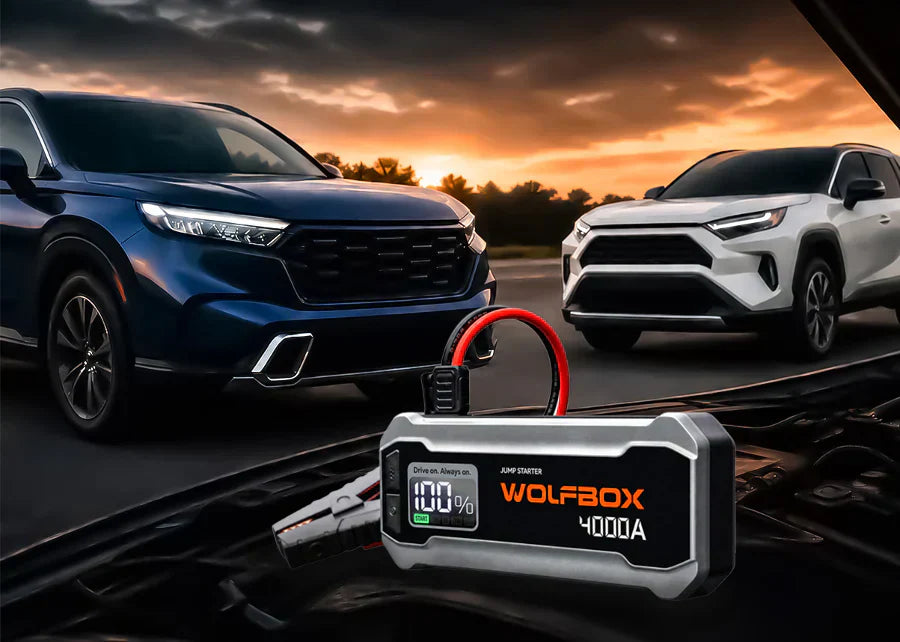
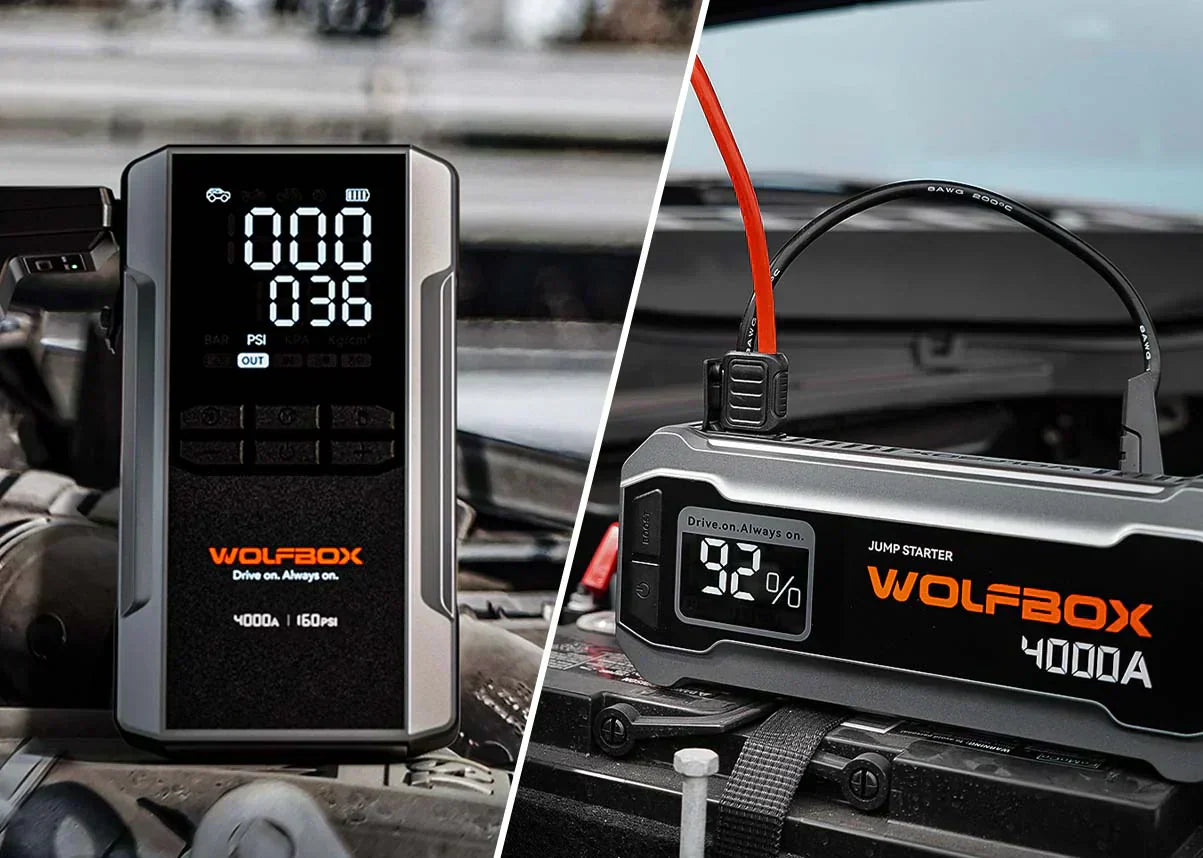
A jump starter in the 1000A to 2000A peak range comfortably handles most hybrid 12V batteries. A unit with a 3000A or 4000A peak output, like the Wolfbox MegaVolt24, provides ample power. It also covers conventional gas vehicles in the same household. For a deeper breakdown of how amperage impacts real-world performance, see our guide on 1000 Amp vs 2000 Amp Jump Starter.
Smart Clamp Protection for Hybrid Electronics
Hybrid vehicles contain sophisticated electronics that are more sensitive to voltage irregularities. A jump starter may lack reverse-polarity detection and short-circuit protection. And it carries risks of sending an incorrect voltage spike through the hybrid computer or relay control systems.
Long Charge Retention for Infrequent Use
Many hybrid owners are also primary EV or public transit users who drive infrequently. A jump starter that depletes its own charge after six weeks on the shelf isn't reliable. For low-use scenarios, a device that holds its charge for six to twelve months is the right standard.
USB Power Bank Function for Day-to-Day Usefulness
A portable jump starter for hybrid cars can also serve as a high-capacity power bank. It's more likely to be in the vehicle or near it when needed. The MegaVolt24's USB-C PD 100W output and USB-A ports charge phones, tablets, and laptops efficiently enough.
Compact Size to Fit in the Limited Storage Space
Hybrids retain their popularity partly because of their efficient use of interior space. A portable, compact jump starter can fit in a glovebox, a console storage bin, or a small pouch in the cargo area. It's far more likely to be in the vehicle when needed than an unwillingly left large/heavy unit.
Wolfbox MegaVolt24: Best Portable Jump Starter for Hybrid EV Vehicles
That reliability isn't just a marketing claim. TechGearLab ranked the MegaVolt24 the best overall jump starter in its lab tests, noting that vehicles "roared to life as if they were connected to brand-new batteries."
4000A Peak Output with Intelligent Delivery for Sensitive Electronics
It delivers 4000 peak amps with a smart clamp system that regulates output for sensitive electronics. The jump starter provides the current the hybrid needs without stressing the battery management electronics.
The same 4000A output covers conventional gas vehicles, from compact sedans to V8 trucks. In simple terms, the MegaVolt24 is the only portable jump starter a multi-vehicle household needs.
Full Safety Protection Suite for Hybrid Battery Management Systems
Your hybrid will be protected against reverse polarity, short circuits, overcharge, overdischarge, and overtemperature conditions. These issues are more consequential for a hybrid vehicle.
Reverse-polarity detection is particularly important, as an incorrect connection can blow a fuse. More importantly, it can damage the 12V battery's interface, requiring an expensive repair.
That protection suite has held up under independent testing — Pro Tool Reviews confirmed the MegaVolt24 "boasts 10 levels of protection" along with an IP64 ingress rating against dust and water.
24,000 mAh Capacity: A Power Bank in Your Hybrid within Minimal Space
Its 24,000 mAh battery capacity serves as your on-the-go power bank. The USB-C PD 100W port charges a laptop in roughly 90 minutes and a smartphone in under an hour.
The MegaVolt24 earns its place in the vehicle beyond its emergency function. It's indeed the best-case scenario for any device you need to have on hand when something goes wrong.
12-Month Charge Retention for Hybrid Owners Who Don't Drive Daily
Cheaper jump starters eventually frustrate owners because the battery drains in storage when you need it. The Wolfbox MegaVolt24 holds a usable charge for up to 12 months.
And it covers the real-world usage pattern of most hybrid owners. Charge the starter once, store it in the vehicle, and rely on it whenever the 12V auxiliary battery decides to give up.
Cold-Weather Reliability: -4°F Operating Rating
Cold weather is one of the leading causes of 12V auxiliary battery failure in hybrid vehicles. The same temperature-reducing effect on battery capacity also affects the jump starter used to rescue it.
The MegaVolt24's -4°F operating rating retains full functionality in cold conditions. You can rely on this specific advantage over devices that degrade or fail to deliver rated output below freezing.
Lightweight and Compact: Easy to Store Without Sacrificing Cargo Space
At just 3.38 lb, the Wolfbox MegaVolt24 is light enough to carry with one hand and compact enough to fit in a door pocket, under a seat, or in the trunk organizer. It stays out of the way until it's needed, making it an ideal addition to a hybrid's limited storage space.
That portability matters for hybrid owners who often use their vehicles for commuting, errands, or weekend road trips. Whether you're parked at the airport for days or driving through remote areas, the MegaVolt24 is easy to keep within reach without adding unnecessary bulk or weight.
How to Jump-Start a Hybrid: Step-by-Step
Let's walk through the actual jump-start procedure for a hybrid vehicle. The process is nearly identical to that of a gas car, with a few hybrid-specific details worth knowing.
Before You Start: Find the Right Jump Terminals
Most hybrid cars place the 12V auxiliary battery somewhere other than under the hood. Toyota Prius models locate it in the trunk or under the rear cargo area. Ford hybrids mostly keep it under the hood.
Honda hybrids vary by model. Always check your owner's manual to identify the exact battery location + dedicated jump-start terminals. Many hybrids provide a positive terminal under the hood for the job.
Never attempt to jump a hybrid car by guesswork. The 12V battery and its designated jump points are clearly marked in the owner's manual. Even the terminals have '+' and '−'markings for you to catch up.
Step-by-Step Jump-Start Procedure for Hybrid Vehicles
- Power everything off. Ensure all electronics in the vehicle are off before connecting the clamps.
- Locate the 12V jump terminals depending on the model. Check the owner's manual if in doubt.
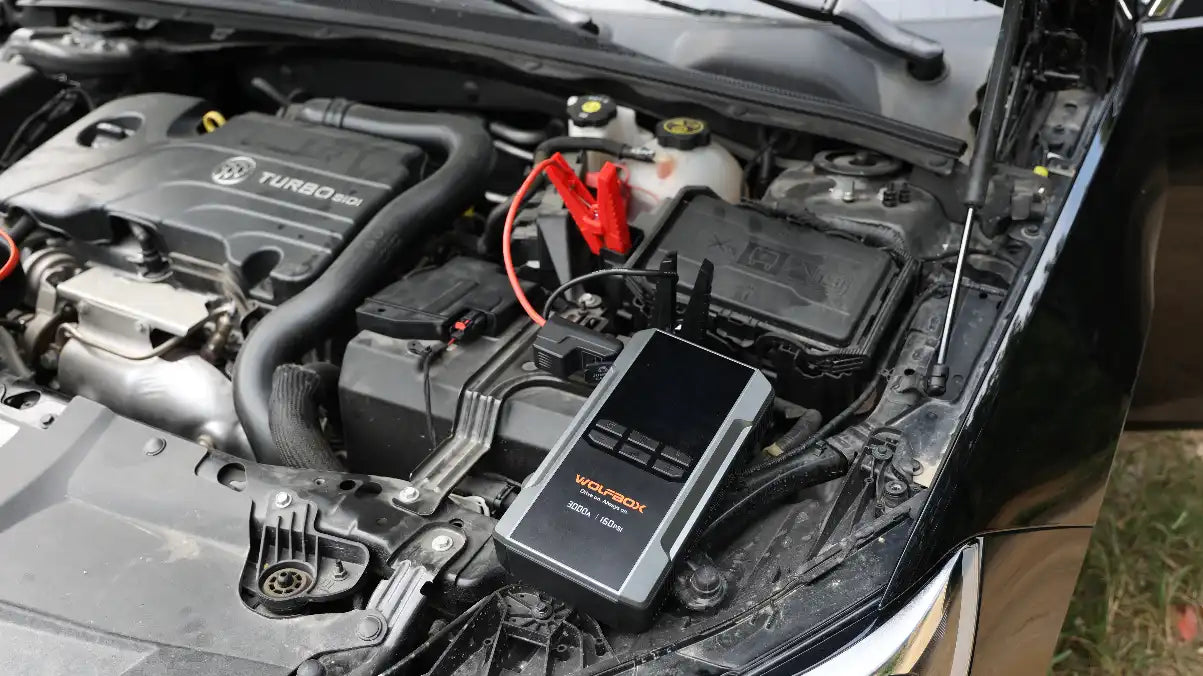
- Connect the red clamp to the positive (+) terminal or designated positive jump point.
- Connect the black clamp to an unpainted metal ground point (engine bracket, bolt, or chassis ground) away from the battery.
- Never connect the black clamp directly to the negative battery terminal to reduce the risk of sparking.
- Power on the starter and wait for the ready indicator to appear. If the battery is deeply discharged, wait 60 to 90 seconds before attempting a charge.
- Attempt to start the hybrid system. Press the start button to wake up the hybrid computer and initialize the high-voltage system.
- Disconnect the black clamp first, then the red clamp after successful initialization. Power off the starter.
- Drive the vehicle for at least 20 to 30 minutes to allow the 12V auxiliary battery to recharge.
Common Mistakes to Avoid When Jump-Starting a Hybrid
Most jump-start failures on hybrid vehicles aren't mechanical. Take a look at some of the most common errors + how to avoid them.
- Connecting to the Wrong Battery: Never attempt to connect jump clamps to the high-voltage hybrid battery pack. It isn't marked for jump-starting.
- Expecting an Engine Start Sound: On most hybrid vehicles, a successful start is indicated by a "Ready" light on the dashboard. Wait for the indicator, not a sound.
- Using a Jump Starter without Smart Clamp: Cheap starters without reverse-polarity detection can deliver incorrect current. Always choose one with built-in protection circuits.
- Revving to Recharge: Unlike gas vehicles, hybrid 12V auxiliary batteries don't benefit from engine revving. Drive normally; let the system handle the recharge.
- Not Diagnosing the Underlying Cause: A jump start fixes the symptom. If the 12V auxiliary battery discharges without a clear reason, the battery may be at the end of its life and will fail again.
Conclusion
Jump-starting a hybrid vehicle is straightforward once you understand how the dual-battery system works. In most cases, the issue is simply a depleted 12V auxiliary battery, not the high-voltage hybrid system. With the correct 12V jump points and a properly rated jump starter, you can safely restore power and get the vehicle back on the road within minutes.
The key is using a reliable device with smart safety protection and enough peak output to support modern hybrid electronics. Wolfbox offers jump starters designed with these requirements in mind, helping drivers handle unexpected 12V battery failures with confidence and safety.
For drivers looking for an upgraded all-in-one solution, the Wolfbox MegaVolt 24Air combines a powerful jump starter with a built-in air compressor, providing extra convenience for roadside emergencies such as flat tires and dead batteries.


Frequently Asked Questions (FAQs)
1. Can you use a jump starter on a hybrid car?
Yes. Every hybrid car sold in the US has a 12V auxiliary battery that operates separately. That battery is jump-started using a portable jump starter connected to the correct 12V terminals.
2. What is the best jump starter for hybrid cars?
The best jump starter for hybrid cars combines smart clamp protection for hybrid electronics, sufficient peak amp output, long charge retention for infrequent use, and compact size for hybrid trunk storage.
3. How do I know if my hybrid needs a jump-start?
If the vehicle is completely unresponsive, the 12V auxiliary battery has likely discharged. The vehicle may respond electronically but still show a hybrid system warning, a red triangle, or a specific battery fault code. In such cases, the issue involves a high-voltage hybrid battery or the hybrid control module.
4. Can I use a portable jump starter on a plug-in hybrid (PHEV) or EV?
Yes. Connect only to the 12V auxiliary battery terminals, never to the high-voltage pack. All plug-in hybrids and full EVs currently available include a 12V auxiliary battery for this purpose.
5. Why does my hybrid's 12V battery keep dying?
Several factors cause hybrid 12V auxiliary batteries to discharge more frequently. Infrequent driving is the most common cause, with parasitic drains, cold weather, and shorter service life also contributing.

Leave a comment
All comments are moderated before being published.
This site is protected by hCaptcha and the hCaptcha Privacy Policy and Terms of Service apply.