








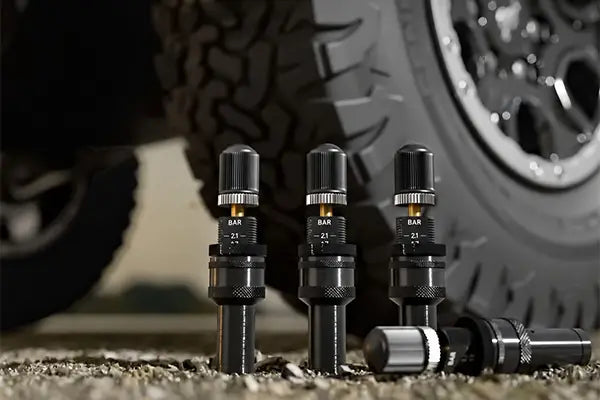
You've walked out to the car on a cold morning only to find it won't start – the battery's dead. Now you're 40 miles from the nearest town, and your tire is going flat on a rural highway. Both situations are stressful but common.
A jump starter can handle the first one. Only a jump starter with an air compressor can handle both. The question isn't really which device is better. Which one matches your driving life?
This guide compares a traditional jump starter against a combo jump starter with an air compressor across every dimension. Hopefully, you can make the call with clarity instead of guesswork.
What Does Each Device Actually Deliver?
Before comparing the two, let's get precise about what each unit offers. The difference is more meaningful than most product listings make clear.
What Does a Traditional Jump Starter Do?
A portable jump starter is a high-capacity lithium battery with built-in jump cables. Clip the cables to your dead battery, press a button, and start your car. That's its core function, and a quality unit does it reliably in under a minute.
Most modern jump starters also include USB charging ports, a built-in LED flashlight or emergency strobe, and enough battery capacity to jump the same vehicle two or three times on a single charge. Some include a 12V DC output for accessories.
What Does a Jump Starter with an Air Compressor Add?
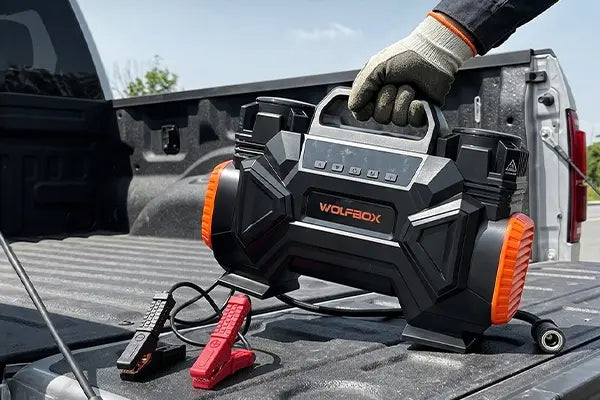
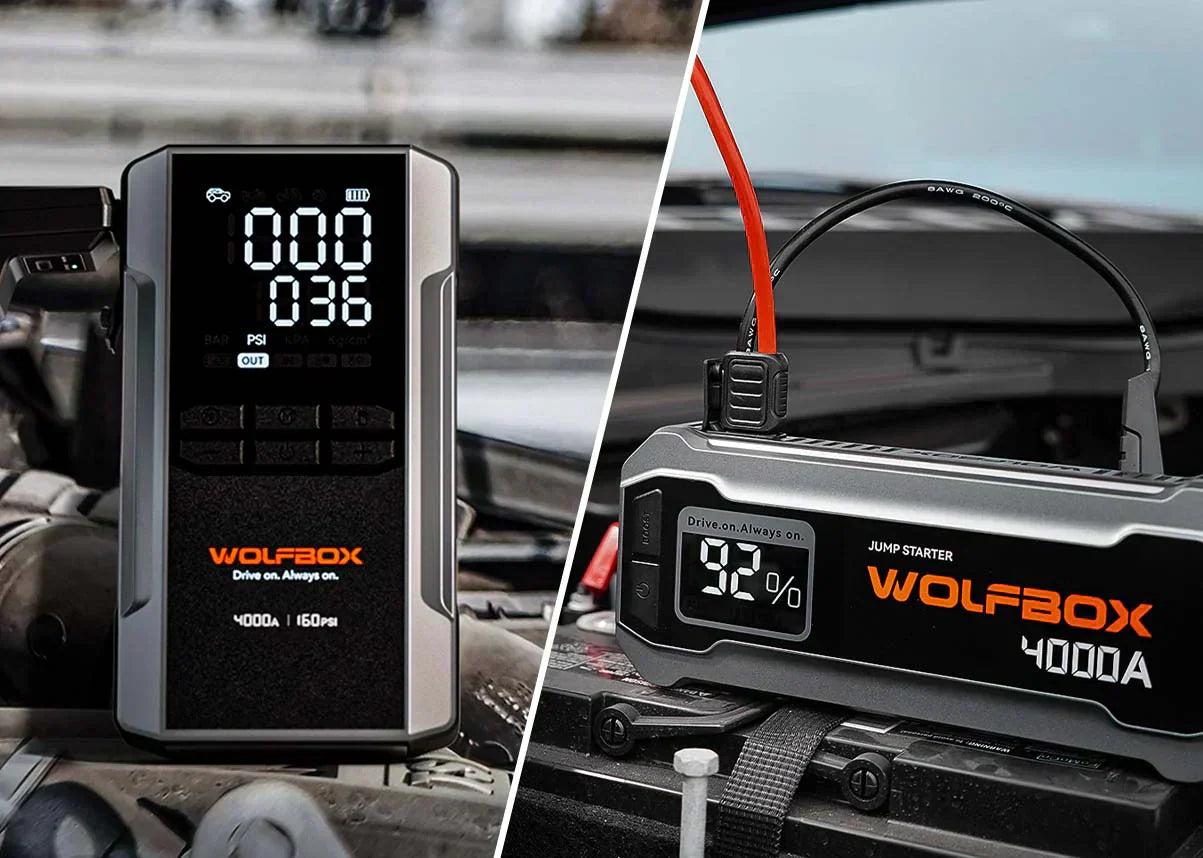
A jump starter with an air compressor does everything a traditional jump starter does. Plus, it comes with an integrated tire inflator powered by the same onboard battery. You can jump a dead battery, then use it to inflate a low tire, check pressure with a digital gauge, and deflate if needed.
The compressor component in quality units like the Wolfbox MegaVolt24 Air reaches pressures up to 160 PSI. It's suitable for passenger car, SUV, truck, and motorcycle tires, as well as sports equipment. Most standard tires inflate from flat to road-ready in three to five minutes.
Convenience and Portability: Does the Extra Function Cost Anything?
Combo jump starters have their perks. But many feel an extra air compressor makes them bigger and heavier than a simple jump starter.
The Size and Weight Difference
A quality portable jump starter typically weighs between 2 and 4 pounds, making it easy to store in a vehicle without taking up much space. The Wolfbox MegaVolt24 weighs just 3.38 pounds, while the Wolfbox MegaVolt24 Air, which adds a built-in air compressor, weighs only slightly more at 3.42 pounds.
Despite the added functionality, the difference in weight is minimal. Both units can be stored easily in a glove compartment, center console, door pocket, or under a seat. For drivers who want the convenience of both battery boosting and tire inflation in a single device, the small increase in weight is unlikely to be a deciding factor.
One Device Replaces Two: A Real Convenience
Using separate devices means managing two charging schedules, two sets of cables + connectors, and two devices. A jump starter with a built-in tire inflator eliminates that. It's one device, one charging routine, and one place to store it.
It's meaningful for drivers who aren't careful about gear maintenance. Separate units get forgotten, run out of charge, and end up in the garage when you need them. A single combo unit lives in the car, delivering whenever you need it.
Emergency Usefulness: What Actually Goes Wrong on the Road?
You need to evaluate the devices with potential emergencies in mind. They don't have to be the worst-case scenarios, but the realistic ones.
Dead Batteries: Both Devices Cover You Equally Well
A dead battery is the most common roadside emergency in the United States. AAA data shows battery failure as the leading cause of roadside assistance calls, far outpacing flat tires, fuel problems, and lockouts.
Both a standalone jump starter and a jump starter with an air compressor handle this scenario. Clamp and jump, then you drive. Where they differ is peak amp output.
The Wolfbox MegaVolt24 delivers up to 4000 peak amps, enough for most vehicles.
Flat Tires and Low Pressure: Only the Combo Unit Helps
Flat tires and dangerously low tire pressure are the second-most-common roadside emergency category. A spare tire gets you back on the road from a full flat, but only if the spare itself is properly inflated.
Many drivers discover their spare is also low on pressure exactly when they need it most. A jump starter with an air compressor lets you address both. Got a slow leak? Inflate it and drive to the nearest shop.
Is spare low? Inflate it before swapping. Did the tire go soft overnight from dropping temperatures? Top it up in the morning and go. A standalone jump starter can't help with any of those.
Slow Leaks and Seasonal Pressure Drops are Everyday Problems
Beyond outright flats, tire pressure drops are a daily reality that most drivers ignore. Tires lose roughly 1 PSI of pressure for every 10°F drop in temperature. Significant seasonal swings or a cold snap can turn a fine tire in September into a dangerously underinflated tire by November.
Having a portable tire inflator as part of your jump starter means you handle these pressure drops as they happen. It's a safety habit that extends tire life and improves fuel economy on every drive.
Long-Distance Travel and Remote Driving: The Combo Earns Its Price
Drivers may take long road trips, travel through remote areas, or spend time off the beaten path. The calculus shifts dramatically toward the combo unit in such cases.
It seems more valuable to carry the ability to handle both a dead battery and a tire pressure problem. A family on a road trip can sweep through rural Montana, or a couple may head into the Arizona desert.
Regardless of your intention, weekend camping can't count on quick roadside assistance. Both jump-starting ability and tire inflation capability should be there.
Jump Starter vs Jump Starter with Air Compressor: A Quick Comparison
|
Factor |
Jump Starter Only |
Jump Starter + Air Compressor |
|---|---|---|
|
Dead Battery Rescue |
Yes |
Yes |
|
Flat Tire Inflation |
No |
Yes (built-in compressor) |
|
Slow Leak Top-Up |
No |
Yes |
|
Weight/Portability |
Lighter (usually 2 to 4 lbs) |
Slightly heavier (mostly 4 to 7 lbs) |
|
Peak Amps (Wolfbox) |
Up to 4000A (MegaVolt24) |
Up to 4000A (MegaVolt24 Air) |
|
Max Tire PSI |
N/A |
Up to 160 PSI |
|
USB Charging Ports |
Yes |
Yes |
|
LED Emergency Light |
Yes |
Yes |
|
Price Range |
$80–$150 |
$120–$200 |
|
Best for |
Urban daily drivers, tight budgets |
Road trippers, families, outdoor adventurers |
Cost-Effectiveness: Is the Combo Unit Worth the Extra Spend?
Price is a legitimate consideration. Likewise, the combo jump starter does cost more than a standalone jump starter. You should think strategically about whether the premium makes sense for you.
Compare the Combo Price against Two Separate Devices
A quality standalone jump starter runs $80 to $150 for a reliable unit. A quality portable tire inflator runs $40 to $80. Buy both separately, and you're looking at $120 to $230 for two.
A jump starter with an air compressor sits in the $120 to $200 range. For most buyers, the combo unit costs the same or less than buying dedicated devices separately. From a pure cost-per-capability standpoint, the combo unit wins.
Consider Long-Term Value Beyond the Sticker Price
A single roadside assistance call costs $75 to $150, depending on location and coverage plan. A towing call for a dead battery in a remote area can run $100 or more.
One emergency where you can solve the problem yourself pays for the device entirely. It's better than waiting an hour or more for help to arrive. That's not a hypothetical.
It's the realistic value calculation for any investment in a roadside emergency kit. You're buying insurance against predictable inconveniences with a one-time purchase.
Wolfbox MegaVolt24 vs MegaVolt24 Air: The Practical Comparison
Wolfbox MegaVolt24: The Right Call for Urban Daily Drivers
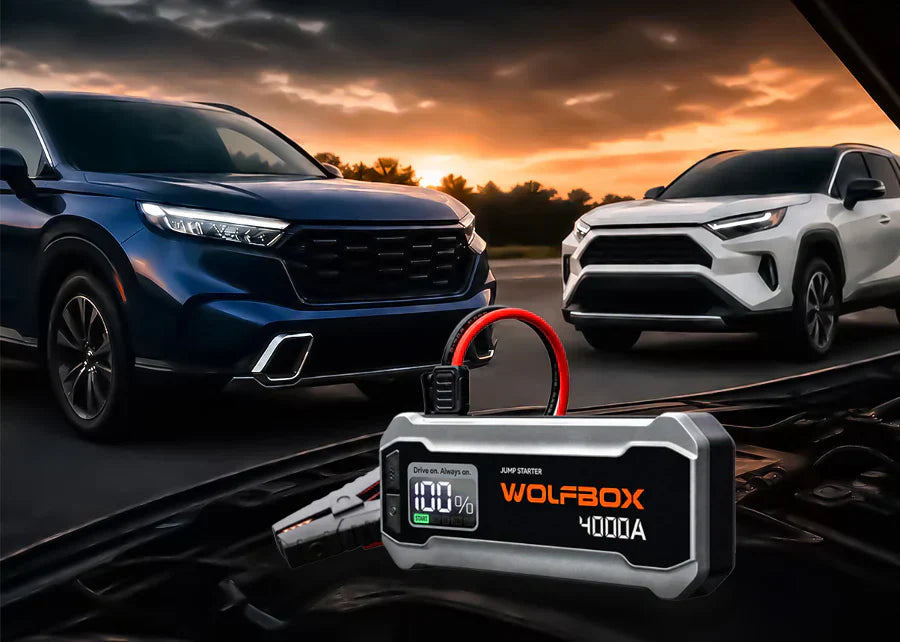
The Wolfbox MegaVolt24 is a 4000-peak-amp portable jump starter. It's perfect for drivers who want reliable battery jump capability in a compact form factor. It easily handles cars, SUVs, and light trucks, charges via USB-C, includes a built-in LED flashlight, and stores in a pouch.
It's an excellent choice for drivers who primarily need emergency jump-start capability and spend most of their time in urban or suburban areas. If you are usually just minutes away from a tire shop or roadside assistance, you may not need the added convenience of a built-in air compressor. But the MegaVolt24 covers you for other situations you're likely to face.

Wolfbox MegaVolt24 Air: The Smart Choice for Nearly Everyone Else
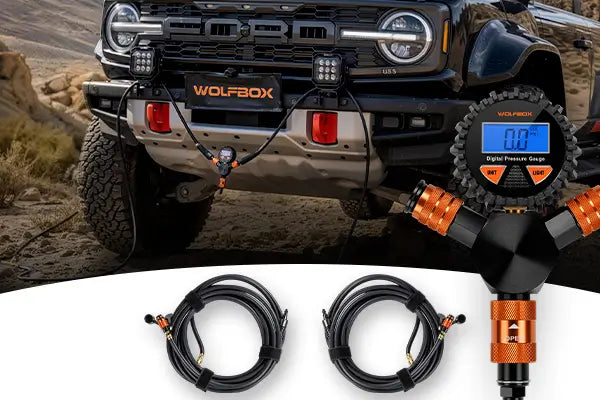
The Wolfbox MegaVolt24 Air features an integrated air compressor and tire inflator. And the jump starter foundation remains at 4000 peak amps, capable of inflating any tire to 160 PSI. The digital pressure gauge lets you inflate to an exact PSI target.
It's for road trippers, families on long drives, outdoor adventurers, and larger vehicles with bigger tires. For them, the combo unit doesn't just add a feature; it's a game-changer. Instead, it genuinely improves their preparedness for the most common roadside emergencies.

Who Should Choose Which: A Clear Decision Guide
Choose the Traditional Jump Starter If You –
-
Drive primarily in urban/suburban areas with easy access to tire shops + roadside assistance.
-
Already own a separate portable tire inflator and are happy maintaining both devices.
-
Want the lightest possible roadside emergency device for a compact car or motorcycle.
-
Only need the single most common emergency roadside kit function with budget constraints.
Choose the Jump Starter with Air Compressor If You –
-
Take road trips, travel through remote areas, or regularly drive long distances.
-
Have a family in the vehicle and want to handle the two most common roadside emergencies.
-
Drive an SUV, truck, or larger vehicle with high-volume tires that drop pressure seasonally.
-
Want one device that replaces two and simplifies your roadside emergency kit entirely.
-
Need to handle a dead battery + a flat tire without needing a second device or a service call.
Conclusion
The jump starter vs jump starter with air compressor debate has an answer once you get how you use a vehicle. A standalone jump starter is a capable piece of emergency roadside equipment at a lower cost.
A jump starter with an air compressor does everything the standalone unit does and adds practical value in situations involving tire pressure. And the capability gap it closes represents the top two emergencies for a slightly higher price.
Wolfbox offers both categories of products, including portable jump starters and jump starters with built-in air compressors, allowing drivers to choose the option that best fits their needs.
Frequently Asked Questions (FAQs)
1. Can a jump starter with an air compressor fully inflate a flat tire?
Yes. Top-quality units like the Wolfbox MegaVolt24 Air inflate a standard passenger tire in three to five minutes. The integrated air compressor reaches up to 150 PSI, covering most of the vehicles.
2. Does adding an air compressor reduce jump-starting power?
No. The Wolfbox MegaVolt24 Air actually delivers the same peak amps (4000A) as the MegaVolt24 (4000A). The air compressor and jump starter functions draw from the same onboard battery.
3. How long does the battery last between charges in a combo unit?
A fully charged Wolfbox MegaVolt24 Air holds its charge for 6–12 months in storage. For active use, the onboard 24,000mAh battery delivers up to 40 jump starts or multiple tire inflations on a single charge.
4. Is a jump starter with an air compressor harder to use than a standalone unit?
No. Both functions on a combo jump starter are for drivers who aren't mechanics. The jump-starting process is identical to that of a standalone unit. The tire inflator function adds just another step.
5. Which Wolfbox model is better for large vehicles like trucks or SUVs?
The Wolfbox MegaVolt24 Air is the stronger choice for trucks and SUVs. Its 4000-peak-amp output provides more cranking power for larger engines and cold-weather starts. For more details, see the Wolfbox guide on best portable jump starter with air compressor.

Leave a comment
All comments are moderated before being published.
This site is protected by hCaptcha and the hCaptcha Privacy Policy and Terms of Service apply.