








A dead battery can happen at the worst possible moment. That's why drivers invest in the best jump starter for emergency kit. It isn't the one with the biggest numbers on paper; it's the one ready to deliver the moment you need it.
AAA data shows roughly 33 million roadside assistance calls annually. And battery issues triggered roughly 7 million of them. A dead battery remains one of the most common reasons drivers end up stranded. [1]
This guide explains the role of a jump starter in a car emergency kit. We'll discuss the traits of a reliable one and what else belongs alongside it. You can build the best jump starter for emergency kit in 2026 from scratch or upgrade an old kit.
What Role Does a Jump Starter Play in an Emergency Kit?
A jump starter's job is very specific: reviving a dead 12V battery. It gets your engine started again without requiring a second car or a stranger's help.
That narrow focus makes the kit different from the rest of your emergency supplies. A first aid kit handles injuries, and a flashlight handles visibility. Meanwhile, a jump starter handles one problem.
Your vehicle may not start in a parking lot, a driveway, a workplace lot, or on the roadside. Flagging down another vehicle isn't realistic or safe in such situations. It doesn't fix a flat tire, treat an injury, or keep you warm overnight. [2]
But it's the one tool that solves a no-engine-start problem directly and immediately. That reliability makes it worth the dedicated space in the kit.
What Makes the Best Jump Starter for an Emergency Kit?
The best emergency jump starter is compact enough to store permanently. It should also be simple enough to use under stress. The tool must also be reliable enough to revive an engine months after you last used it.
An emergency kit is a different use case than a garage tool you reach for every week. That difference shapes which features matter when you're looking for the best possible option.
Portability and Storage
A jump starter meant for an emergency kit should be small and light enough to live permanently in a glovebox, trunk, or under a seat. A bulky or large one eventually becomes a hassle to handle and store.
Many drivers simply prefer to leave the unit behind or move somewhere less accessible. It makes things even more burdensome when your engine isn't working. [2]
Ease of Deployment
In an emergency, you're likely stressed, possibly in bad weather, and want the simplest process possible. You expect to start the engine by connecting the clamps and pressing a button. [3] Overly complex menus or unclear indicator lights work against you when clarity matters.
A unit that's intuitive enough to figure out without reading a manual first is worth more in practice. Several units have longer feature lists but confusing interfaces.
Self-Contained Operation
A good emergency jump starter shouldn't require a second vehicle, a specific outlet, or any outside help to function. The point is independence: the unit includes everything needed to revive the battery.
Vehicle Compatibility
Check that the unit's peak amp rating and engine coverage match your vehicle. A jump starter sized for a compact sedan may not reliably start a larger truck or an engine with higher displacement.
The WOLFBOX MegaVolt24, for example, is rated for gasoline engines up to 10 liters and diesel engines up to 6 liters. It provides enough headroom across a wide range of vehicle sizes. [4]
That headroom matters for households with more than one vehicle in the driveway. A single unit sized for the smallest car in your collection may fall short on a larger truck or SUV.
Battery Readiness and Status Checks
A jump starter that's dead when you need it is worse than not having one at all. That just creates false confidence. Look for a clear charge indicator, and get in the habit of checking it periodically. Even a great unit is only useful if it's actually charged.
Durability and Temperature Considerations
An emergency jump starter often lives in a trunk or glovebox through real seasonal temperature swings. So, its rated operating and storage range matters more than it would for a tool used only in a climate-controlled garage. Lithium units hold their charge in storage longer than lead-acid packs.
A lithium unit left untouched for months is far more likely to still be usable than a lead-acid pack. The latter often needs a top-up before it becomes reliable for roadside emergencies again. [5]
What Features Are Useful Beyond Jump Starting?
A handful of secondary features genuinely earn their place in an emergency jump starter. Meanwhile, others add bulk you'll never use.
The features worth having solve a second, closely related emergency problem. Judge each extra by whether it addresses a real-time scenario or just adds to a longer feature list.
Emergency Lighting
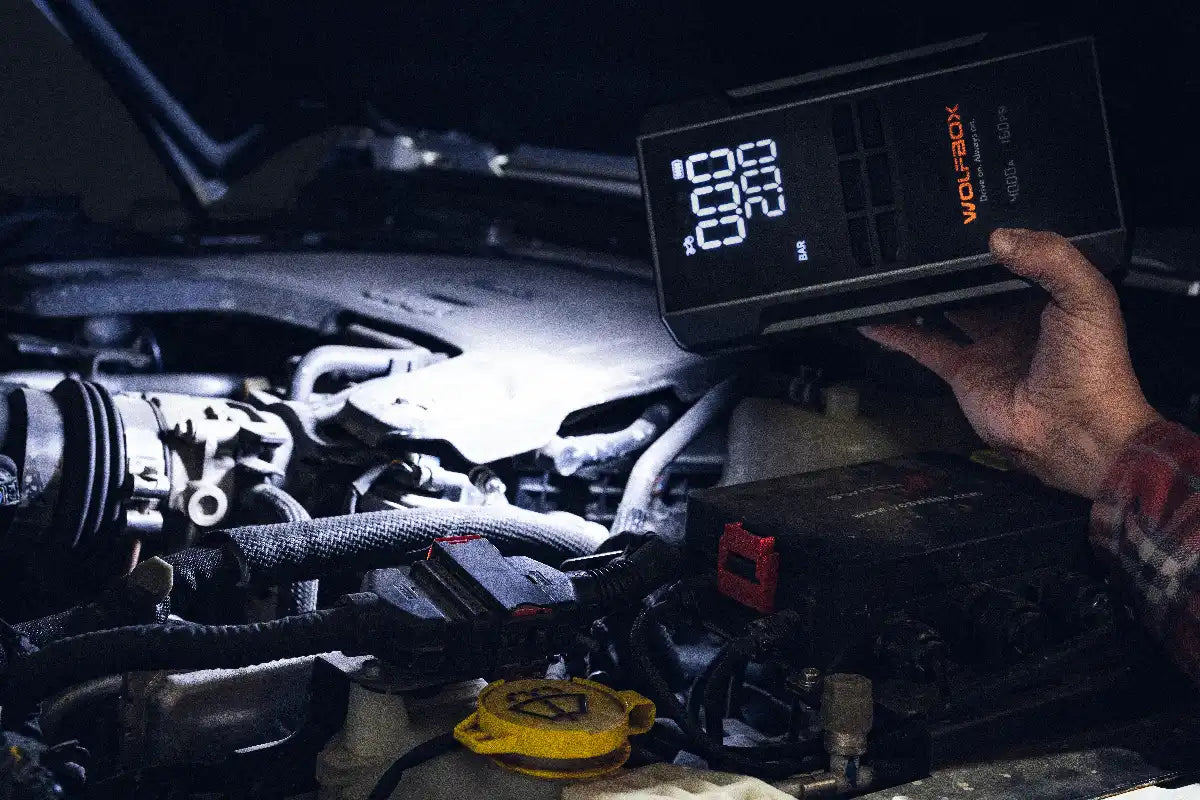
A built-in LED light lets you check under the hood easily in the dark. You can even locate dropped tools and small parts.
It also improves the overall visibility while you're stopped on a roadside at night. This small addition removes the need for a separate flashlight in many situations.
Device Charging
USB output turns the unit into a backup power source for a phone or other essential device. A normal outlet feels like finding a diamond in those situations. It also matters when you need to call for help or pull up roadside assistance information.
That said, WOLFBOX MegaVolt24 doubles as a 24,000mAh power bank alongside its jump-starting function. The combination provides real value even outside a dead-battery situation. [4]

Tire Inflation and Other Integrated Functions
Some models combine jump-starting with additional roadside functions like tire inflation. It means fewer separate tools taking up trunk space overall.
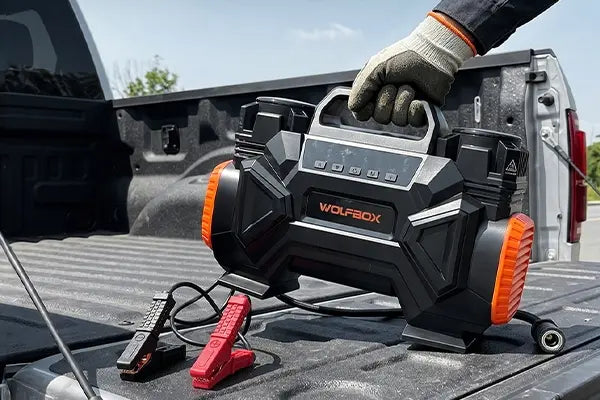
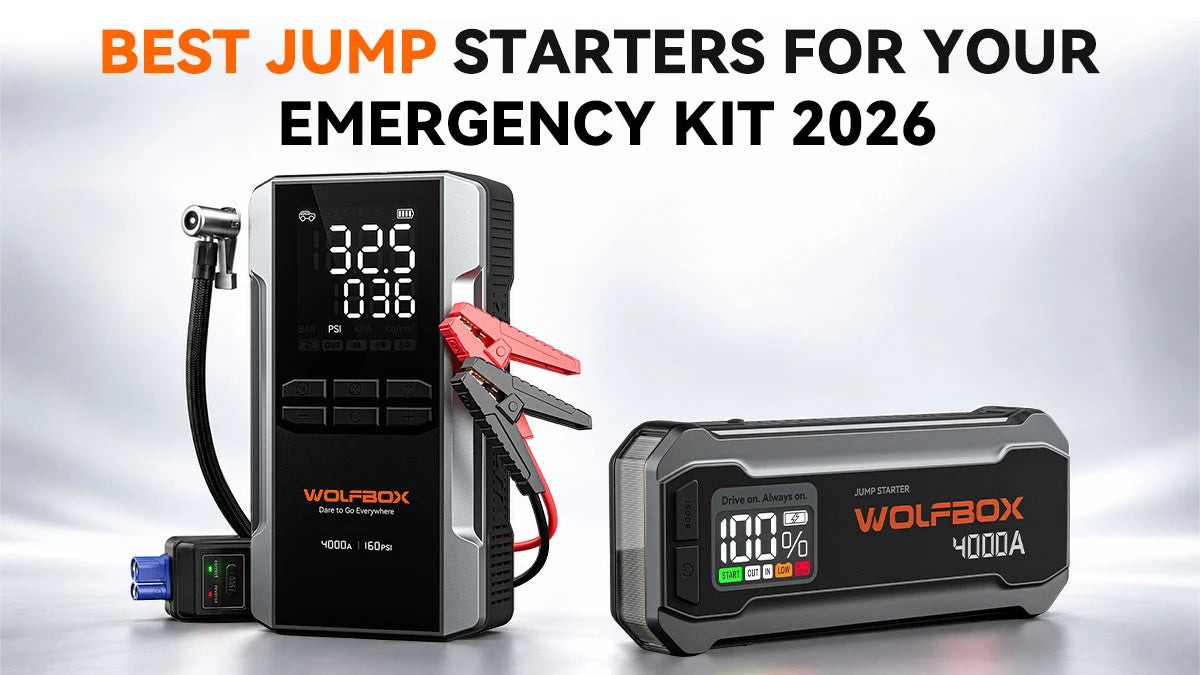
The WOLFBOX MegaVolt24Air folds a 45L/min air compressor into the same housing as its jump starter. So, a driver carrying one unit covers both a dead battery and a low tire without packing two separate devices. [6]

Summary Comparison: WOLFBOX MegaVolt24 vs WOLFBOX MegaVolt24Air
|
Model |
Peak Amps |
Battery Capacity |
Air Compressor |
Best For |
|---|---|---|---|---|
|
WOLFBOX MegaVolt24 |
4,000A |
24,000mAh / 88.8Wh |
None |
Compact, glovebox-friendly emergency backup |
|
WOLFBOX MegaVolt24Air |
4,000A |
24,000mAh / 88.8Wh |
45L/min, 160 PSI |
One device covering a dead battery and a low tire |
What Else Should Be in a Car Emergency Kit?
A jump starter solves one specific problem. That's why a complete kit also needs visibility gear, basic vehicle supplies, and personal essentials to cover the other ways a trip can go wrong.
Keep a broader emergency supply kit in the vehicle for situations where you're stranded. It goes well beyond the battery to help you handle other issues. [7]
Always think through the full range of what could go wrong, not just a dead battery. A careful approach can turn that single tool into a life-saving kit that gets you out of the roadside misery.
Visibility and Roadside Warning Equipment
Reflective triangles, warning lights, or reflective gear make a disabled vehicle visible to other drivers. A stopped car becomes hard to see in time on a shoulder at night or in poor weather.
Tire and Basic Vehicle Supplies
A tire-pressure gauge, an inflator or basic repair kit, work gloves, and a small set of basic tools round out the supplies. They can handle a flat tire or other minor mechanical issues without waiting for outside help.
Personal Emergency Supplies
First-aid supplies, drinking water, a blanket, and other basic provisions matter for the situations a jump starter and tire tools don't cover. Consider a breakdown somewhere where help will take a while to reach.
How Should You Organize and Check Your Emergency Kit?
An emergency kit only works if you can find what you need quickly and trust that it still works. That means organization and periodic checks matter as much as what's in the kit itself.
A few habits keep a kit reliable, not a forgotten box in the trunk.
- Keep It Accessible: Always store the kit somewhere you can reach it without digging through unrelated cargo first.
- Keep Components Together: A scattered kit means hunting for pieces during an actual emergency. Many don't have the patience to organize the tools.
- Check Accessories Periodically: Inspect the cables, clamps, and connectors occasionally for wear or damage.
- Check Charge and Readiness: Verify your jump starter's battery periodically. Don't assume it's full months after the last check.
- Review Compatibility and Instructions: Confirm the jump starter still matches your current vehicle if you've changed cars. Also, keep the instructions where you can find them when you need them.
Conclusion
The best jump starter for an emergency kit requires four things. Choose a unit that's compact enough to store and simple enough to use under stress. But it must match your vehicle and stay reliable months after you last used it.
Consider useful extras like lighting, device charging, or integrated tire inflation. Round out the rest of the kit with visibility gear and basic personal supplies for the most satisfactory outcome. That's when you'll have a setup that holds up when something goes wrong.
The WOLFBOX MegaVolt24Air is a solid example of a device that covers both a dead battery and a low tire. [6] Meanwhile, the standard MegaVolt24 offers the same jump-starting power in a smaller package. [4] Whichever one you choose, the unit must deliver when you need it.
Frequently Asked Questions (FAQs)
1. Is a jump starter worth keeping in a car emergency kit?
Yes. A dead battery is one of the most common reasons drivers get stranded. A capable jump starter solves that specific problem directly without needing a second vehicle or outside assistance.
2. Can one jump starter be used for multiple vehicles?
Yes. However, the peak amp rating and engine coverage must match each vehicle. A unit rated for larger gas and diesel engines, like the WOLFBOX MegaVolt24's coverage up to 10L for gas and 6L for diesel, can handle a range of household vehicles.
3. Can a jump starter replace jumper cables?
Yes, for practical purposes. A self-contained jump starter includes its own power source and clamps. It effectively eliminates the need for a second running vehicle that traditional jumper cables require.
4. Can a jump starter stay in a car year-round?
Generally, yes. However, the unit must be rated for the temperature range that your car experiences. Lithium units hold charge in storage significantly better than lead-acid packs across seasonal swings.
5. Where is the safest place to keep a jump starter?
A glovebox, trunk, or under-seat storage area works well. Wherever you keep it, make sure it stays accessible in an emergency. Also, keep the unit away from extreme or prolonged heat.
6. How often should you check a jump starter's charge?
A quick check every few months is a reasonable habit, especially before winter or a long road trip. Even a reliable lithium unit is only useful in an emergency if it's actually charged when you need it.
References
[1] AAA Newsroom: "AAA Reminds Vehicle Owners to Prepare for Fall and Winter" – https://newsroom.acg.aaa.com/aaa-reminds-vehicle-owners-to-prepare-for-fall-and-winter-il-in/
[2] WOLFBOX: "Summer Heat and Dead Car Batteries: Why You Need a Portable Jump Starter" – https://wolfbox.com/blogs/jump-starter/summer-heat-and-dead-car-batteries-why-you-need-a-portable-jump-starter
[3] WOLFBOX: "Portable Car Jump Starter: Keep You Safe and Ready Anywhere" – https://wolfbox.com/blogs/news/portable-car-jump-starter
[4] WOLFBOX: "MegaVolt24 4000A Jump Starter" – https://wolfbox.com/products/wolfbox-megavolt24-jump-starter
[5] WOLFBOX: "Hurricane Season Prep: Why You Need a Lithium Jump Starter" – https://wolfbox.com/blogs/jump-starter/hurricane-season-prep-lithium-jump-starter
[6] WOLFBOX: "4-in-1 Jump Starter with Air Compressor Tire Inflator — MegaVolt 24Air" – https://wolfbox.com/products/jump-starter-with-air-compressor-tire-inflator-wolfbox-megavolt-24air
[7] Ready.gov: "Car Safety: US Department of Homeland Security" – https://www.ready.gov/car


Leave a comment
All comments are moderated before being published.
This site is protected by hCaptcha and the hCaptcha Privacy Policy and Terms of Service apply.