







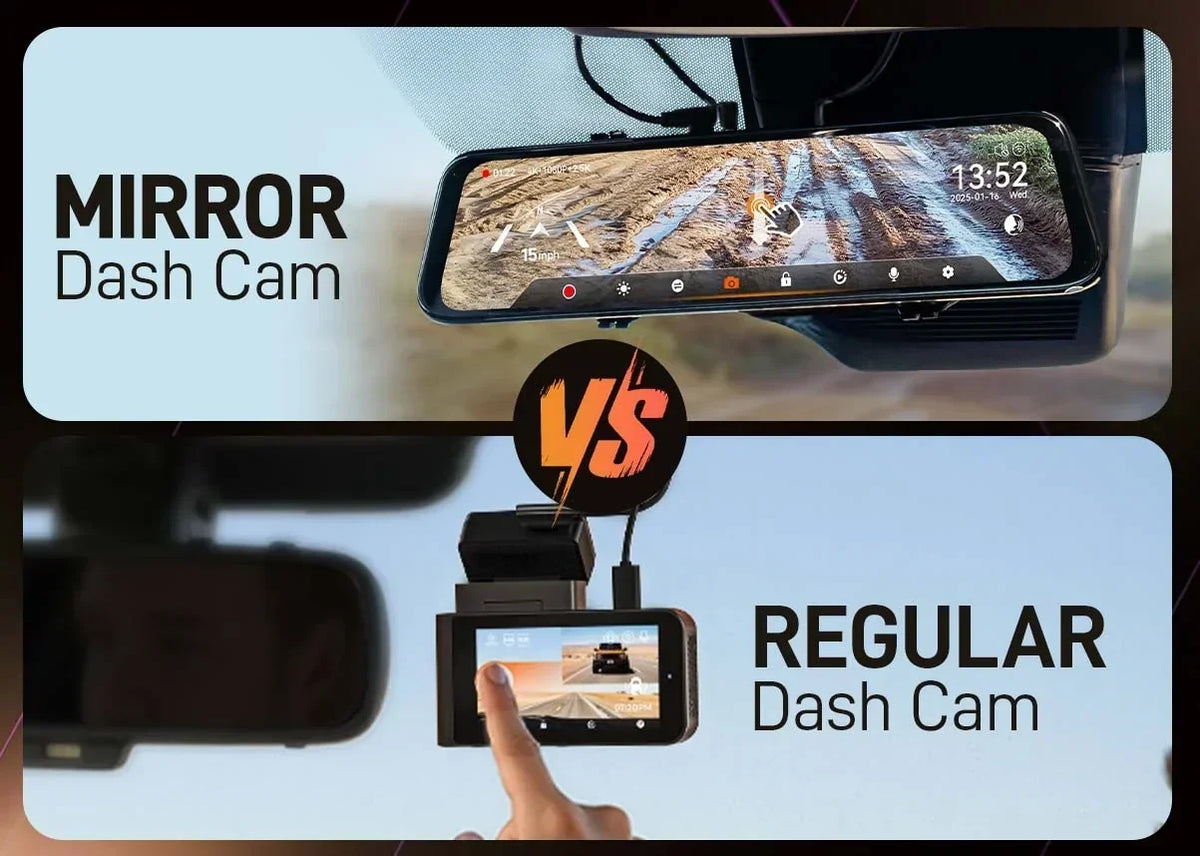
You’ve decided to get a dash cam; smart move. But then you hit the first real decision. Do you go with a mirror dash cam to replace the rearview mirror? Or do you want to stick with a regular windshield-mounted dash cam?
The dash cam vs mirror cam debate is more nuanced than most buying guides let on. Both types record and protect. But they work differently, fit different vehicles, and suit different drivers. This guide gives you a clear, honest comparison.
Working Mechanism: Mirror Dash Cam and Regular Dash Cam
Before comparing the two, you need to understand exactly what each type is and how it works. They’re not just the same camera in a different housing.
How a Regular Dash Cam Works?
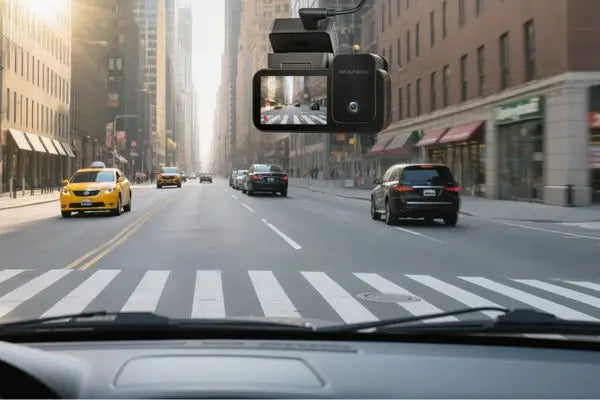
A regular dash cam is a compact camera that mounts on your windshield or dashboard. It points forward through the glass and records continuously while you drive.
Many have a rear camera that mounts on the rear windshield, providing front- and rearview coverage. The screen, if there’s one, remains within the cam body itself. It becomes a small, black box that records quietly when not in use.
Regular dash cams are the more traditional format. They’ve been around longer and are widely available. You can sweep through a massive range of price points and feature sets.
How a Mirror Dash Cam Works
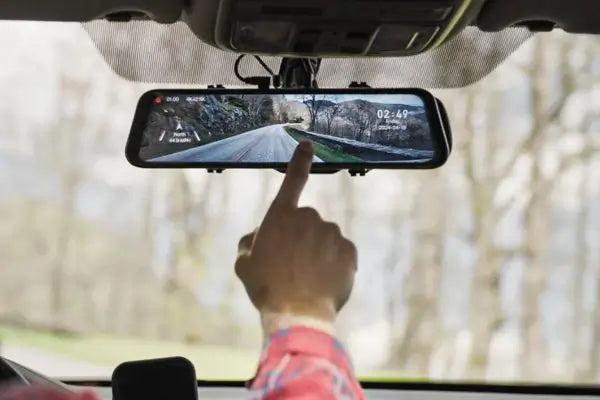
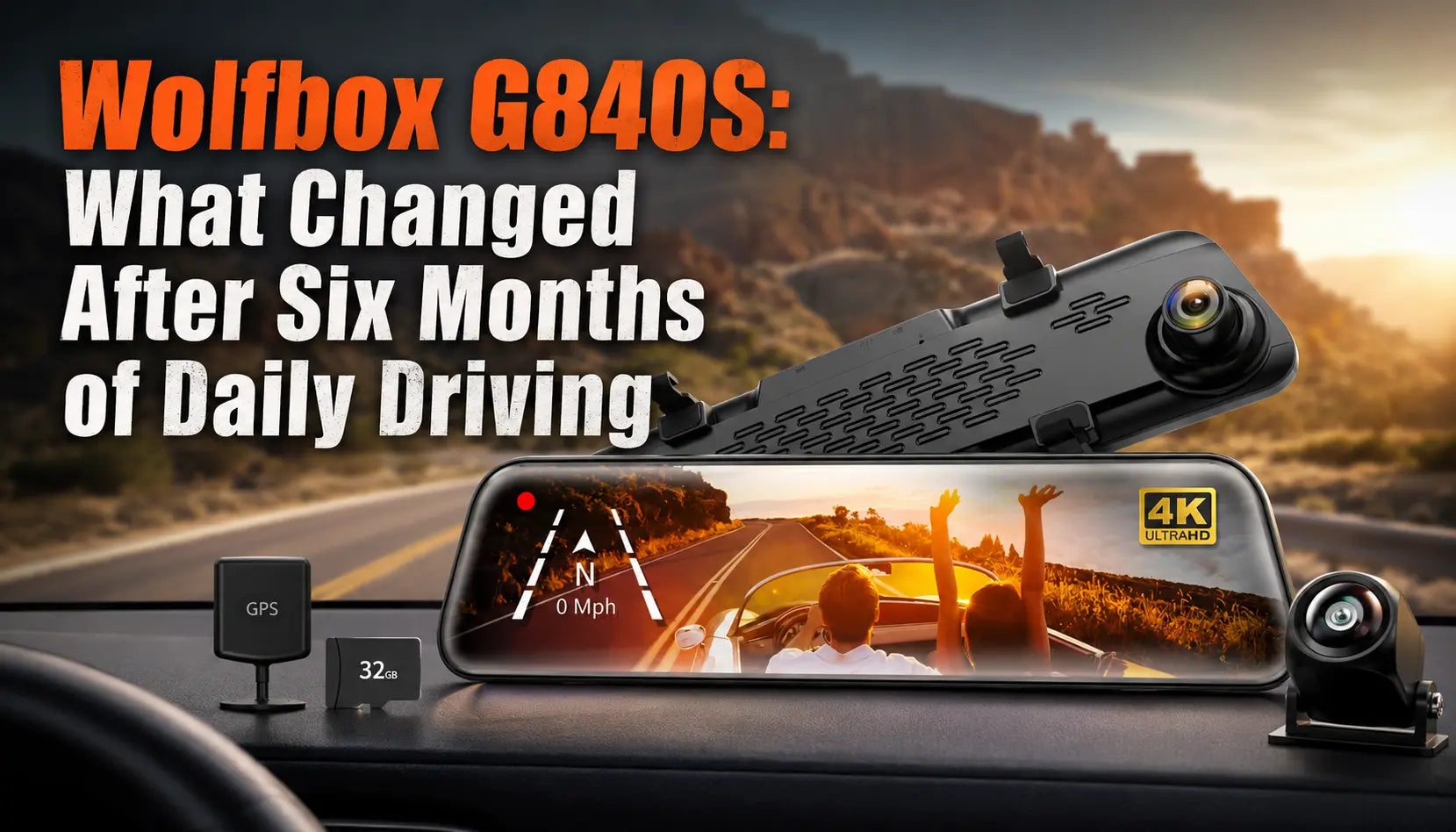
A mirror dash cam is sometimes called a smart rearview mirror or digital rearview mirror. It clips over or replaces your existing rearview mirror. The front-facing camera remains within the mirror housing, and the rear camera connects via a cable.
The mirror’s surface is actually a display that shows a live video feed from the rear camera. It effectively replaces or supplements the traditional optical reflection.
When the display is on, you’re seeing what’s behind you through a camera. When it’s off, the unit looks and acts like a standard mirror. Such a dual-function design makes it a genuinely different product, not just a dash cam with a different shape.
Core Advantages of a Mirror Dash Cam
Dramatic Improvement in Rear Visibility
Traditional rearview mirrors show you whatever is directly behind your rear window. That works fine in a sedan, but becomes seriously limited in vehicles with obstructed rear views.
There are SUVs with cargo blocking the window, pickup trucks, minivans with passengers or gear filling the back, or any vehicle with headrests, tinting, or sun glare.
A mirror dash cam’s rear camera gets mounted at the back with a wide-angle lens of 140 degrees or more. The digital display on the mirror shows you that wider, cleaner view regardless of what’s in your cabin.
The IIHS identified limited rear visibility as a contributing factor in many low-speed backing crashes. A wider, camera-based rear view directly addresses that risk.
Independent hands-on testing backs this up — The Gadgeteer, after putting the Wolfbox G900 TriPro Cabin Version through its paces, found that "the rear camera actually provides a wider and clearer view than a traditional rearview mirror" (The Gadgeteer).

Cleaner Cabin Aesthetics
A mirror dash cam integrates into the existing mirror position. There’s no extra device on the windshield, suction cup blocking a corner, or dangling power cable running down the A-pillar.
The mirror form factor is a meaningful improvement for drivers who find windshield-mounted devices distracting or visually cluttered.
The rear camera cable must be routed through the vehicle’s headliner or along the door trim. It takes more effort than plugging in a suction-cup cam. But once it’s done, it results in a much tidier setup.
Better Glare and Night Visibility from the Rear
Anyone who’s been blinded by headlights in their rearview mirror at night knows the problem. Traditional mirrors reflect light directly back at your eyes. Auto-dimming mirrors help, but they’re not in every vehicle.
A mirror dash cam’s digital display doesn’t reflect headlights. Instead, it shows you a processed video image. Brightness is consistent regardless of how bright the lights behind you are. At night, it feels like a safety upgrade.
Real-world testing confirms this advantage — AutoGuide compared the Wolfbox G900 TriPro bumper version to a factory backup camera and concluded it "is better than the stock back-up camera on my wife's van" (AutoGuide).

Core Advantages of a Regular Dash Cam
Simpler Installation and Portability
If you are not using parking mode, installing a windshield-mounted regular dash cam takes only a few minutes. You simply attach the mount, plug the power cable into the 12V socket or hardwire kit, and you’re ready to go.
This makes it especially convenient for drivers who frequently rent cars, switch between vehicles, or prefer a low-commitment setup. The camera can be easily removed, transferred to another vehicle, or shared without any complex installation steps.
More Windshield Mounting Flexibility
With the dash cam window mount vs. the mirror mount, placement matters more than it seems. A precisely positioned windshield-mounted cam can avoid obstructing your sightlines. Still, it keeps capturing the best possible forward angle.
You can adjust the height, angle, and horizontal position freely. Some drivers mount them low behind the rearview mirror; others prefer a corner position.
Mirror mounts are fixed by definition; they go where your rearview mirror is. The mirror position may not give the built-in camera an ideal forward angle. And you have limited options for adjustment beyond the front camera’s built-in tilt range.
Lower Starting Price Point
Quality regular dash cam options are priced lower than equivalent mirror dash cams. Mirror dash cams need to include display hardware, a larger housing, and a longer rear camera cable.
The high manufacturing costs are passed through to the consumer. If budget is a primary concern and with no rear visibility challenges, a windshield-mounted cam delivers solid value at a lower price.
Wider Selection of Form Factors and Features
The regular dash cam market is larger and more mature. Therefore, you get more options across every dimension. It includes resolution tiers, GPS, parking mode, cloud connectivity, internal memory vs card-based storage, and size profiles.
The profiling feature can range from nearly invisible mini cams to larger units with built-in touchscreens. Mirror dash cams have improved significantly in recent years, but the windshield-mount category still offers more variety overall.
Mirror Dash Cam vs Regular Dash Cam: A Quick Summary
|
Feature |
Mirror Dash Cam |
Regular Dash Cam |
|---|---|---|
|
Mounting Location |
Over the existing rearview mirror |
Windshield or dashboard |
|
Screen Size |
Large (9 to 12 inches) |
Small (1.5 to 3 inches) or screenless |
|
Stealth/Visibility |
Blends in as a mirror |
Small and easily hidden behind the mirror |
|
Rear Visibility |
Excellent (acts as a full-time digital backup) |
Limited (rear camera only records, rare livestream) |
|
Installation Complexity |
Medium (requires routing cables to front and rear bumpers) |
Low to Medium (simple plug-and-play if not using parking mode) |
|
Blind Spot Reduction |
High (wide-angle digital view) |
Low (doesn’t change physical mirror view) |
|
Distraction Risk |
Medium (larger display may require slight visual adjustment) |
Low to Medium (smaller screen) |
|
Glare Resistance |
Moderate (large screen may reflect sunlight in some conditions) |
High (doesn’t affect night or day vision) |
|
Cost Range |
$100 - $300+ |
$40 - $200+ |
Dash Cam Window Mount vs Mirror Mount: How Placement Changes Your Experience
Where a dash cam sits in your car affects more than just aesthetics. The dash cam window-mount vs. mirror-mount question touches on several points.
Field of View and Camera Angle
Consider a windshield-mounted cam positioned behind the rearview mirror or near the top center of the glass. It captures a forward view that closely matches the driver’s natural line of sight. It’s a good thing for footage accuracy.
A mirror-mounted cam’s front camera, in the mirror housing, also sits near the top center. The angle is similar but fixed to the mirror position. The rear camera, mounted at the back, often captures a wider and lower angle.
Obstruction and Distraction
The NHTSA advises that any device mounted to the windshield should not obstruct the forward view. A compact, regular dash cam, positioned high and behind the rearview mirror, easily satisfies it.
A bulkier windshield-mounted unit positioned lower or too far to the side can cross into the distraction zone. Mirror dash cams don’t add anything to the windshield glass.
The display is in the mirror position, which drivers already look at regularly. The rear video feed remains accessible without a new eye movement pattern, which some drivers find less distracting.
Legal Considerations
Most US states restrict windshield obstructions in specific zones. Generally, the top and bottom few inches of the windshield are permitted areas. However, the critical visibility zone in the center is restricted.
A well-positioned regular dash cam behind the rearview mirror complies with these rules. Still, it’s worth checking your state’s specific regulations.
Mirror dash cams don’t mount to the windshield glass, so they sidestep many of the restrictions.
Who Should Choose Which: A Practical Guide
Choose a Mirror Dash Cam When –
- Driving an SUV, pickup truck, minivan, or any vehicle with limited rear visibility.
- Frequently carrying passengers or cargo that blocks your rearview mirror's line of sight.
- Nighttime glare from trailing headlights is a regular issue.
- Desiring a cleaner cabin without extra devices on the windshield.
- Intending to keep the cam in one vehicle long-term and don't mind a longer initial installation.
Choose a Regular Dash Cam When –
- Driving a sedan, coupe, or vehicle with a clear rear view through the mirror.
- Needing a quick, tool-free installation that you can move between cars.
- Budget is a priority and you don't need a digital rear display.
- Requiring the widest possible range of feature options and form factors.
- Renting vehicles or switching cars regularly.
There’s no universally “better” option in the dash cam vs mirror cam comparison. It’s about matching the product to your actual driving situation.
What to Look for: Key Specs That Actually Matter
Video Resolution
1440p or 4K provides enough detail to read license plates and road signs clearly in front-facing videos. 1080p is acceptable, but increasingly the minimum. For rear cameras, 1080p is sufficient since you’re capturing proximity footage.
Night Vision and Aperture
Look for an F1.8 lens aperture, which admits significantly more light than the F2.8 lenses. Pair it with a WDR (Wide Dynamic Range) or HDR sensor to handle high-contrast scenes. These two specs determine whether your nighttime footage is actually readable.
Parking Mode
Parking mode allows your dash cam to monitor your vehicle while it is parked. It can continue recording or stay in a low-power standby state that triggers recording when motion or impact is detected.
To enable this feature, the dash cam typically needs to be connected to a constant power source using a hardwire kit or a compatible power setup that supplies electricity even when the engine is off.
GPS Logging
GPS-equipped dash cams embed speed, location, and route data into footage files. The information can strengthen your overall account of an incident. For fleet vehicles or commercial drivers, GPS logging is particularly valuable.
Conclusion
Both dash cam types do the same job: they record the road and protect you when something goes wrong. The dash cam vs mirror cam decision comes down to what specific problems you’re solving.
A mirror dash cam should suffice for compromised rear view, nighttime glare, or a poor-looking setup. A windshield-mounted regular dash cam is the smarter choice for simplicity, portability, variety, and a low entry price.
Wolfbox covers both formats. Mirror dash cams and windshield-mounted options can handle real driving conditions. You won’t have to worry about nighttime glare, parking, and highway driving.
Frequently Asked Questions (FAQs)
1. Can a mirror dash cam replace my factory rearview mirror entirely?
Most mirror dash cams clip over your existing mirror rather than replace it. If you turn off the display, your original optical mirror still works underneath.
2. Does a mirror dash cam's rear camera record at the same quality as the front camera?
Not always. On many mirror dash cams, the front camera captures at a higher resolution than the rear camera. Check the spec sheet carefully: a cam advertised as “4K” may deliver 4K in front and 1080p in the rear.
3. Is a windshield-mounted dash cam legal in all US states?
Yes, when mounted properly. Most states allow windshield-mounted devices in specific zones (usually the top or bottom strip of the glass). The key is not to obstruct the driver’s primary line of sight.
4. Do mirror dash cams work at night?
Yes. Many find mirror dash cams better than traditional mirrors at night. The display shows a processed video feed, and you don’t get blinded by headlights from following vehicles.
5. Can I use a mirror dash cam in a rental car or borrowed vehicle?
Yes. The clip-on mirror mounts are removable. But routing the rear camera cable is more involved, so mirror dash cams aren’t really designed for frequent vehicle swapping.

Leave a comment
All comments are moderated before being published.
This site is protected by hCaptcha and the hCaptcha Privacy Policy and Terms of Service apply.