







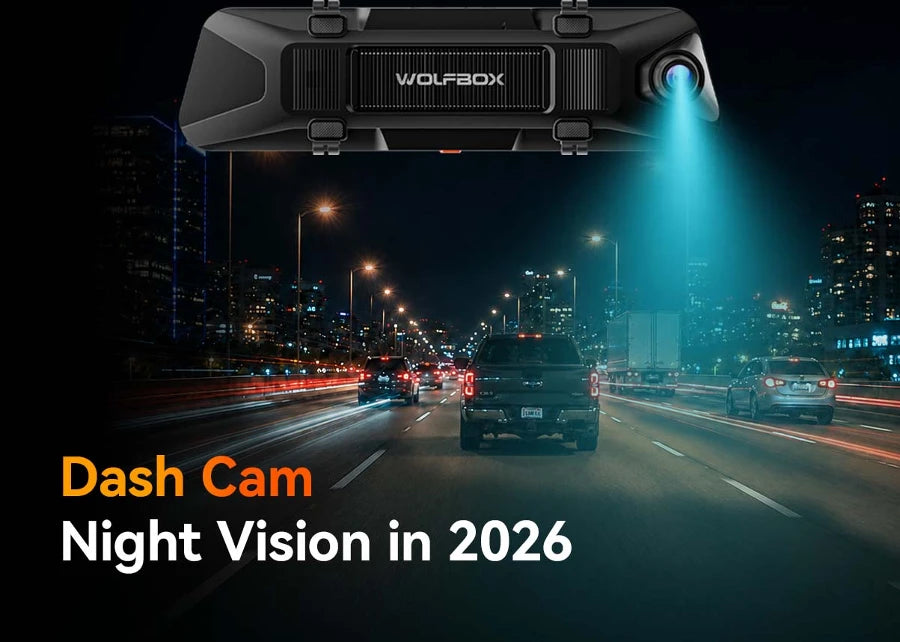
A dash cam that looks sharp in daylight showroom demos can produce a nearly unusable smear of noise and motion blur once the sun goes down. The difference almost always comes down to the image sensor, not the camera housing or the marketing copy — and understanding what a sensor like Sony's IMX678 actually does explains why night footage varies so dramatically between dash cam models.
What Actually Determines Night Vision Quality
Three sensor-level factors determine how a dash cam performs after dark: pixel size, sensitivity, and dynamic range. Sony's IMX678 is a 1/1.8-inch CMOS sensor with roughly 8.4 million effective pixels and a 2.0μm × 2.0μm unit cell size, built on the STARVIS 2 back-illuminated architecture [1]. STARVIS 2 sensors are engineered specifically for security and automotive camera applications, offering a documented minimum sensitivity of 2,000 mV per µm² and more than 8dB of additional dynamic range compared to the original STARVIS generation at equivalent pixel size [2][3]. In plain terms: more light captured per pixel and a wider gap between the darkest and brightest parts of a scene translate directly to cleaner, more usable footage at night.
STARVIS vs. STARVIS 2: What Actually Changed
| Factor | Original STARVIS | STARVIS 2 |
| Dynamic Range (same pixel size) | Baseline | 8dB+ improvement |
| Minimum Sensitivity | Lower | 2,000 mV/µm² or higher |
| Light Region Coverage | Visible light | Visible + near-infrared |
| Typical Application | Early security/consumer cameras | Modern security and automotive cameras |
Source: Sony Semiconductor Solutions official sensor documentation [1][2].
Sony's own comparison data shows the IMX678 reaching equivalent image brightness to the older IMX334 sensor while using roughly a third of the gain — 48dB versus 57dB [1]. Lower gain at equal brightness generally means less amplified noise in the final image, which is the practical reason IMX678-based cameras tend to hold detail better in low light rather than washing it out with grain.
Where This Shows Up in a WOLFBOX Dash Cam
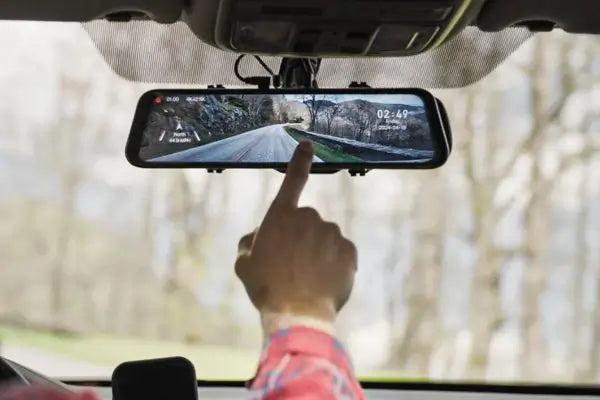
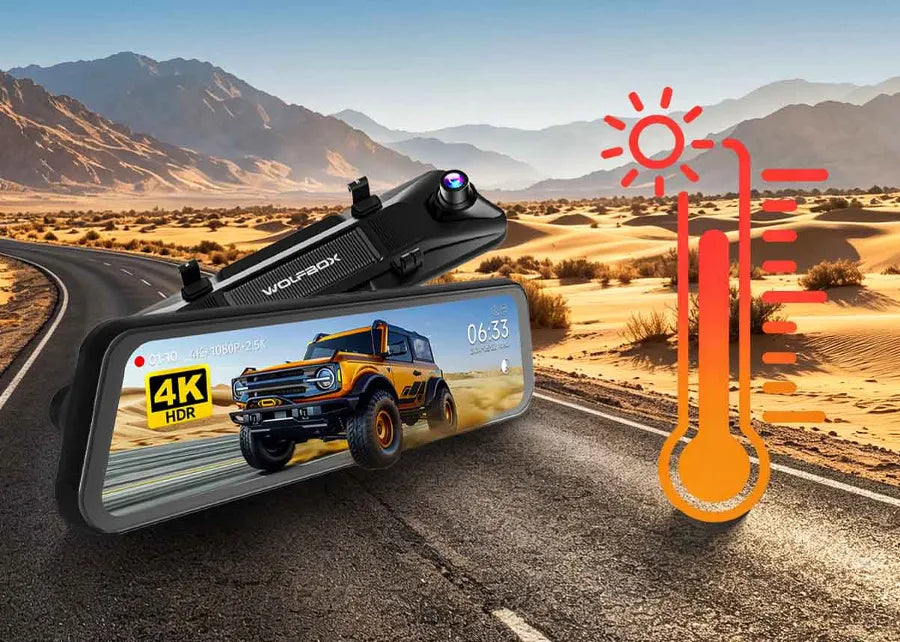
The WOLFBOX G900 Pro uses the Sony STARVIS 2 IMX678 sensor for its front camera, paired with a 12-inch display and support for front 4K/rear 2.5K simultaneous recording [4][5][8]. The G900 TriPro Cabin Version extends this further with a three-camera configuration: an IMX678 front sensor, an OmniVision OS04J10 rear sensor, and an infrared-equipped cabin camera for interior monitoring in low light [6][7]. Both models pair the IMX678's sensor-level advantages with wide-aperture glass — the TriPro's front lens uses an F1.8 aperture with a 130° field of view — which further supports light-gathering performance in dark conditions [6].
What Actually Happens to Footage at Night
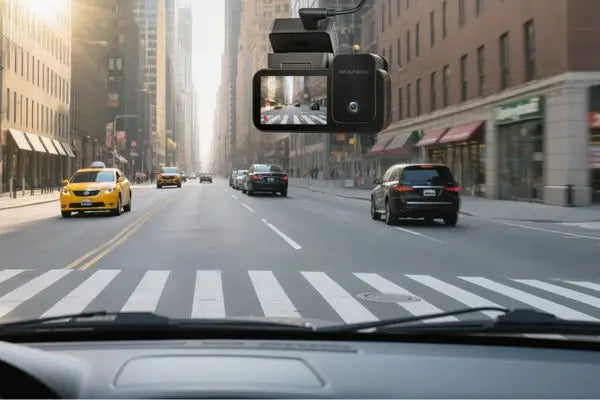
At 2am with only headlights and streetlights for illumination, a dash cam is working in genuinely difficult conditions — low ambient light, moving light sources, and high contrast between bright headlights and dark surroundings. A sensor with strong dynamic range handles this better because it can hold detail in both the bright headlight beam and the dark shoulder of the road simultaneously, rather than blowing out one or losing the other to noise. This is where license plate legibility and object identification actually live or die: a wide-angle lens with a lower-quality sensor will still capture a scene, but fine detail like plate characters or a pedestrian's outline can disappear into noise even when something is technically recorded.
Why Gain Matters as Much as Raw Sensitivity
Sensor gain is essentially an amplification setting: when there isn't enough natural light, the camera boosts the signal to produce a visible image, but that boost also amplifies noise along with the useful signal. This is why Sony's comparison data showing the IMX678 reaching equivalent brightness to the older IMX334 sensor at 48dB of gain, rather than 57dB, matters in practice: a lower gain requirement at the same brightness level generally produces a cleaner image with less visible grain, since less amplification means less amplified noise riding along with it [1]. Two dash cams can have similar advertised resolution and even similar low-light claims, but if one relies on a sensor needing significantly more gain to reach usable brightness at night, its footage will typically show more visible noise even at the same nominal light level.
Infrared and Cabin Monitoring in Low Light
Front and rear cameras rely on ambient light, headlights, and streetlights to form an image, but a cabin-facing camera monitoring the vehicle's interior at night often has none of that available. This is where infrared illumination becomes relevant: an infrared-equipped cabin camera, like the one used in the G900 TriPro Cabin Version's interior channel, can produce a visible image using near-infrared light invisible to the human eye, rather than requiring the cabin to already be lit [6]. This matters specifically for rideshare drivers or anyone wanting a usable interior recording during nighttime trips, since a cabin camera without infrared support would otherwise produce a mostly black frame once the interior lights are off.
A Practical Checklist for Evaluating Night Vision Claims
- Check whether the sensor is named specifically (e.g., IMX678) rather than a vague claim like "enhanced night vision" with no sensor reference.
- Look for the STARVIS or STARVIS 2 designation specifically, since this indicates a Sony sensor generation built for low-light performance rather than a generic sensor branded for daytime clarity.
- Consider lens aperture alongside sensor choice — a wider aperture (lower F-number) lets in more light before the sensor even processes the image.
- Recognize that resolution (4K, 2.5K) and low-light performance are related but separate specs; a higher-resolution sensor with poor low-light sensitivity can still produce grainy night footage despite a high daytime pixel count.
Frequently Asked Questions
What is the Sony STARVIS 2 sensor, and why does it matter for dash cams?
STARVIS 2 is a back-illuminated CMOS sensor architecture from Sony built for low-light imaging, offering higher sensitivity and wider dynamic range than the original STARVIS generation.
Does a higher resolution automatically mean better night vision?
No. Resolution determines detail level in good lighting, but low-light performance depends primarily on sensor sensitivity and dynamic range, which are separate specifications.
What sensor does the WOLFBOX G900 Pro use?
The G900 Pro's front camera uses the Sony STARVIS 2 IMX678 sensor.
How many cameras does the G900 TriPro Cabin Version record from simultaneously?
Three: a front camera with the IMX678 sensor, a rear camera with an OmniVision OS04J10 sensor, and an infrared-equipped cabin camera.
Why does dynamic range matter specifically for nighttime driving footage?
Dynamic range determines whether a camera can hold detail in both bright areas, like oncoming headlights, and dark areas, like an unlit road shoulder, in the same frame, rather than losing detail to overexposure or noise in one part of the scene.
References
[1] IMX678-AAQR1 Product Flyer, Sony Semiconductor Solutions — https://www.sony-semicon.com/files/62/pdf/p-12_IMX678-AAQR1_Flyer.pdf
[2] Security Camera Image Sensor Technology STARVIS/STARVIS 2, Sony Semiconductor Solutions — https://www.sony-semicon.com/en/technology/security/index.html
[3] Vadzo Imaging Explains Sony STARVIS 2 Rolling Shutter Architecture — https://www.newswire.com/news/vadzo-imaging-explains-sony-starvis-2-rolling-shutter-architecture-for-22776500
[4] WOLFBOX G900Pro 12MP WiFi Touch Screen Rear View Mirror Dash Cam, Official Product Page — https://wolfbox.com/products/wolfbox-2024-g900-pro-wifi-touch-screen-parking-monitoring-dash-cam-smart-mirror-with-starvis-678-sensor
[5] WOLFBOX G900 PRO Mirror Dash Cam, Amazon listing — https://www.amazon.com/WOLFBOX-G900-PRO-Included-Recording/dp/B0DD78Y3L5
[6] WOLFBOX G900 TriPro Cabin Version Official Product Page — https://wolfbox.com/products/wolfbox-g900tripro-cabin-version-3-channel-dash-camera
[7] Product Info on Wolfbox G900 TriPro Bumper Version, r/dashcams — https://www.reddit.com/r/dashcams/comments/1jwnbh5/product_info_on_wolfbox_g900_tripro_bumper_version/
[8] Wolfbox G900 Pro unboxing and first impressions, dashcamtalk forum — https://dashcamtalk.com/forum/threads/wolfbox-g900-pro-unboxing-first-impressions-sony-starvis-2-imx678-starvis-imx335-gps-5ghz-

Leave a comment
All comments are moderated before being published.
This site is protected by hCaptcha and the hCaptcha Privacy Policy and Terms of Service apply.