







You've parked the car for three hours on a July afternoon in Phoenix only to find your dash cam dead. The screen is blank, the mount seems loose, and earlier footage appears to be gone. Even so, it isn't the worst-case scenario. It's more like a pattern that shows up on dashcam forums during summer.
Nonetheless, the root cause is almost always the same. And that would be the wrong internal power source baking in a car that turned into an oven. A heat-resistant dash cam, featuring a supercapacitor instead of a Li-ion battery, determines whether a cam keeps running through summer after summer or fails quietly.
That choice is one of the most important factors for drivers in the Sun Belt. More specifically, it's crucial for driving Phoenix, Houston, and/or Tampa. This guide explains how heat destroys dash cams, what makes a cam survive extreme heat, and what is the best dash cam for extreme heat.
Why Does Summer Heat Destroy Most Dash Cams?
The interior of a closed car on a hot summer day exceeds the safe operating range of most consumer electronics. A dash cam for high heat must survive those conditions continuously.
Most standard cams can't do it. The problem isn't heat in isolation alone. Repeated thermal cycling puts further stress. By summer's end, dash cams have visibly swollen batteries, corrupted storage, or stop powering on.
What Happens Inside a Lithium-Ion Dash Cam in Extreme Heat?
Lithium-ion batteries store energy through chemical reactions. Heat accelerates those reactions beyond the battery's management system's ability to handle. Permanent capacity loss begins above 130°F (55°C).
A windshield-mounted cam in direct summer sun reaches above 140–158°F (60–70°C). The battery pouch begins to expand. Swelling puts physical pressure on the housing. Documented cases revealed that swollen cells have permanently deformed casings, caused leaks, or created fire risks.
Many dash cams include thermal protection circuits to force a shutdown. Though it's better than a swollen battery, the cam stops recording as soon as the car gets hot. Parking on a summer afternoon may shut off the cam within thirty minutes. Overnight parking mode may never restart reliably again.
Why Supercapacitors Handle Heat Where Batteries Can't?
A supercapacitor stores energy electrostatically rather than through a chemical reaction. No destabilizing reaction means no swelling, leakage, or thermal runaway at higher temperatures.
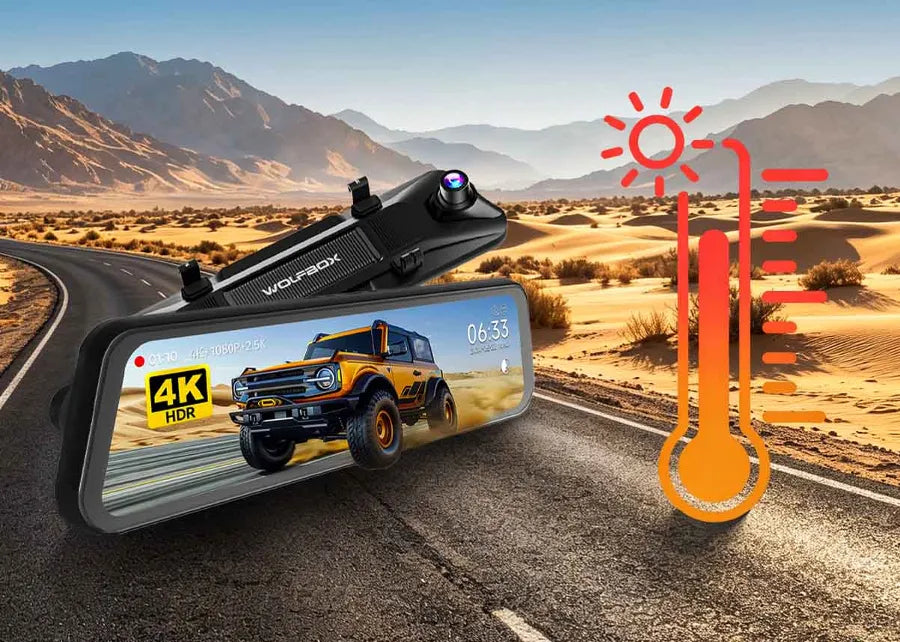
Wolfbox's entire mirror dash cam lineup uses a supercapacitor power design. The rated operating range is -4°F to 158°F (-20°C to 70°C) to cover the full temperature window for the hottest US climates.
A supercapacitor holds far less charge than a Li-ion cell. So, it can't power the cam for more than a few seconds. Still, it's not exactly a limitation for a mounted dash cam that's always plugged in.

What Makes a Dash Cam the Best for Arizona and Desert Heat Specifically?
The best dash cam for Arizona heat needs more than just a supercapacitor. Arizona summers combine extreme ambient temperatures, intense direct sunlight, low humidity, and long parking windows.
Phoenix averages 110°F+ days every July. Las Vegas, Tucson, and Palm Springs follow closely. A dash cam in those cities faces thermal conditions that are categorically different from most cams.
Four Factors to Determine Heat Resistance in a Dash Cam
1. Power Source: Supercapacitor remains the topmost factor. A supercapacitor-powered cam won't swell, shut down, and/or degrade over seasonal temperature cycles.
2. Operating Temperature Rating: Look for a stated upper limit of at least 158°F (70°C). Cams listing a 131°F (55°C) upper limit frequently shuts down in Arizona summer.
3. Housing and Ventilation: The cam's processor generates operational heat. A well-ventilated housing dissipates that heat without relying on active cooling.
4. Mount Type: Suction cup mounts with adhesive pads soften + lose grip above 140°F. Adhesive mounts with proper VHB tape maintain holding at higher temperatures.
All four factors matter while you go shopping. A cam with a supercapacitor but a softening suction cup mount can still fail. Or, a camera with a good mount but a lithium battery can still shut down.
Best Dash Cam for Texas Heat: What's Different About Humid Hot Climates?
Texas heat is different from Arizona heat in terms of humidity. Houston, Dallas, San Antonio, and the Gulf Coast regularly hit 95–105°F with humidity above 70%. High moisture content in the air accelerates corrosion on circuit boards and connector pins.
The best dash cam for Texas heat needs the same core specs. Humidity resistance still adds an extra layer of value. Fully sealed Wolfbox G900-series limits condensation risk. The 12-inch mirror housing also prevents the assembly from direct sunlight.
Best Dash Cam for Florida Heat: UV, Humidity, and Daily Summer Storms
The best dash cam for Florida heat faces UV exposure, which accelerates degradation. Daily afternoon thunderstorms create rapid temperature swings, and parking in direct sun seems unavoidable.
A camera housing that's not UV-stabilized discolors and becomes brittle in two seasons. A suction cup mount also fails at the adhesion point when the windshield heats rapidly after a cool storm.
How to Protect Your Dash Cam from Heat?
Even the best dash cam for heat benefits from smart installation. A supercapacitor camera can handle peak summer temperatures. However, reducing the peak temperature extends component life and keeps the processor at optimal speed.
Three habits make the biggest difference: using a windshield sunshade, parking position, and cable management. Those maintenance habits extend the working life of electronic devices like a dash cam, a radar detector, or a garage door opener.
Use a Reflective Windshield Sunshade
It's the single most effective step for reducing heat. A good sunshade lowers interior temperatures by 30–40°F. Thus, a supercapacitor camera remains below the upper limit even in Phoenix summer.
Park in Shade Whenever Possible
Even partial shade (from a tree or a building) noticeably reduces the dashboard surface temperature. On a 110°F day, shade can mean the difference between 130°F and 165°F at the windshield.
Hardwire Instead of Using the Cigarette Lighter
Hardwiring delivers cleaner, more stable power while enabling parking mode to function properly. It also eliminates micro-vibrations in plug-in power connectors, which can loosen connections over time.
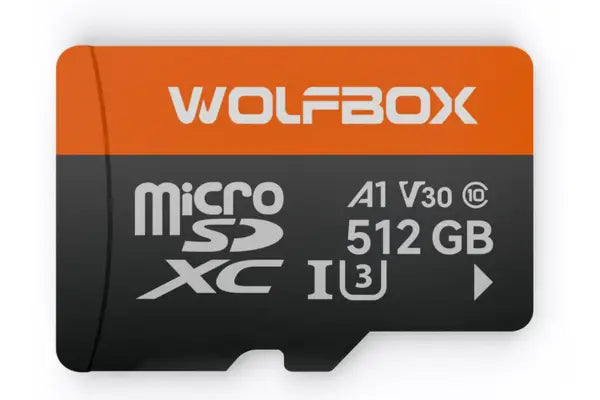
Use a High-Endurance SD Card
Heat accelerates write cycle wear on standard SD cards. A high-endurance card rated for continuous recording holds up better under thermal stress. Replace the card annually, regardless of climate.
Position the Cam Behind the Rearview Mirror
The mirror visor blocks some direct UV exposure. The mirror form factor in Wolfbox places the electronics partially behind the OEM mirror. And it naturally shields the components from direct sun angles.
Which Wolfbox Models Are the Best Dash Cams for Summer Heat?
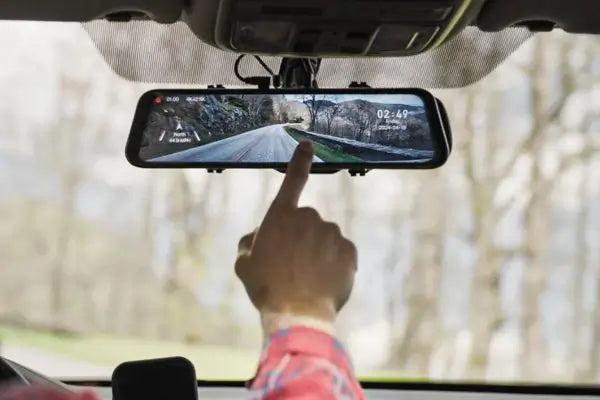
Every Wolfbox mirror dash cam features a supercapacitor with an operating temperature range of -4°F to 158°F. The differences between models come down to channel count, sensor quality, and overall coverage. Three models stand out for drivers in hot climates: the G900 Pro, and the G900 Tripro (Bumper Version and Cabin Version), and G850Pro.
Wolfbox G900Pro: Premium 4K Heat Resistance with Sony STARVIS 2
The G900Pro marks the most well-featured two-channel mirror dash cam by Wolfbox. It upgrades the front camera to a Sony STARVIS 2 IMX678 sensor. The 8MP, 1/1.8″ sensor sets the benchmark for high-detail, low-light recording.
- Sony STARVIS 2 IMX678 front sensor: 4K@30fps with exceptional low-light detail and HDR performance.
- 2.5K rear camera with WDR for clear rear recording in glare-heavy summer driving conditions.
- 5.8GHz Wi-Fi for fast footage transfer; no more waiting for large 4K clips to move to your phone.
- Intuitive voice control for hands-free operation without touching the screen while driving.
- 128GB card included – enough for full-day recording with the loop running at 4K+2.5K quality.
- GPS logging records route and speed embedded in every clip – useful for insurance documentation.
The G900 Pro is the best dash cam for Arizona heat for drivers who want the highest image quality in a proven heat-safe design.
That combination of heat-safe design and premium imaging has drawn coverage from technology media. Digital Trends (February 2025) described the G900Pro as "one of the most feature-rich dash cams on the market," specifically highlighting its Sony STARVIS 2 sensor, HDR 3D DNR night vision, and 5.8GHz Wi-Fi as the capabilities that set it apart from competing models at a comparable price point.

Wolfbox G900 Tripro: Three-Channel Coverage Built for Summer Road Trips
The G900 Tripro records front (4K), rear (2.5K), and either interior cabin (1080P) or a low-angle bumper view simultaneously. The Cabin Version adds a 1080P interior cam to document what's happening inside; the Bumper Version adds a low-angle front cam for ground-level obstacle visibility.
- Three-channel simultaneous recording: 4K front + 2.5K rear + 1080P inside (or bumper-angle view).
- Sony STARVIS 2 IMX678 front sensor with the same performance profile as the G900 Pro.
- Supercapacitor power rated to 158°F – safe in the same Phoenix and Houston summer conditions.
- 5.8GHz Wi-Fi and voice control for fast file access and hands-free operation.
- 256GB card included – more storage for the higher total bitrate of three simultaneous channels.
- Available in Cabin Version (rideshare/family) and Bumper Version (off-road/truck).
For summer road trips where you want complete coverage, the G900 Tripro is the most comprehensive Wolfbox answer for the best dash cam for summer heat.
That three-channel scope drew industry attention at launch. Automotive Interiors World (March 2025) reported the G900 TriPro as the "first three-channel touchscreen rearview mirror dashcam with a bumper camera," noting that the system "enables drivers to maintain 360° awareness of their surroundings, both inside and outside the car"—making it equally capable as a summer commuter cam and a road-trip documentation platform.


Wolfbox G850Pro: Smart Heat Resistance with ADAS and BSD
The G850Pro is Wolfbox's most feature-rich mid-range two-channel mirror dash cam, combining detailed front recording with a complete driver-assistance suite. Built with a supercapacitor power system instead of a traditional battery, it delivers proven heat resistance in high-temperature environments without the swelling and failure risks that plague battery-powered cameras.
- 3840 × 2160 front camera at 30fps and 1080P rear camera at 25fps, both with HDR for balanced exposure in harsh midday glare and low-light driving conditions.
- 5-zone ADAS with collision avoidance warnings — lane departure, forward collision, rear collision, side collision, and pedestrian alerts.
- Smart BSD algorithm monitors blind spots and issues real-time lane-change warnings to help prevent side-impact accidents.
- 12 intuitive voice commands for hands-free control — lock footage, take photos, or switch views without taking your hands off the wheel.
- 5.8GHz high-speed Wi-Fi for fast video downloads and easy footage access via the Wolfbox app.
- 64GB card (expandable up to 256GB) with loop recording for continuous, gap-free coverage, plus GPS logging for embedded route and speed data.
The G850 Pro is the best dash cam for Arizona heat for drivers who want ADAS safety features and reliable high-resolution recording in a heat-durable supercapacitor design.
That blend of ADAS intelligence and heat-safe hardware holds up under independent evaluation. DiscoverCameras (June 2026) tested the G850 PRO alongside competing models and rated it best for "Drivers who prioritize safety and high-quality recording," noting that its wide-angle lenses "minimize blind spots and maximize your field of view"—a practical benefit that pairs directly with the supercapacitor reliability that makes hot-climate recording possible.

Conclusion
Most drivers looking for a dash cam with a heat-resistant design focus on resolution and price. The spec that actually determines whether the cam survives remains buried at the bottom. Specifically, the power source is a supercapacitor or a lithium-ion battery. It separates cams that can keep recording through Arizona summers from swelling, shutting down, and failing.
Wolfbox G900-series mirror dash cams handle summer conditions in Phoenix, Houston, Tampa, and every hot-climate city well. Whether it's the best dash cam for Arizona heat, the best dash cam for Texas heat, or the best dash cam for Florida heat, the G900Pro, and G900Tripro and G850Pro from the Wolfbox are ready to deliver.
Frequently Asked Questions (FAQs)
Can a dash cam catch fire in a hot car?
A lithium-ion dash cam in extreme heat carries risks of battery swelling or electrolyte leakage. Severe but rare cases initiate thermal runaway. There are no documented cases of catching fire or emitting burning smoke.
Should I remove my dash cam when parked in the summer?
It sounds like a reasonable precaution for a lithium-ion dash cam without a sunshade. Such steps aren't necessary with a heat-resistant dash cam featuring a supercapacitor rated to 158°F. Still, use a sunshade when you can.
Does heat affect the quality of dash cam footage?
Extreme heat can cause frame drop, color shift, or processing slowdowns. Cams with lower thermal operating ranges remain the most vulnerable. It's separate from battery failure as the processor throttles under thermal load.
Do suction cup mounts fail in heat?
Yes. Standard 3M VHB adhesive pads and suction cups lose holding strength above 140°F. A cam mounted with a suction cup on a Phoenix windshield in August will likely fall onto the dashboard before October.



Leave a comment
All comments are moderated before being published.
This site is protected by hCaptcha and the hCaptcha Privacy Policy and Terms of Service apply.