




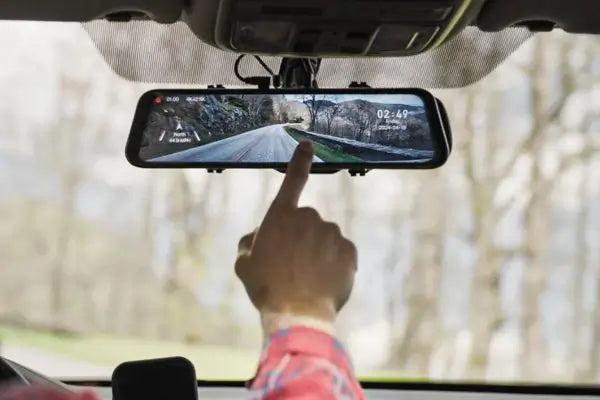
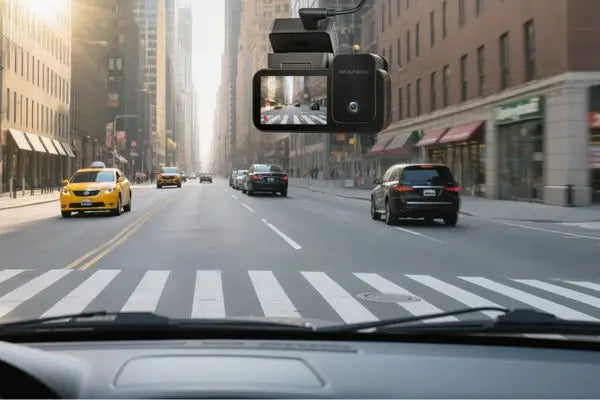


Pickup trucks have a visibility problem that most cars don't face. It could be a tall bed, a tailgate, and sometimes a camper shell or trailer sitting directly in the driver's rearview line. A mirror dash cam for trucks can solve those issues right away.
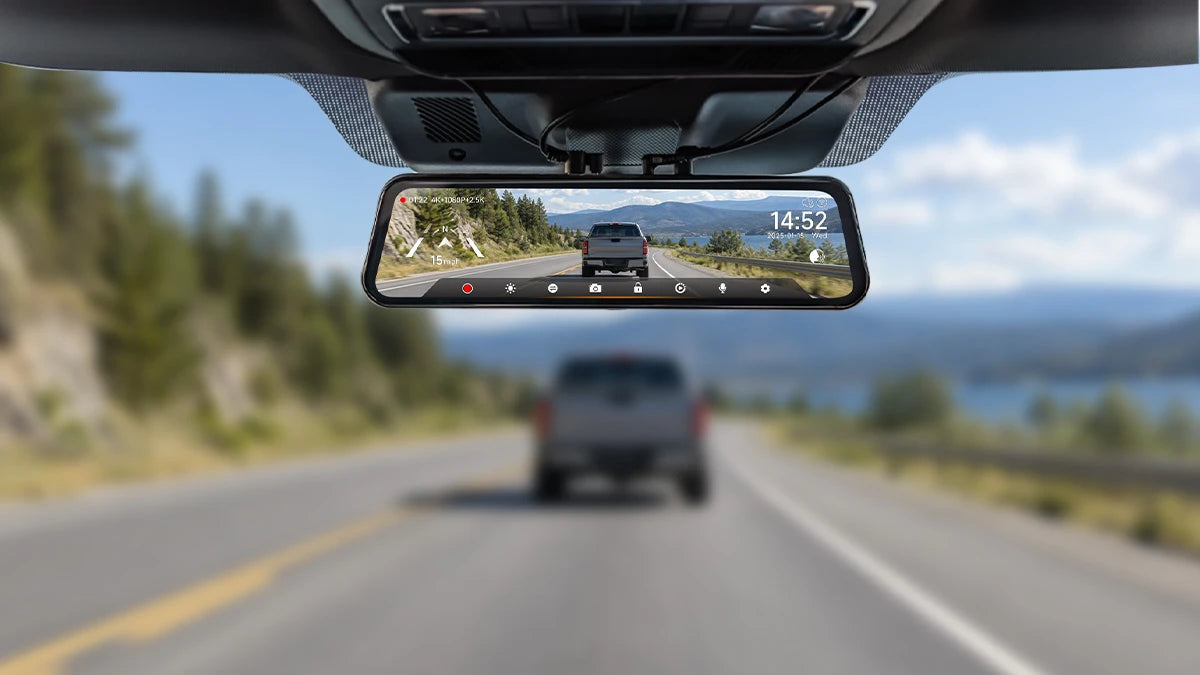
It replaces the factory mirror with a live camera feed instead of a reflection that's half-blocked before you back out of the driveway.
This guide covers why that matters for pickups and what separates the best truck mirror dash cam 2026 from a flashy option. We'll discuss how the installation differs depending on whether you're running a bare bed, a camper shell, or towing a trailer.
Table of Contents
Why Choose a Mirror Dash Cam for a Truck?
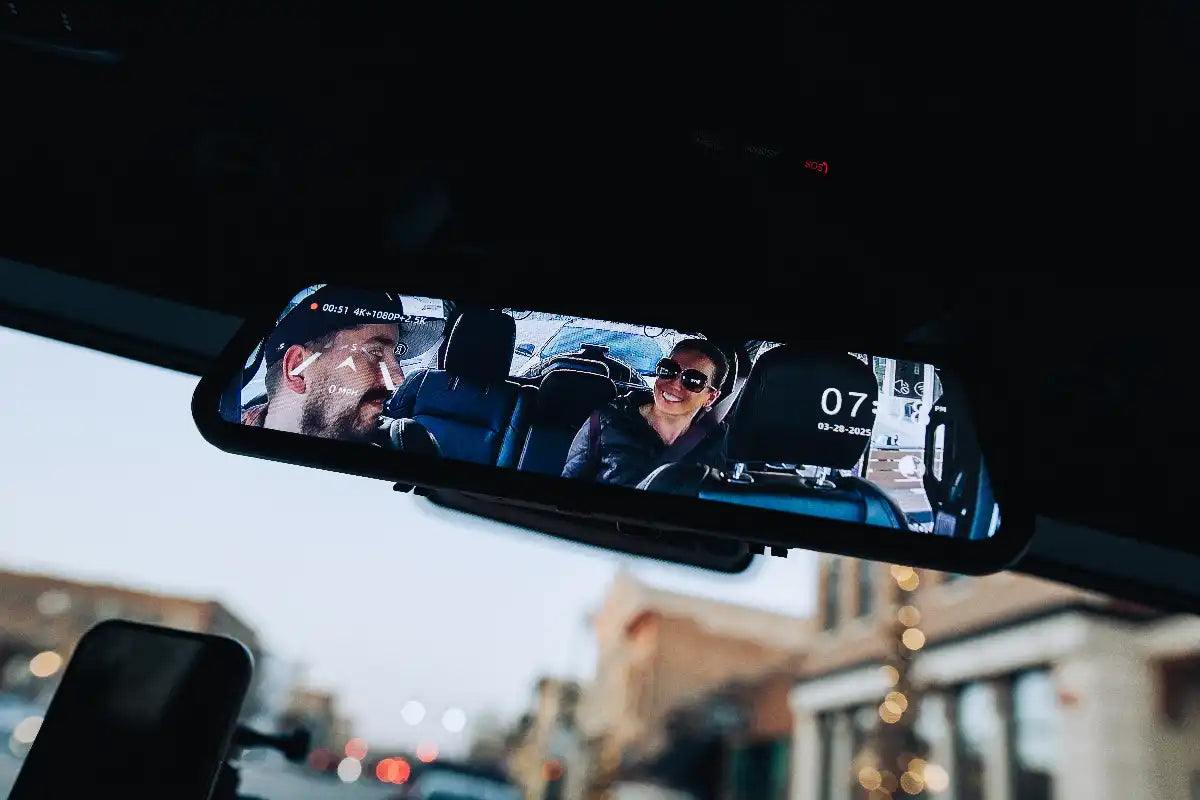
A mirror dash cam gives you a continuous, unobstructed, and wide rear view where a truck's factory mirror struggles the most. It also records front-and-rear footage the whole time.
Pickup trucks are disproportionately affected by poor rear visibility. A federal study measured rear blind zones across passenger vehicles. It found that direct-view blind zones were consistently larger for pickup trucks than for any other vehicle class tested. [1]
The gap only grows once a bed cover, tailgate net, or tall cargo blocks the factory mirror. A mirror dash cam with a live camera feed restores a clear rear view whether your truck is empty or loaded.
Continuous Rear Viewing and Reversing Assistance
The mirror seems useful only when the bed is empty. Meanwhile, a rear-facing camera feeds the mirror screen constantly. Most models automatically overlay reversing guidelines once the truck shifts into reverse.
That's a noteworthy upgrade for many less-experienced truck drivers. You won't have to glance at a mirror that's half-blocked by a tonneau cover or a load of gear stacked above the bed rails. [2]
Multi-Angle Recording
A mirror dash cam can record from multiple camera angles, giving you a broader view of the road and the area around your truck. Depending on the model, the system may combine front, rear, cabin, or bumper cameras to capture different areas at the same time.
For pickup trucks, additional camera views can be useful when the bed, tailgate, or vehicle dimensions create areas that are difficult to monitor from the driver's seat. A dedicated low-angle bumper camera, for example, can provide a closer view of curbs, rocks, ditches, and other low obstacles, while a rear camera helps monitor traffic and the area behind the truck.
Having footage from multiple angles can also provide more complete context when reviewing an incident, since a single forward-facing camera may not capture everything happening around the vehicle.
A Cleaner Dashboard and Windshield
The camera hardware lives in the mirror housing instead of being stuck to the windshield. So, a mirror dash cam keeps the dash and glass less cluttered than a separate camera and mount would.
That may sound minor to many. However, it matters for a work truck where the dash is already cluttered. You may have a mounted phone, a radio, or aftermarket gauges there.
Mirror Dash Cam vs. Factory Backup Camera and Standard Dash Cam
Each of the three options (mirror dash cam, factory backup camera, and standard dash cam) covers a different piece. Still, only a mirror dash cam covers almost all features at once.
Federal rules require a factory backup camera to show only a defined zone directly behind the vehicle while reversing. [4] Meanwhile, a standard windshield dash cam records continuously but skips rear coverage entirely on most single-channel models.
A mirror dash cam combines continuous rear viewing with continuous front-and-rear recording in one unit. Federal backup camera rules require a rear-view display only while the vehicle is in reverse.
It must cover a defined zone directly behind the bumper, which is what a mirror dash cam is built for. [4] A standard dash cam usually records only the road ahead, unless you buy a dual-channel model. Even then, it isn't designed to double as your live rearview mirror.
A mirror dash cam's advantage is combining both jobs. You get continuous live rear view and continuous recording into the mirror you're already looking at dozens of times per trip.
Summary Comparison: Mirror Dash Cam vs Factory Backup Camera vs Standard Dash Cam
| Feature | Factory Backup Camera | Standard Dash Cam | Mirror Dash Cam |
|---|---|---|---|
| Live rear view | Only while reversing | Not included | Continuous (all the time) |
| Continuous recording | No | Front only | Front and rear |
| Coverage zone | Fixed zone behind bumper | Forward road only | Full rear plus forward road |
| Reversing guidelines | Yes (while reversing) | No | Yes (overlaid automatically) |
| Dashboard clutter | None (factory installed) | Adds a windshield mount | Replaces existing mirror |
Best Truck Mirror Dash Cam 2026: What Should You Look For?
The right pick depends on your truck's exact dimensions, install conditions, and daily driving comfort. Relying solely on the resolution number on the box can barely get you a suitable purchase.
Chasing the highest resolution alone misses most of what determines whether a mirror dash cam works well on a specific truck.
Rear-Camera Placement and Image Quality
Rear resolution matters, but so do nighttime detail, field of view, and HDR performance for handling headlight glare. Also, confirm whether the rear camera is rated for interior mounting behind glass.
Check if the chosen unit is built for true exterior mounting on a tailgate or bumper. Those are different products with different weatherproofing needs.
Cable Length and Vehicle Compatibility
Measure the complete routing path across the cab, bed, tailgate, camper shell, or trailer connection point. WOLFBOX specifically recommends a 33-foot extension for crew-cab, long-bed pickups. [5]
Pay attention before buying a camera or an extension cable. The included cable often fails to reach a tailgate or rear-bumper mounting point. For larger rigs like box trucks and RVs, get a 50-foot cable.
Exterior Durability
An externally mounted rear camera needs verified water resistance, sealed connectors, a realistic temperature range, and vibration tolerance. Unlike an interior/cabin camera, the dash cam will encounter road salt, mud, and repeated car washes.
WOLFBOX rates its truck-oriented rear cameras and connectors to IP67 standards specifically. They hold up well against pressure washing and wet, muddy driving conditions. [5]
Display Comfort and OEM Compatibility
Check for daylight reflections and comfortable nighttime brightness. Don't forget minimal image distortion, along with the mirror dimensions that fit your factory mount. [6]
Also, confirm whether the mounting bracket doesn't interfere with factory mirror controls. It shouldn't interfere with auto-dimming sensors or toll transponders in the stock mirror housing either.
GPS and Parking Protection
The following four features sound similar but perform different tasks. Understand which ones you're getting –
- GPS logs your route, speed, and location alongside recorded footage, useful for insurance claims.
- Reverse-trigger wiring connects to your reverse light. So, parking guidelines appear automatically on the mirror screen when you shift into reverse.
- Impact detection (G-sensor) locks a video clip automatically the moment it senses a sudden collision. Loop recording can't overwrite it. [6]
- Hardwired parking recording keeps the camera monitoring your truck after the engine's off. It requires a separate hardwire kit connected to a fuse the ignition doesn't control directly.
How to Install a Mirror Dash Cam on Different Truck Setups
Installation changes noticeably depending on whether you're running a bare bed, a camper shell, or towing a trailer. Plan your route before you start drilling or routing cable.
You may choose safe cable routing or a secure mount. No matter the setup, properly calibrating the reversing guidelines matters more than rushing the installation. [7]
Standard Pickup Without a Camper Shell
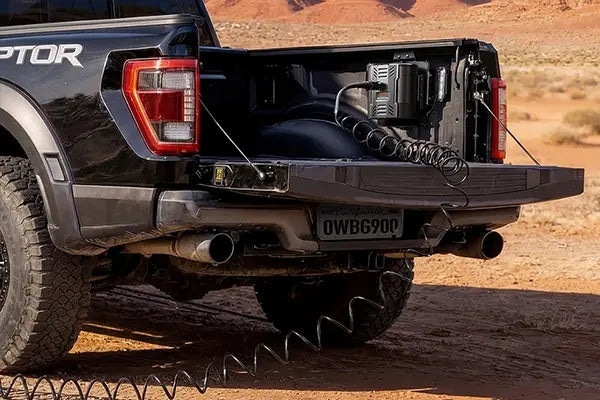
For a bare-bed pickup, choose between mounting the rear camera inside the upper rear window or externally on the tailgate or license plate area. An upper-window mount keeps wiring simpler and protects the camera.
Meanwhile, an exterior tailgate or license-plate mount gives a lower, wider view. Such a view often feels better suited for hitching up a trailer or judging distance to a curb.
Pickup with a Camper Shell or Obstructed Rear Window
A camper shell or heavily tinted, obstructed rear window can block a clean view from inside the cab. Move the rear camera to the shell's own rear glass or to an exterior mounting point at the true back of the vehicle.
Mounting behind an obstructed window defeats the purpose of the upgrade. So that's one case where an exterior, weatherproof camera is worth the extra installation effort.
Pickup Towing a Trailer
For regular towing, plan the rear camera's placement on the tow vehicle. Most mirror dash cam systems aren't designed to mount permanently on the trailer or caravan.
You'll need a user modification outside the manufacturer's setup. Route any extension cable through protected underbody paths and secure it with zip ties. Keep them away from heat sources and moving parts.
Leave enough slack at the hitch for steering and articulation without strain. A weather-sealed quick-disconnect connector at the hitch point keeps the wiring protected and easy to unplug. [5]
Which WOLFBOX Mirror Dash Cam Fits Different Truck Needs?
The G900 Pro and the G900TriPro Bumper Version are two pioneering mirror dash cam options in the WOLFBOX lineup. The former delivers a straightforward front-and-rear setup, while the latter adds an exterior view. [8] [9]
The right choice depends on whether you're okay with a basic front-and-rear setup or need an additional low-angle exterior view. Both use the same core mirror-camera concept, but they target slightly different truck use cases.
WOLFBOX G900 Pro
The G900 Pro is a front-and-rear mirror dash cam built around a STARVIS 2 IMX678 sensor. It features a 12-inch touchscreen display, GPS, and 5.8 GHz WiFi. [8]
You can enable parking monitoring after pairing the unit with a hardwire kit. The built-in G-sensor locks footage automatically the moment it detects a sudden impact.
Its reverse-trigger wiring displays adjustable parking guidelines when you shift into reverse. You can cover the core use cases on a standard pickup without a camper shell or towing.

WOLFBOX G900TriPro Bumper Version
The G900TriPro Bumper Version adds a third, ultra-low-angle bumper camera to the same front-and-rear mirror setup. The front camera uses an 8MP STARVIS IMX678 sensor, delivering 4K front recording, while the rear camera provides 2.5K resolution and the dedicated bumper camera provides a 1080P low-angle view. [9]
That low bumper angle can spot curbs, low obstacles, or trailer hitches that a standard rear camera can't see. Always verify your specific cable reach, mirror mounting fit, and towing visibility needs against your truck's actual dimensions.

Conclusion
There's no universal "best" mirror dash cam for every truck. The right system depends on your specific vehicle configuration. Rear-window visibility, bed configuration, overall length, towing frequency, desired camera angle, and installation conditions determine the dash cam for your truck.
A standard pickup without a shell or trailer works well with a front-and-rear system like the G900 Pro. [8] Meanwhile, trucks that need an additional low-angle view for curbs or hitching benefit more from a three-camera setup like the G900TriPro Bumper Version. [9]
Measure your truck dimensions first to confirm the possible cable reach and mounting fit. Then, match the system to how you use the truck rather than chasing the highest specification numbers.
Frequently Asked Questions (FAQs)
Is a mirror dash cam useful for a pickup truck?
Yes. Pickup trucks have measurably larger rear blind zones than most other vehicles. A mirror dash cam for truck use restores a clear, continuous rear view that a factory mirror alone can't provide once the bed is loaded.
Can a mirror dash cam show the road behind a trailer?
Not directly in most cases. Standard mirror dash cam systems are built to mount on the tow vehicle, not the trailer. There's no factory-supported way to route the cable across the hitch connection to the trailer's rear.
Where should the rear camera be mounted on a truck?
It depends on your setup. An inside mount in the upper rear window works for a bare-bed pickup with a clear view. Meanwhile, a camper shell, heavily obstructed window, or towing setup calls for an exterior mount on the shell's glass, tailgate, or license plate area.
Is an exterior rear camera safe in rain, snow, and car washes?
Only if it's rated for it. Look for a verified IP67 water-resistance rating and sealed connectors. WOLFBOX builds its truck-oriented rear cameras to that standard for repeated exposure to mud, rain, and pressure washing.
What is the best mirror dash cam for a truck in 2026?
It depends on your truck. The WOLFBOX G900 Pro covers standard front-and-rear needs well. In contrast, the G900TriPro Bumper Version's added low-angle camera makes more sense for trucks that need extra visibility around curbs or a trailer hitch.
Do I need a hardwire kit for parking monitoring on a truck mirror dash cam?
Yes. Parking monitoring needs continuous low-power draw while the ignition is off. A hardwire kit with a low-voltage cutoff connects the camera to a fuse the ignition doesn't directly control. It monitors your truck without draining the starter battery overnight.
References
[1] National Highway Traffic Safety Administration: "Direct Rear Visibility of Passenger Cars: Laser-Based Measurements" – https://www.nhtsa.gov/sites/nhtsa.gov/files/811174.pdf
[2] RWC Group: "A Beginner's Guide to Using Truck Mirrors for Maximum Safety" – https://www.rwcgroup.com/blog/a-beginners-guide-to-using-truck-mirrors-for-maximum-safety--40338
[3] WOLFBOX: "Are Dash Cams Legal? Know the Laws Before You Record" – https://wolfbox.com/blogs/dash-cams/are-dash-cams-legal
[4] Federal Register: "Federal Motor Vehicle Safety Standards; Rear Visibility" – https://www.federalregister.gov/documents/2014/04/07/2014-07469/federal-motor-vehicle-safety-standards-rear-visibility
[5] WOLFBOX: "Professional Truck Dash Cam Systems" – https://wolfbox.com/collections/truck-dash-cam
[6] WOLFBOX: "Why Every Driver Needs a Mirror Dash Cam" – https://wolfbox.com/blogs/news/from-daily-commutes-to-weekend-getaways-why-every-driver-needs-a-mirror-dash-cam
[7] WOLFBOX: "Dash Cam Installation Guide: In-Depth Instructions for a Seamless Setup" – https://wolfbox.com/blogs/news/dash-cam-installation-guide-in-depth-instructions-for-a-seamless-setup
[8] WOLFBOX: "G900 Pro WiFi Touch Screen Parking Monitoring Dash Cam Smart Mirror with STARVIS 678 Sensor" – https://wolfbox.com/products/wolfbox-2024-g900-pro-wifi-touch-screen-parking-monitoring-dash-cam-smart-mirror-with-starvis-678-sensor
[9] WOLFBOX: "G900TriPro Bumper Version 3-Channel Rearview Mirror Camera" – https://wolfbox.com/products/wolfbox-g900tripro-bumper-version-3-channel-rearview-mirror


Leave a comment
All comments are moderated before being published.
This site is protected by hCaptcha and the hCaptcha Privacy Policy and Terms of Service apply.