WOLFBOX Brands
WOLFBOX Brands


Imagine a truck dash cam built for the long haul. Picture a semi truck dash cam system with 50ft cabling, industrial waterproofing, and total blind-spot elimination. Stop settling for car gadgets. Discover professional dash cams for trucks offering complete dash cam for trucks front and rear coverage designed to protect your livelihood and your CDL.

 30 Month Warranty
 30-Day Money-Back
19 products

Driving a truck isn't just a job; it's a lifestyle that demands total focus and professional equipment. Whether you are hauling a 53-foot trailer across state lines or navigating a heavy-duty pickup through a crowded job site, the risks you face are fundamentally different from those of a passenger car driver.Your vehicle is larger, your blind spots are massive, and the "he said, she said" of an accident often leaves the truck driver carrying the blame. That is why a standard car camera simply won't cut it. You need a specialized truck dash cam system engineered to handle the unique challenges of your rig. Below, we explore why a purpose-built system is essential and what features you should look for to protect your livelihood.
Many drivers make the mistake of buying a generic "high-rated" camera, only to find it useless when it matters most. To understand why you need a specific dash cam for truck use, we need to look at the real-world struggles drivers face every day.
For professional drivers, the biggest threat isn't just the accident itself; it's the liability. Dave, an OTR driver operating a semi truck dash cam setup, knows this all too well. While driving his 18-wheeler on I-40, a sedan cut into his right-side blind spot and slammed on the brakes. Without video evidence, the police might have assumed the "big truck" bullied the small car. However, Dave’s system didn't just record the front; it captured the entire sequence.
The Lesson: Semis have massive blind spots. A standard camera only sees forward. You need a dash cam for semi trucks that acts as an undeniable witness for what happens on your sides and rear, protecting your CDL from false claims.
Trucks are physically longer and operate in harsher environments than cars. Maria, who runs a contracting crew with her Ford F-250, learned this the hard way. She purchased a standard camera, but the rear cable was only 20 feet long—barely reaching the back of her cab, let alone the tailgate. Worse, the first time she took her truck through a wash, the non-waterproof rear camera failed.
The Lesson:Dash cams for trucks require industrial-grade hardware. This means extended cables (30-50ft) to span the length of a chassis or trailer, and fully waterproof (IP67/IP69K) external cameras that can withstand rain, mud, and pressure washing.
Not all rigs are created equal. Selecting the right dash cams for trucks depends heavily on what you drive and what you haul. Here is a breakdown of features to look for based on your specific vehicle type:
If you drive a Class 8 truck or a box truck, your factory rearview mirror is essentially useless for seeing directly behind you.
If you drive a Silverado, Ram, or F-Series for work, you need versatility.
If you want a deeper breakdown of the best options and features to look for, check out our full guide on the best dash cam for pickup trucks.
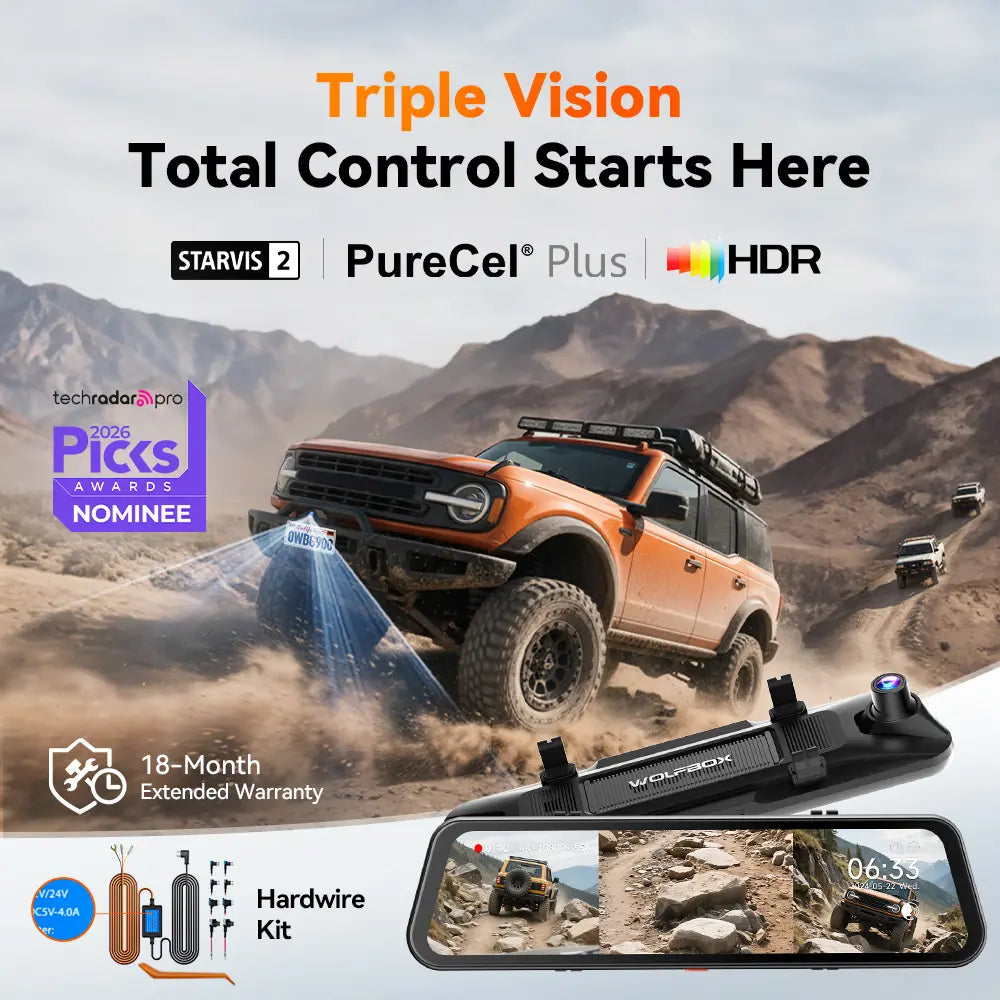
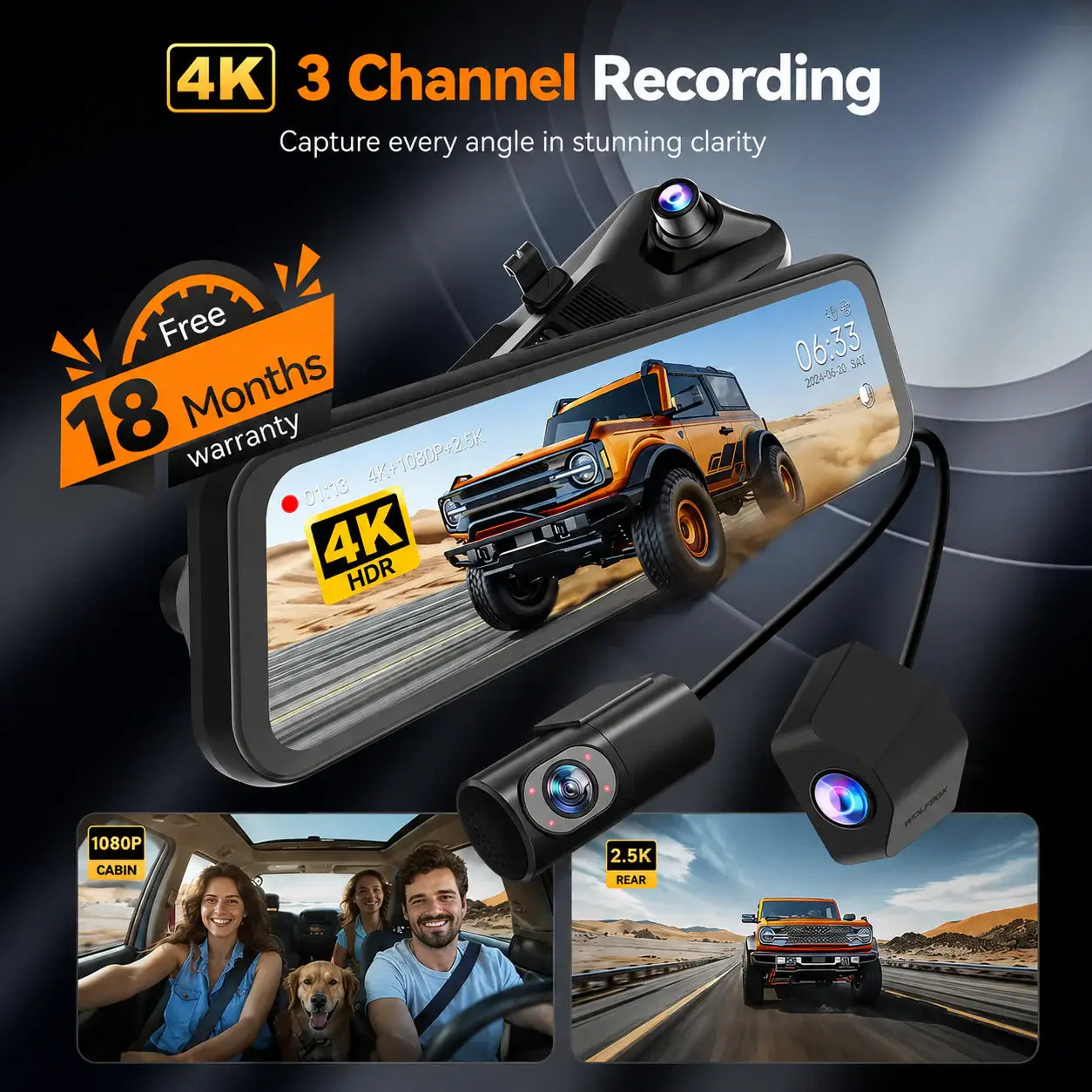
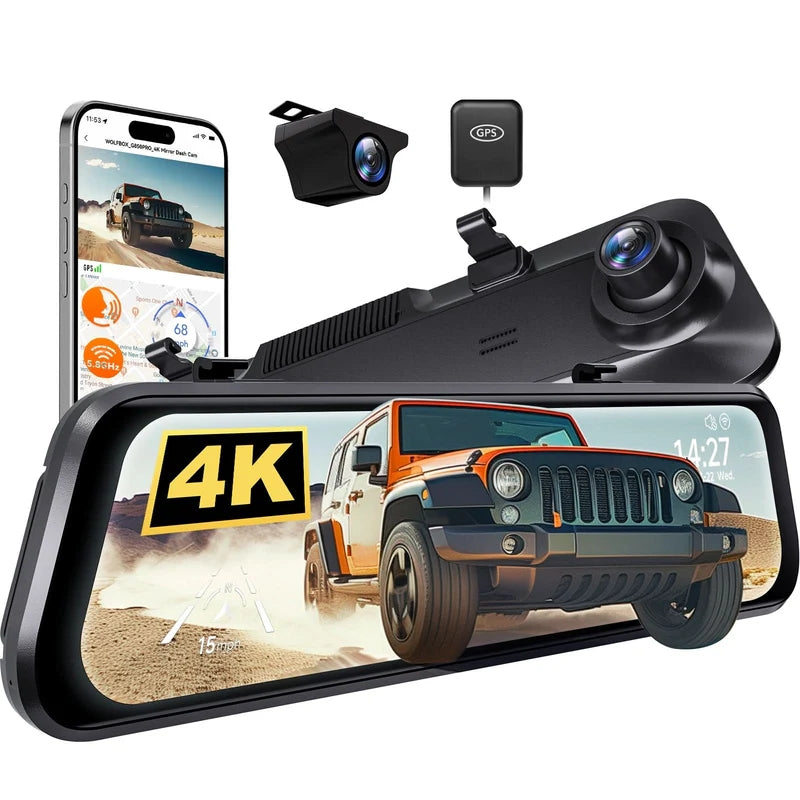
Modern dash cam for trucks systems have evolved beyond simple recording. The latest professional systems now offer 3-channel configurations that solve specific maneuvering problems.
For trucks with long hoods—like a Peterbilt 389 or a lifted pickup—the area directly in front of your bumper is a dangerous blind spot. A dedicated front bumper camera is a game-changer. Mounted low on the grille, it gives you a clear view of the ground immediately in front of your tires.
A proper dash cam for trucks front and rear setup does more than record accidents; it transforms your driving experience. With a wide-angle lens mounted high on a trailer or low on a bumper, you eliminate the blind zones that side mirrors simply cannot cover. This makes changing lanes on the highway and backing into tight loading docks significantly safer and less stressful.
For fleet managers or rideshare drivers, a third camera facing the cabin provides security. It records driver attentiveness (crucial for exoneration in accidents) and protects the vehicle when parked overnight at truck stops.
Ready to install? Installing a multi-channel system on a large rig requires some planning. For a step-by-step walkthrough on wiring and mounting, visit our [Detailed Installation Guide] page.
The WOLFBOX G900TRIPRO is the top choice, offering two specialized 3-channel solutions. Choose the Cabin Version if you need to record the driver and interior for security and liability. Choose the Bumper Version if you need a dedicated front-bumper camera to eliminate the dangerous blind spot directly in front of your hoo
Mount the waterproof camera on your license plate or trailer bumper. Unlike cars, route the cable underneath along the truck's chassis (frame rail) using zip ties to avoid heat and moving parts, then enter the cabin through a floor grommet to connect to the main unit.
It depends on your vehicle type: