How Are Dash Cams Powered? Discover the Best Options for Your Car
Your dash cam gives you peace of mind on every trip. You want to keep your camera working, so you're probably asking, how are dash cams powered? When you know the power choices, it's easier for you to pick what matches your car and your daily routine.
Quick Overview: The Main Power Pathways for Dash Cams
You might want to know about the ways to power a dash cam before you choose one for your car. Some options are fast to set up, while others give extra features that help keep your dash cam recording, even when your car is off.
Power Method
Ease of Installation
Parking Mode Support
Cable Visibility
12V Socket
Very Easy
No
High
USB Port
Very Easy
No
High
Hardwire Kit
Moderate
Yes
Low (Hidden)
OBD-II Port
Easy
Yes
Medium
External Battery
Easy
Yes
High
Dash Cams with Built-In Batteries
Easy
No
Low
Powering a Dash Cam via the 12V Cigarette Lighter Socket
Many drivers pick the 12V socket as it works with almost every car and dash cam. WOLFBOX dash cams usually come with a plug for your cigarette lighter. This choice gets your camera working as soon as you start the car, and you only need to do very little setup.
Typical Installation Steps
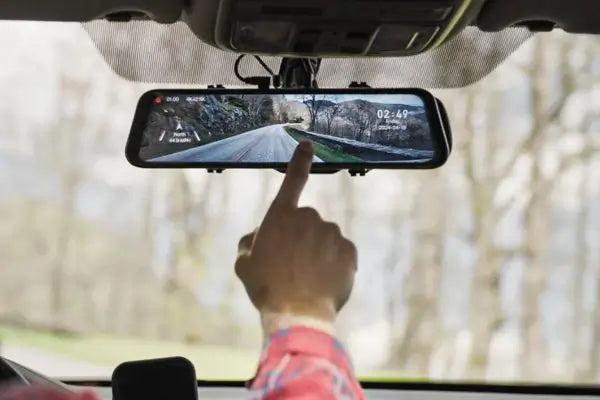
Attach the mirror dash cam to your existing rearview mirror using the provided straps, or replace your factory mirror entirely. Make sure the camera lens has a clear view of the road ahead.
Put the small end of your power cable in your dash cam. The big end is the 12V plug that fits your car's cigarette lighter.
Hide the cable by running it above the window, and down the side towards the socket. This makes sure your view stays clear, and you won't trip over any loose wires.
Plug the adapter into your car's cigarette lighter. Every time you start your engine, your dash cam will turn on and start recording.
Pros
Setup is fast and you don't need special tools.
You can unplug your dash cam any time you want.
Works with nearly any car you might drive.
Cons
The 12V slot is in use, so you can't charge other things.
Wires may look a bit messy if you don't tuck them away.
Does not support parking mode features.
Powering a Dash Cam Through USB or USB-C Ports
If your car has USB or USB-C ports, you can use them to power your dash cam. This method is often as simple as using the 12V socket, and many newer cars come with multiple USB ports for convenience. Make sure you have the correct cable for your dash cam type.
Typical Installation Steps
Mirror dash cams can be attached to your existing rearview mirror with straps or replace the mirror entirely, while mini dash cams are usually fixed to the windshield with adhesive or a suction cup. Make sure the lens has a clear view of the road.
Plug the cable into your dash cam.
Tuck the wire above the windshield and along the side, hiding it from sight. Wires are kept out of the way so they won't bother you as you drive.
Place the other end in the USB or USB-C slot in your car and start the engine. Your dash cam will come on.
Pros
Very little setup and no technical skill needed.
Your 12V socket stays free for your phone or other chargers.
Many cars already have several USB slots available.
Cons
Some dash cams do not get enough power from USB.
Some cars turn off the USB port when parked.
If you don't tuck the wire away, cables can show.
Hardwiring a Dash Cam to the Fuse Box
For a more hidden and neat look, you can connect your dash cam straight to the fuse box. Drivers who want 24-hour recording or like the camera to work even when parked often pick this power method. Your camera can record events when your car is off, when it is run by the fuse box.
Typical Installation Steps
First, you should look inside your car for the fuse box. In most cars, it is below the dashboard. Your car's manual has the location and can guide you.
You find two fuses—one always has power, one works only with the car on. Use a tester tool to find each one, so you set up your camera to work at the right times.
Your hardwire kit has wires that go to each fuse. The wires attach with fuse taps and you connect the ground wire to metal inside your car.
After connections, run the cable to your dash cam and tuck it into the inside panels. The setup is hidden, and your car looks neat.
Pros
Let you use parking mode to watch your car always.
No wires showing—it is all tucked away inside.
Keeps your car's power sockets and ports free.
Cons
The setup is tougher than the basic methods.
You must follow your car's manual and may need to check the wiring.
If installed incorrectly, it may drain your car's battery.
You might want to dive deeper into the pros and cons of these methods. Check out our full guide on hardwired vs plug-in for more details, tips, and insights to choose the best setup for your car.
Powering a Dash Cam Through the OBD-II Port
If you want a setup easier than hardwiring but still want your dash cam to record while parked, the OBD-II port can work for you. You will find this port below your steering wheel or dashboard. When you attach your dash cam to this port with a special cable, your camera can keep working, even if the car is off.
Typical Installation Steps
Find your car's OBD-II port located near your feet under the dashboard. This slot is where mechanics connect tools to check your car.
Plug the dash cam's special OBD-II adapter directly into this slot. You do not need to open any panels or use special equipment.
Connect the cable from the adapter to your dash cam, so the camera gets the steady power it needs.
Hide the wire along the top of the windshield and down the side to your camera, so the wire does not block your view.
Pros
No hard steps—most drivers can get it working by themselves.
You get parking mode with the right dash cam.
Your existing car chargers will stay open for your devices.
Cons
The cable and adapter near your feet can feel in the way.
Not every dash cam is made to get power this way.
If you use your OBD port for other reasons, it is not free for them.
You may want to compare this method with hardwiring to see which works best for parking mode and overall setup. Check out our guide on OBD-II port or hardwire for parking mode.
Using External Battery Packs or Dedicated Dash Cam Batteries
If you would rather keep your car's battery safe and have recording when your car is off, an external battery is useful. These special batteries charge up while you drive, and power your dash cam when the car is parked. You can move portable batteries to another car if you switch vehicles.
Typical Installation Steps
Before you use it, charge your external battery at home or plug it into your car so it fills up with power.
Place the battery in your car where it cannot move around, like under your seat or in your glove box. You want it to stay secure when you are driving.
Connect your dash cam's cable to the port on your new battery. The battery will give your camera power to record, even as your car sits quietly.
Charge the battery when it is low either at home or let it top up while you drive the car.
Pros
You protect your car's own battery from going flat.
Get long hours of monitoring with parking mode.
Easy to take out and put in another car if you need.
Cons
You must remember to charge the battery sometimes.
You add one more thing to your car to keep track of.
These batteries cost more than the other power cables.
Dash Cams with Built-In Batteries
Some dash cams come with built-in batteries, allowing them to record without being connected to your car's power. This can be convenient for short trips or when you don't want to deal with wiring, but there are important considerations:
Typical Installation Steps
Place the dash cam on your windshield or dashboard.
Turn on the built-in battery by pressing the power button.
Adjust the camera so the lens has a clear view of the road.
Recharge the camera as needed to maintain recording.
Pros
Works without any car wiring.
Easy to move between vehicles.
Quick setup for short-term use.
Cons
Recording time is limited.
Not suitable for full-time or parking surveillance.
Requires frequent charging for regular use.
Conclusion
By learning how are dash cams powered, you can pick the way that fits your car and your life. If you want to record while you drive and don't want to change your car, use the 12V or USB options. If you care most about parking mode or a neat setup, you may want a hardwiring kit.
WOLFBOX dash cams, like the G900 Pro, offer flexible power options, so you can choose the setup that best fits and keeps your car and camera working safely.
FAQs
Will a dash cam work if you unplug it?
If you unplug your dash cam from its power source, recording will stop right away. Only a small built-in battery keeps it running for a few moments so you do not lose your files.
How does a dash cam get power when the car is off?
To keep your dash cam working when your car is off, you need a hardwire kit, an OBD-II adapter cable, or an external battery pack. These ways give your dash cam steady energy even when parked.
Is powering a dash cam from the OBD-II port safe?
Using the OBD-II port to give your dash cam power is safe. These cables protect your car battery from draining while giving your camera what it needs for parking mode.