







A dash cam for rideshare driving isn't primarily about traffic incidents — those matter, but the more frequent protection is the interior record of what happens in your vehicle when a passenger dispute, a false accusation, or a sudden deactivation threat comes in. Here's what's worth understanding before you buy and mount one.
Why Rideshare Drivers Have Specific Needs
Unlike personal commuting, rideshare driving means a new stranger is in your car every few minutes. Lyft permits recording devices in drivers’ vehicles, while local rules can require notice or consent. [6] The complications come from interior-camera coverage, audio-recording law by state, and whether your footage is useful when you need it. A front-only dash cam without an interior view is significantly less useful for passenger disputes.
The G900TriPro Cabin addresses this directly: it adds a 1080P interior cabin camera to the standard front-and-rear setup, giving you three simultaneous views — road ahead, road behind, and the inside of the cabin — in one device.[1]
Audio Recording Laws: The State-by-State Reality
Most dash cams record audio by default. In 11 states classified as all-party or two-party consent states, recording a conversation without all parties' consent may violate state law — in some states it's a criminal misdemeanor, not just a civil matter.
| Consent Type | States (as of 2026) | Practical Guidance for Rideshare Drivers |
|---|---|---|
| All-party / two-party consent | California, Connecticut, Florida, Illinois, Maryland, Massachusetts, Montana, New Hampshire, Oregon, Pennsylvania, Washington | Post a visible notice in the vehicle ('This vehicle records audio and video') or disable audio in the camera settings. Uber/Lyft in-app disclosure helps but doesn't guarantee state compliance. |
| One-party consent (all other states) | All remaining US states including Texas, New York, Ohio, Georgia, and 35+ others | Your consent as the driver is sufficient. No passenger notification required for audio recording in your own vehicle. |
Sources: Consumer Reports Dash Cam Buying Guide[5]; Reporters Committee for Freedom of the Press Recording Guide.[4]
What Each Camera Channel Captures
For rideshare use, each channel protects against a different type of incident. [3]
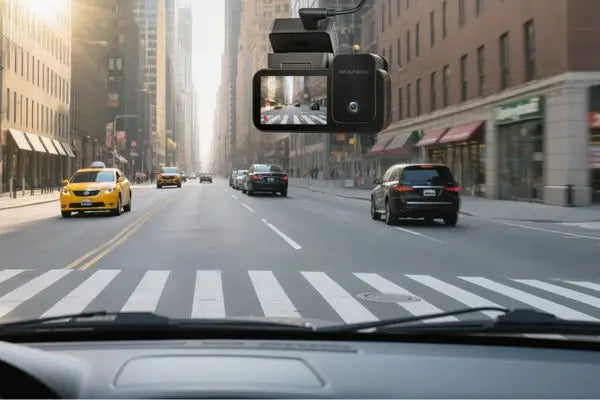
- Front channel (4K / Sony STARVIS 2 IMX678): Records the road ahead — traffic events, signal violations, other vehicle behavior. Primary evidence in forward collision disputes.
- Rear channel (2.5K bumper or rear window): Records following vehicles and the rear exterior. Covers rear-end incidents and drive-off scenarios at pickup/dropoff.
- Interior cabin channel (1080P): Records the passenger compartment. Directly relevant to fare disputes, vehicle condition allegations, verbal confrontations, or safety incidents involving a passenger. This is the channel most unique to rideshare drivers.
GPS Logging for Trip Evidence
The G900TriPro includes GPS tracking. When footage is exported, it can include GPS coordinates, speed, and route data. [1] Route playback through WOLFBOX GPS Player shows the path, timestamps, and speed from the camera’s GPS data. [2]
Parking Mode Between Shifts
If you park in lots or on urban streets between pickup shifts, parking mode can record impacts with the correct hardwire setup. Confirm the hardwire kit’s voltage cutoff and the model’s supported parking modes before use. [1][7]
Practical Setup Checklist
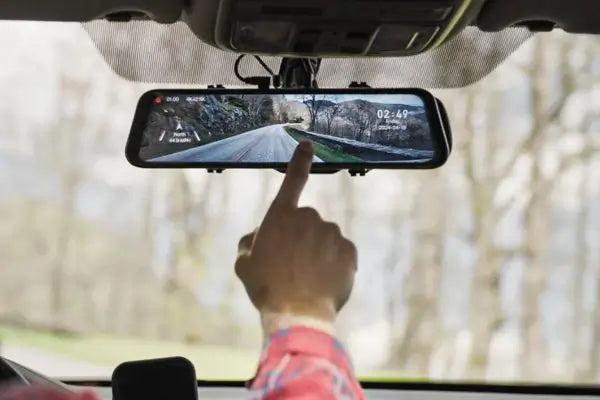
- Mount the mirror dash cam using the strap mount over your existing rearview mirror — no drilling, no adhesive.
- Angle the cabin camera to cover the full rear seat, not just one side.
- In all-party consent states: laminate and post a small notice on the rear headrests or center console: 'This vehicle records audio and video.'
- If audio feels legally uncertain for your state: disable the microphone in camera settings. Video alone is sufficient for nearly all disputes.
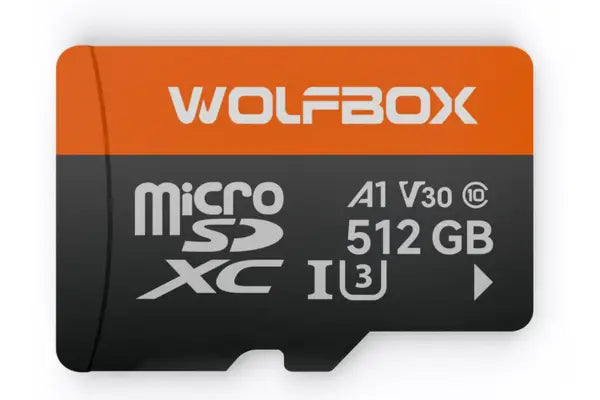
- Use a 128 GB card minimum for 3-channel recording — 64 GB fills in roughly 3–4 hours at full resolution.
- Enable GPS logging so every trip embeds location and speed data.
Frequently Asked Questions
Q: Is it legal to have a dash cam as an Uber or Lyft driver?
A: Recording-device rules vary by platform and location. Lyft permits recording devices, but local rules may require notice or consent; check the current policy and local law before recording. [6]
Q: Which states require all-party consent for audio recording in a vehicle?
A: As of 2026: California, Connecticut, Florida, Illinois, Maryland, Massachusetts, Montana, New Hampshire, Oregon, Pennsylvania, and Washington. Post a visible notice or disable audio recording in these states.
Q: Does the WOLFBOX G900TriPro have an interior camera?
A: Yes. The G900TriPro Cabin version includes a 1080P interior cabin camera as the third channel, alongside 4K front and 2.5K rear.
Q: Do I need to tell passengers about the dash cam?
A: Check the current platform policy and local recording law before recording passengers; notice or consent may be required.
Q: Does a rideshare dash cam record GPS data?
A: Yes, if it has a GPS Module. The G900TriPro and G900 Pro embed GPS coordinates, speed, and route data — accessible via WOLFBOX GPS Player for route playback.
Q: Can passengers see the dash cam footage?
A: No. Footage is stored on the camera's microSD card, accessible only to the driver unless shared or legally compelled.
Q: What SD card size does a rideshare driver need for a full shift?
A: For 3-channel recording, a 128 GB card holds approximately 6–8 hours before loop overwrite. A 256 GB card is recommended for 8–10 hour shifts.
References
[1] WOLFBOX G900TriPro Cabin Official Product Page: https://wolfbox.com/products/wolfbox-g900tripro-cabin-version-3-channel-dash-camera
[2] WOLFBOX GPS Player Help Center: https://helpcenter.wolfbox.com/articles/articles/755202285600280576
[3] WOLFBOX — 3-Channel Dash Cam: Front, Rear, and Interior Explained: https://wolfbox.com/blogs/dash-cams/3-channel-dash-cam
[4] Reporters Committee for Freedom of the Press — Recording Guide: https://www.rcfp.org/reporters-recording-guide/
[5] Consumer Reports — How to Choose a Dash Cam for Your Car: https://www.consumerreports.org/cars/dash-cams/buying-guide/
[6] Lyft — Recording Device Policy: https://help.lyft.com/hc/en-us/all/articles/115012923127
[7] WOLFBOX Hardwire Kit Installation Guide: https://wolfbox.com/blogs/news/the-ultimate-guide-to-installing-a-hardwire-kit-for-dashcam-a-step-by-step-tutorial



Leave a comment
All comments are moderated before being published.
This site is protected by hCaptcha and the hCaptcha Privacy Policy and Terms of Service apply.