







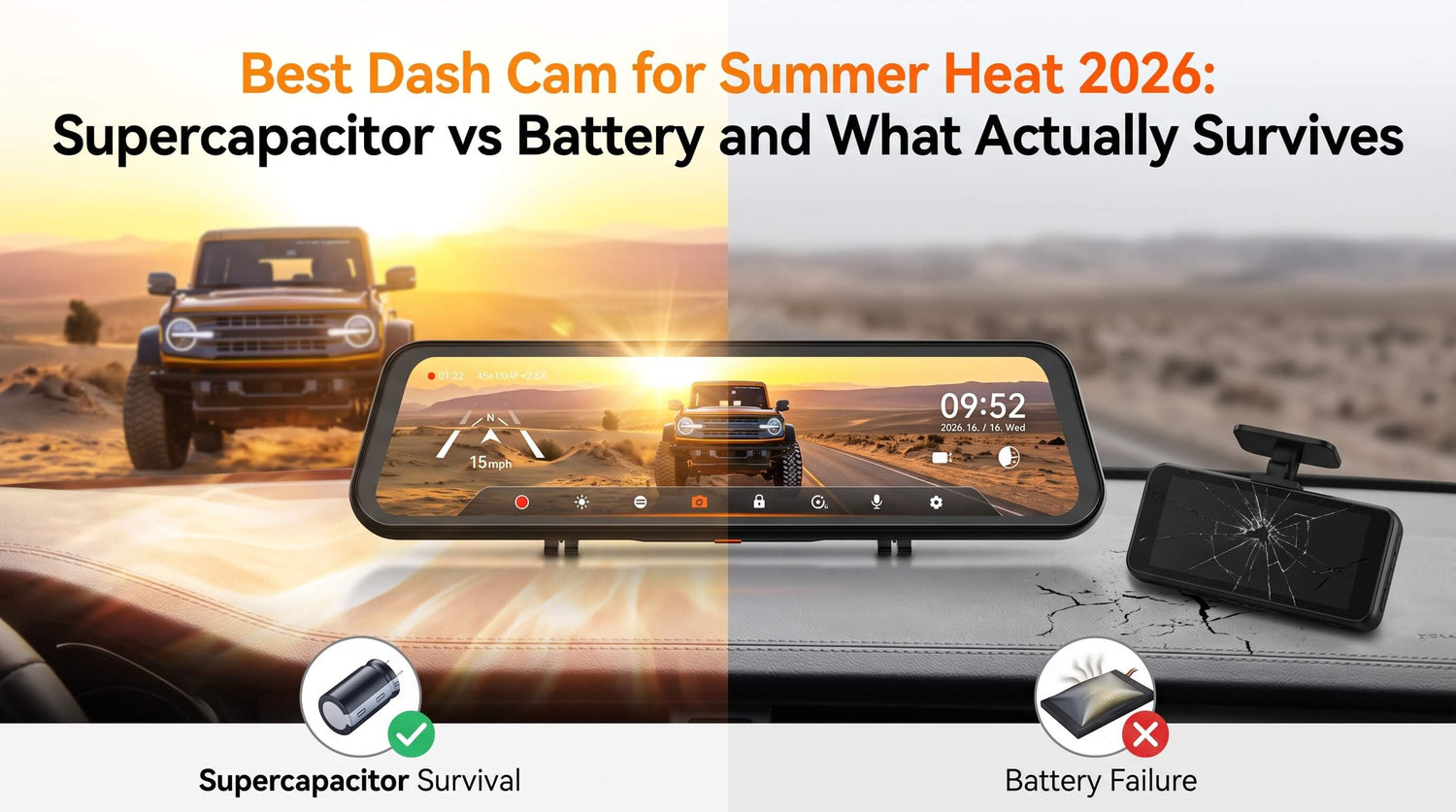
A dash cam left in a hot car is one of the more common ways to damage an otherwise functional piece of hardware — not because the heat is unusual, but because most people don't realize how hot a parked car gets. Here's the temperature data, what it means for the two main power types, and how to set up for year-round performance.
How Hot Does a Parked Car Actually Get?
A peer-reviewed parked-vehicle study measured an average sun-exposed dashboard surface temperature of 68.9°C (156°F) after a simulated shopping trip; temperatures vary by vehicle, sun exposure, and ambient conditions. [7]
Heat tolerance depends on the camera’s battery chemistry, enclosure, and manufacturer rating. Check the specific camera’s published operating range rather than applying a universal temperature threshold.
Supercapacitor vs Lithium-Ion at High Temperature
| Characteristic | Supercapacitor | Lithium-Ion Battery |
|---|---|---|
| Safe continuous operating temp | WOLFBOX G840S rated –4°F to 158°F (up to 70°C)[1] | Check the camera manufacturer’s published operating range. |
| Risk above 70°C | No meaningful degradation | Follow the device manufacturer’s safety guidance. |
| Risk above 85°C | Use only within the product’s published operating range. | Do not infer a universal threshold from a single source. |
| Estimated cycle life | No universal cycle-life figure; use the product specification. | Varies by battery chemistry and use. |
| Estimated device lifespan | No universal device-lifespan figure; use the product specification. | Varies by product and operating conditions. |
| Parking mode hold time | Parking duration depends on the hardwire setup and vehicle battery. | Depends on the camera and vehicle setup. |
| Low-temperature performance | Rated from –4°F on G840S[1] | Capacity drops below 32°F |
Note: In a dash cam, the supercapacitor stores only enough energy to safely close and write the current video clip when the ignition cuts off. Extended parking mode recording requires a hardwire kit drawing from the vehicle battery. The supercapacitor's role is data integrity and heat tolerance, not long-term power storage.
WOLFBOX Models Built for Summer Use
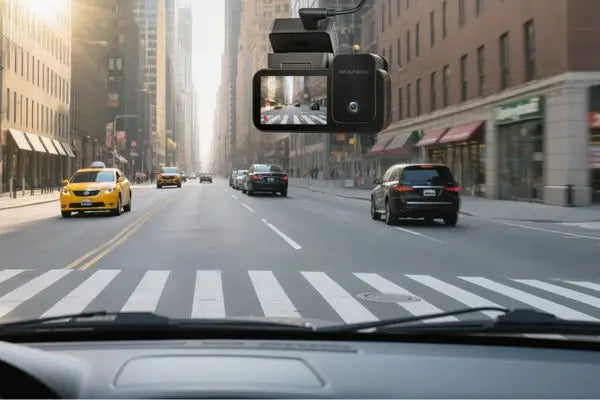
Both the G840S and G900TriPro use supercapacitors. The G840S specifies –4°F to 158°F operating range directly on the product page.[1] The G900TriPro lists 'upgraded supercapacitor for extreme temperatures' on the WOLFBOX product page.[2] For Southern US drivers who park in direct sun regularly, these are the appropriate choices in the WOLFBOX lineup.[3][5][9]
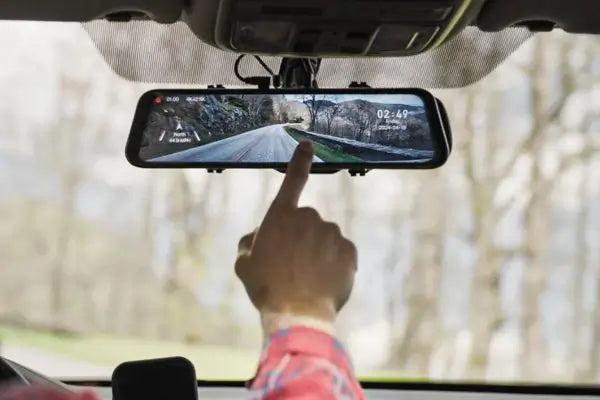
The mirror dash cam form factor also provides a thermal advantage: the camera sits at the top of the windshield where it's partially shaded by the glass frame, rather than in the center of the glass at peak sun exposure.
Summer Setup: Five Things Worth Confirming
- Power source type: Check if your dash cam uses a supercapacitor or lithium-ion battery — this is the single most important spec for hot-climate parking.[4][6][8][10]
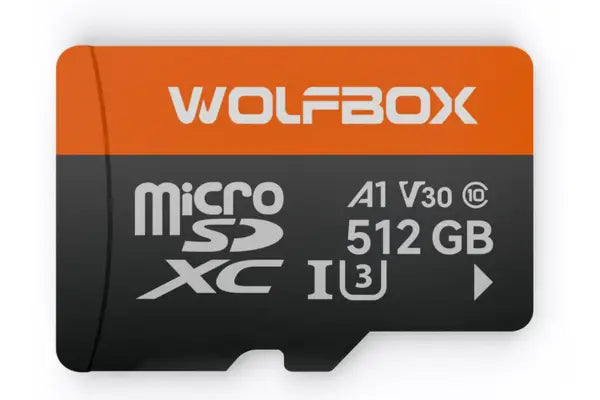
- SD card temperature rating: Standard SD cards are often rated to 70–85°C. Endurance-class cards rated for 85°C are worth the modest price premium in hot climates.
- Hardwire kit voltage cutoff: For parking mode in summer, confirm the hardwire kit's voltage cutoff is set to ~11.8V so a long hot parking session doesn't drain your car battery.
- Windshield sunshade: The simplest and cheapest protection — reduces interior cabin temperature by 10–15°C on peak days, extending any camera's operating conditions.
- Cable routing: Avoid coiling the power cable near dashboard center vents where heat concentrates. Route along the A-pillar and under the headliner as directed in the installation guide.
Summer Dash Cam Use: Scenario Guide
| Scenario | Risk Level | Practical Steps |
|---|---|---|
| Daily commute, parked indoors or shaded | Low | Any dash cam works; supercapacitor preferred for long-term durability |
| Parked outdoors in direct sun, under 2 hours, Southern US | Moderate | Supercapacitor strongly recommended; mount at top of windshield |
| Extended outdoor park in direct sun, 4+ hours, peak summer | High | Supercapacitor camera + windshield sunshade + endurance-class SD card |
| Road trip, overnight hotel parking, multiple days outdoors | Moderate–High | Supercapacitor + hardwire kit + sunshade at each overnight stop |
Frequently Asked Questions
Q: What temperature does a car dashboard reach in summer?
A: A peer-reviewed parked-vehicle study measured an average sun-exposed dashboard surface temperature of 68.9°C (156°F) after a simulated shopping trip. Actual temperatures vary by vehicle, sun exposure, and ambient conditions. [7]
Q: Will a dash cam overheat in a hot car?
A: Check the specific camera’s published operating range and follow its safety guidance. WOLFBOX rates the G840S for operation up to 158°F (70°C). [1]
Q: What is a supercapacitor in a dash cam?
A: A supercapacitor is an energy buffer that can help a dash cam safely close and save the current recording file when the car turns off. Use the model’s published specifications rather than a universal lifespan estimate.
Q: Does the WOLFBOX G840S use a supercapacitor?
A: Yes. The G840S is rated –4°F to 158°F and uses a supercapacitor, confirmed on the WOLFBOX official product page and AU product listing.
Q: Should I remove my dash cam when parked in summer?
A: For lithium-ion dash cams in direct sun on extreme heat days, removing the camera is a reasonable precaution. Supercapacitor cameras like the G840S and G900TriPro are designed to stay mounted year-round; a windshield sunshade is the simplest protective measure.
Q: Do SD cards degrade in hot cars?
A: Yes, especially standard consumer cards. Cards rated for 85°C are recommended for hot-climate use. Loop recording limits cumulative write load, which also extends SD card lifespan.
Q: Can I use a lithium-ion dash cam in Texas or Arizona in summer?
A: You can, but parking in covered or shaded areas significantly reduces risk. For vehicles that regularly sit in direct sun for hours, a supercapacitor dash cam is the more appropriate hardware choice.
References
[1] WOLFBOX G840S Official Product Page (supercapacitor, –4°F to 158°F operating temp): https://wolfbox.com/products/wolfbox-g840s-12-4k-mirror-dash-cam-2160p-full-hd-smart-rear-view-camera-mirror-dash-cam
[2] WOLFBOX G900TriPro Cabin Official Product Page (supercapacitor confirmed): https://wolfbox.com/products/wolfbox-g900tripro-cabin-version-3-channel-dash-camera
[3] WOLFBOX About Us: https://wolfbox.com/pages/about-us
[4] Consumer Reports — How to Choose a Dash Cam for Your Car: https://www.consumerreports.org/cars/dash-cams/buying-guide/
[5] WOLFBOX Blog — Best Mirror Dash Cam 2026: Top Picks and Full Buying Guide: https://wolfbox.com/blogs/dash-cams/best-mirror-dash-cam-in-2026-top-picks-full-buying-guide
[6] CPSC — High-Energy Density Battery Safety: https://www.cpsc.gov/Regulations-Laws--Standards/Voluntary-Standards/Batteries-Fire-High-Energy-Density
[7] Peer-Reviewed Parked-Vehicle Heat Study: https://pmc.ncbi.nlm.nih.gov/articles/PMC6204985/
[8] Consumer Reports — Dash Cam Ratings and Reviews: https://www.consumerreports.org/cars/dash-cams/
[9] Road & Track — Best Dash Cam Deals for Prime Day 2026: https://www.roadandtrack.com/gear/g71482999/dash-cam-deals-prime-day-2026/
[10] CPSC — Lithium-Ion Battery Safety Warning: https://www.cpsc.gov/Newsroom/News-Releases/2021/CPSC-Issues-Consumer-Safety-Warning-Serious-Injury-or-Death-Can-Occur-if-Lithium-Ion-Battery-Cells-Are-Separated-from-Battery-Packs-and-Used-to-Power-Devices


Leave a comment
All comments are moderated before being published.
This site is protected by hCaptcha and the hCaptcha Privacy Policy and Terms of Service apply.