




Here's a question worth asking before something goes wrong: do dash cams help with car accidents? In the real world, many lie to police, and some drivers even label the incident as an act of God. Your spouse/kid remains the only eyewitness whose words nobody takes seriously.
That's exactly what happened to a retired law enforcement officer and Army veteran on a Monday morning in June. [1] He survived a violent head-on collision — struck by an oncoming driver going over 60 mph, about three times the speed limit, while he was doing just 20 mph. And the other driver decided to fabricate a story. Luckily, the police weren't ready to act solely on witness statements.
But the dash-cam footage from his Wolfbox G900TriPro Cabin Version of the car accident changed everything. Criminal charges were filed, his attorneys built on the video evidence, and he is pursuing a civil suit. This article tells that story and explains exactly how car accident dash cam footage holds up.
What Happened: A Head-On Crash, a False Report, and Three Camera Angles
It was the morning of June 1st. A retired law enforcement officer and Army veteran was driving his heavily built Toyota 4Runner at 20 mph. An oncoming driver crossed four lanes of traffic and a median to strike him head-on at over 60 mph. [1]
The other driver told police a deer had caused her to swerve, claiming it was an act of God. The officer's wife was a direct eyewitness, twenty feet behind the vehicle when the crash happened. However, the police initially dismissed her account as biased.
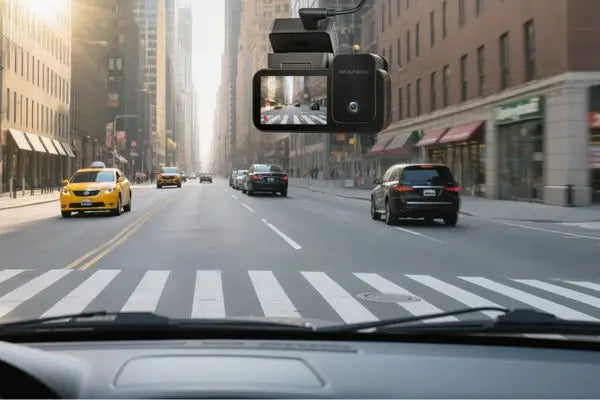
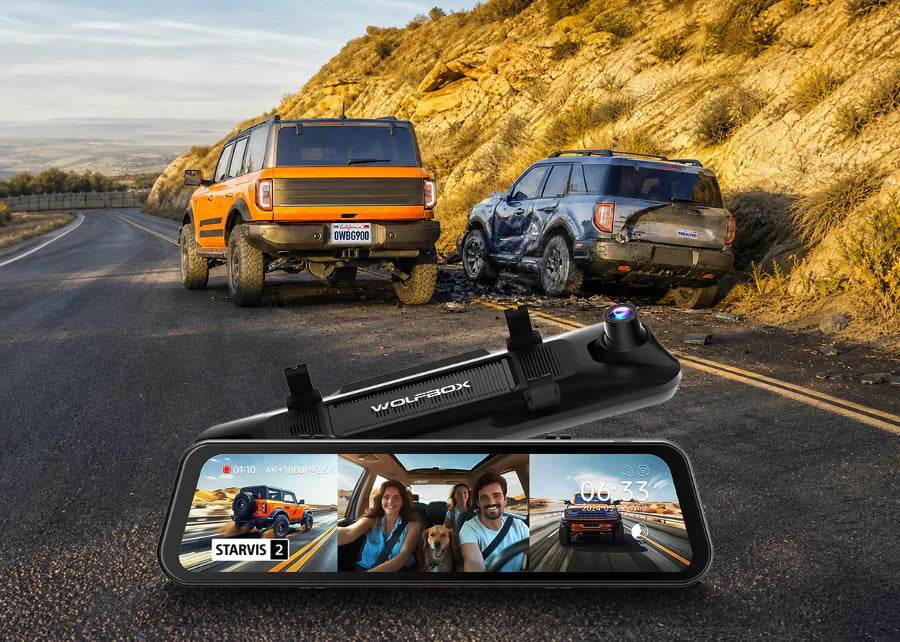
His Wolfbox G900TriPro with cabin camera recorded the event from three angles: front, rear, and interior. [2] Days after the crash, he recovered the system from the totaled 4Runner. It was still intact and functional, footage fully preserved.
What the Front Camera Showed
The front camera captured the other driver's approach from almost a full block away. She was weaving aggressively in and out of both lanes and accelerating erratically. There was no deer or sudden obstacle. The footage documented sustained negligent driving for roughly a block before the point of impact.
The footage also documented something the officer couldn't articulate clearly: a truck accelerating from the intersection in the left lane blocked his sightline to the median. He could not have seen the incoming vehicle. The truck's position, the timing, the camera angle – everything confirmed that no evasive action was possible.
What the Rear Camera Showed
The rear camera showed the officer's wife's vehicle following by 20 feet, directly in line with the point of impact. Her view of the crash was unobstructed and closer than that of any other bystander.
The rear footage established that her physical position made her the best-placed witness at the scene.
What the Interior Camera Adds
The G900TriPro's third channel records the vehicle's interior — the driver, passengers, and cabin. In this crash, the owner confirmed the system also captured interior footage, but his account did not describe what that channel showed; the footage he credited for the case came from the front and rear cameras.
As a general capability, an interior channel documents in-cabin events — occupant behavior, rideshare disputes, or passenger injury claims — that the front and rear cameras can't. That is why drivers who carry passengers add the cabin version.
The officer himself put it plainly –
"The camera angle in the front caught the individual traveling at a high rate of speed, almost a block away from where I was. She claimed that a deer had run out in front of her... Once I was able to recover the video and get it to the police and my lawyers, police were able to see that she had provided false statements on her official encounter, which resulted in arrest and criminal charges." [1]
Police who reviewed the footage were impressed with the image quality. And the department administration asked for the brand and model of the camera. Some even discussed whether they should equip the officers' personal vehicles with the same.
Do Dash Cams Help with Car Accidents Legally?
Properly authenticated dash-cam footage is generally admissible in civil and criminal proceedings throughout the United States, subject to the applicable rules of evidence and state laws governing audio recording. [3] [4] [5]
Video evidence is different from human memory and witness statements. It doesn't change under cross-examination, confuse timelines, and can't be accused of bias. High-quality footage resolves disputes that would otherwise take months of litigation.
The case seems like an extreme example. But the legal value of dash cam footage shows up across a far wider range of scenarios that affect ordinary drivers.
How Dash Cam Footage Affects Fault Determination
Fault in a car accident is not always obvious. Drivers remember events differently. Witnesses have limited vantage points. Insurance adjusters make decisions based on statements and physical evidence.
Dash cam footage gives adjusters, lawyers, and courts an objective record of vehicle speeds, road positions, signal states, and driver behavior in the seconds before and during a collision. [3]
In the retired officer's case, the footage resolved some specific disputed points –
- Whether the other driver was operating recklessly (yes; for roughly a block before impact).
- Whether a deer caused the swerve (no; no deer anywhere in the footage).
- Whether the officer could have taken evasive action (no; found blocked sightline).
Each of those points, unresolved, would have been a litigation battleground. With footage, they became stipulated facts.
How Dash Cam Footage Affects Insurance Claims
Insurance companies settle claims based on the probability of fault. Without video, a two-car accident with conflicting statements results in a split-fault determination. Dash cam footage eliminates that ambiguity.
Several major US insurers have acknowledged that dash cam footage speeds up claims processing. [6] Some offer premium discounts for drivers who use dash cams. The footage also protects against staged accidents.
When Dash Cam Footage Leads to Criminal Charges
In the described case, the footage helped the civil claim. It also directly supported criminal charges. The other driver gave false statements to police at the scene. The dash cam footage contradicted those statements with objective, time-stamped video.
What Makes Dash Cam Footage Legally Useful?
Not all car accident footage captured on a dash cam is equally useful. Low-resolution footage can't resolve a license plate, may degrade into noise, or only capture the front view. Those leave critical questions unanswered.
The retired officer noted that police were impressed by the video quality. Even the PD discussed whether Wolfbox cams outperformed what they had in patrol vehicles. That reaction points directly to the footage's characteristics.
Resolution: Why 4K Matters for License Plates and Driver Identification
A license plate at 40 mph from thirty feet is a challenge for any camera. At 1080P, the plate may be readable under ideal conditions. At 4K with a Sony STARVIS 2 sensor, the individual characters resolve cleanly even in motion, mixed lighting, and even when partially obscured by a plate.
That plate number is everything in a hit-and-run. Reading the vehicle registration number can turn an unidentifiable defendant into a recoverable case.
The Wolfbox G900 series records 4K on the front channel with STARVIS 2. The retired officer's footage was sharp enough to document the other driver's erratic behavior and identify the vehicle.
Multi-Channel Coverage: Why Three Cameras Beat One
A single front-facing camera documents what's in front of you. That's useful but incomplete. You can run into a rear-end collision, a side-impact, a parking lot dispute, or an incident where incidents happen behind or beside your vehicle.
In such cases, a single channel leaves exploitable gaps. Three-channel coverage (front, rear, and cabin interior) eliminates potential missing angles. In the June crash, the front and rear channels each contributed to the legal outcome –
- Front Camera: Documented the other driver's approach, behavior pattern, and no deer.
- Rear Camera: Corroborated the eyewitness account and established the wife's sightline geometry.
- Interior Camera: Part of the three-channel system; the owner did not detail what this channel captured in the crash.
The front and rear channels each answered a question the other couldn't, and the interior channel rounds out the system's coverage for events inside the cabin.
Durability: A Camera That Survives the Crash It's Supposed to Document
A dash cam that flies off its mount upon impact can't help. [7] The Wolfbox G900TriPro Cabin Version in the June crash survived a head-on collision in which the oncoming driver was traveling over 60 mph. It remained on the mount, and all cameras stayed in position.
The footage was fully preserved. Days after the crash, the owner recovered the unit. And he transferred the files intact to law enforcement and attorneys.
The officer described the unit as still being "in perfect condition, like the day I bought it." [1] Aside from some camera mounting brackets and wiring that may need replacing, he plans to reuse the system in his next vehicle and buy a second unit for his wife. It's a testimonial about a cam that survived the worst scenario.
Which Wolfbox System Is the Best Dash Cam for Car Accident Protection?
The Wolfbox G900 series represents the best 4K dash cam for genuine legal protection after an accident.
The G900Pro delivers premium two-channel 4K protection. And the G900 Tripro offers two configurations: the Cabin version, whose third camera records the interior; and the Bumper version, whose third camera covers the front bumper's low-angle blind spot and can also be flexibly mounted near the undercarriage or wheels.
The retired officer had the G900TriPro with the cabin camera. It's essentially the G900 Tripro Cabin Version configuration. [2]
Wolfbox G900Pro: Premium 4K Mirror Dash Cam with Two-Channel Protection
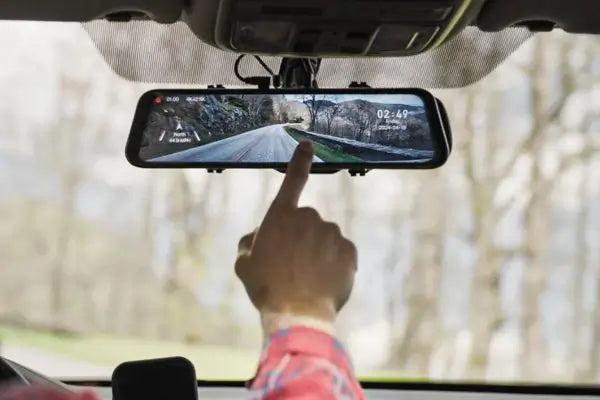
The G900Pro is Wolfbox's flagship two-channel mirror dash cam. It replaces your factory rearview mirror without blind spots caused by headrests or passengers. [8]
- STARVIS 2 IMX678 front sensor rated 4K@30fps with hardware HDR for high-contrast driving.
- 2.5K rear camera with wide dynamic range for clear rear documentation.
- 12-inch IPS touchscreen for a full-width rear-view display with no interior obstruction.
- Supercapacitor power buffer rated -4°F to 158°F; no battery degradation in summer or winter.
- GPS logging embeds route and speed data into every clip to document the speed during impact.
- 5.8GHz Wi-Fi for fast footage transfer and 24-hour parking mode via hardwire kit.
The G900Pro is the right choice for drivers who want the highest front-channel quality in a mirror form factor. [9]

Wolfbox G900 Tripro Cabin: The 3-Camera System for Complete Documentation
The G900 Tripro Cabin Version is Wolfbox's mirror dash cam 3 camera system. It provides front (4K), rear (2.5K), and interior cabin (1080P) recording simultaneously. [1] [2]
- Sony STARVIS 2 IMX678 front sensor rated 4K@30fps with a wide-angle road view.
- A large low-light rear sensor optimized for clearer 2.5K rear recording in dim conditions.
- 1080P interior cabin cam with 4 IR lights.
- All three channels lock simultaneously on G-sensor impact, saving footage from every angle.
- 5.8GHz Wi-Fi for fast clip transfer; voice control for hands-free operation while driving.
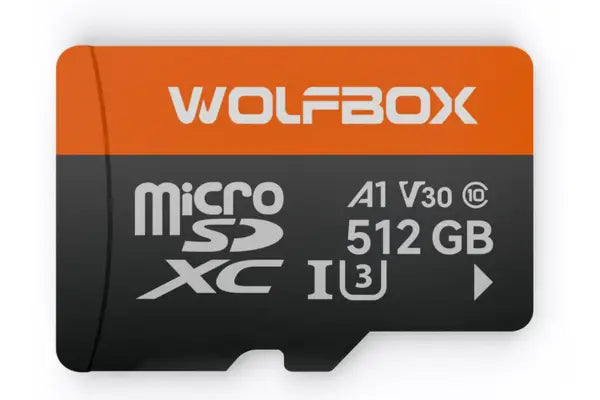
- Supports microSD cards up to 512GB for extended trip documentation.
- Supercapacitor rated -4°F to 158°F; clip-mount attaches mechanically to factory mirror bracket.
It's for rideshare drivers, parents, road-trippers, or anyone who wants the most complete evidentiary record. [1] [2]

Conclusion
The retired officer's wife called the camera "too bougie, extra, and expensive." Seven months later, that same camera preserved the footage to support criminal charges against the driver who nearly killed her husband. It also gave their attorneys strong evidence for both the insurance dispute and the civil suit.
That's the answer to this article's ultimate question: do dash cams help with car accidents? They do, but only if you have one before the accident. A car accident dash cam is the one piece of equipment that you find yourself genuinely grateful for when you do.
The Wolfbox G900Pro and G900 Tripro Cabin Version are built to the standard that changes the outcomes. The three-channel coverage closes every evidentiary angle, turning your footage into a time-stamped record with GPS speed logging. Compare Wolfbox dash cams to find the right one for your vehicle before you need it.
Frequently Asked Questions (FAQs)
1. Is dash cam footage admissible in court in the United States?
Generally, yes. Courts in all 50 states may admit properly authenticated dash-cam footage as evidence in civil and criminal cases, provided it complies with the applicable rules of evidence. Audio recordings may also be subject to state-specific consent laws.
2. Can dash cam footage be used against you?
Yes. If you were at fault and your camera recorded that fact, the footage can be subpoenaed and used as evidence against you. That's why responsible driving matters, whether you have a camera running.
3. What happens to dash cam footage after a crash?
The G-sensor automatically locks the current clip into a protected folder upon detecting an impact. That locked clip stays on the storage card until you manually delete it. In a serious crash, you should retrieve the system as soon as it's safe to do so.
4. Does a dash cam record when the car is parked?
Not by default. Wolfbox's 24-hour parking mode requires a hardwire kit that taps into a fused circuit for constant power. In parking mode, the camera monitors for motion or G-sensor impact events and records triggered clips.
References
[1] Wolfbox verified customer review/testimonial (the retired law enforcement officer and Army veteran) – https://wolfbox.com/products/wolfbox-g900tripro-cabin-version-3-channel-dash-camera
[2] Gadgeteer: "Wolfbox G900 TriPro 3-Channel Mirror Dashcam review – This next-gen dashcam sees all!" – https://the-gadgeteer.com/2025/05/06/wolfbox-g900-tripro-3-channel-mirror-dashcam-review-this-next-gen-dashcam-sees-all/
[3] Whalen Injury Lawyers: "Can Dash Cameras Be Useful Following a Car Accident?" – https://www.whaleninjurylawyers.com/can-dash-cameras-be-useful-following-a-car-accident/
[4] Brandon J. Broderick: "Electronic Evidence and Dash Cams in Car Accidents" – https://www.brandonjbroderick.com/dash-cams-and-electronic-evidence-car-accidents
[5] Corena Law: "Is Dashcam Footage Valid in Car Accident Claims?" – https://www.corenalaw.com/legal-procedures/dashcam-footage-as-evidence/
[6] Farah & Farah: "Dash Cam Impact on a Personal Injury Case" – https://farahandfarah.com/blog/dash-cam-impact-personal-injury-case/
[7] InjuryLawyer: "Dash Cam Footage & Insurance Claims: What to Do After a Crash" – https://www.injurylawyers.com/blog/dash-cam-evidence-car-accident-claim/
[8] WOLFBOX G900Pro Product Page – https://wolfbox.com/products/wolfbox-2024-g900-pro-wifi-touch-screen-parking-monitoring-dash-cam-smart-mirror-with-starvis-678-sensor
[9] Pocket-lint: "Wolfbox G900Pro mirror dash cam review" – https://www.pocket-lint.com/wolfbox-g900-pro-mirror-dash-cam-review/
[10] Techradar: "Wolfbox's G900Pro is a high-quality mirror dash cam, but just be sure it's the right fit for your vehicle" – https://www.techradar.com/vehicle-tech/dash-cams/wolfbox-g900-pro-dash-cam-review
Disclaimer: This article is for general informational purposes only and does not constitute legal advice. Dash-cam use, audio-recording consent, and the admissibility of video evidence vary by state and can change over time. Before relying on dash-cam footage in any legal or insurance matter, check the current laws in your jurisdiction or consult a qualified attorney.


Leave a comment
All comments are moderated before being published.
This site is protected by hCaptcha and the hCaptcha Privacy Policy and Terms of Service apply.