







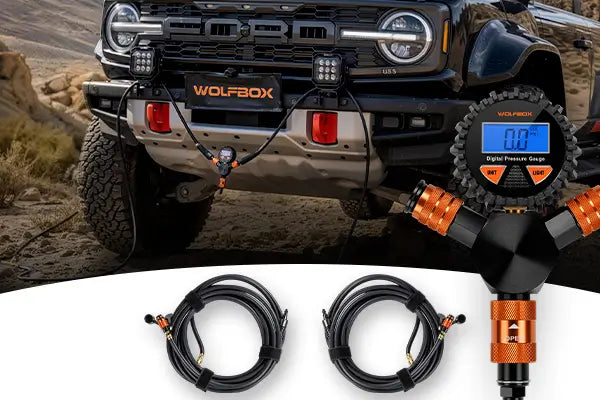
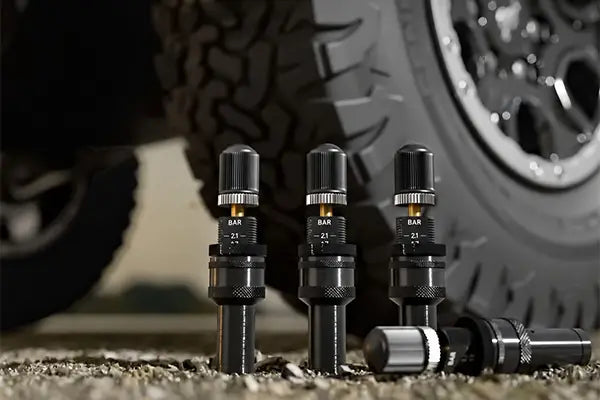
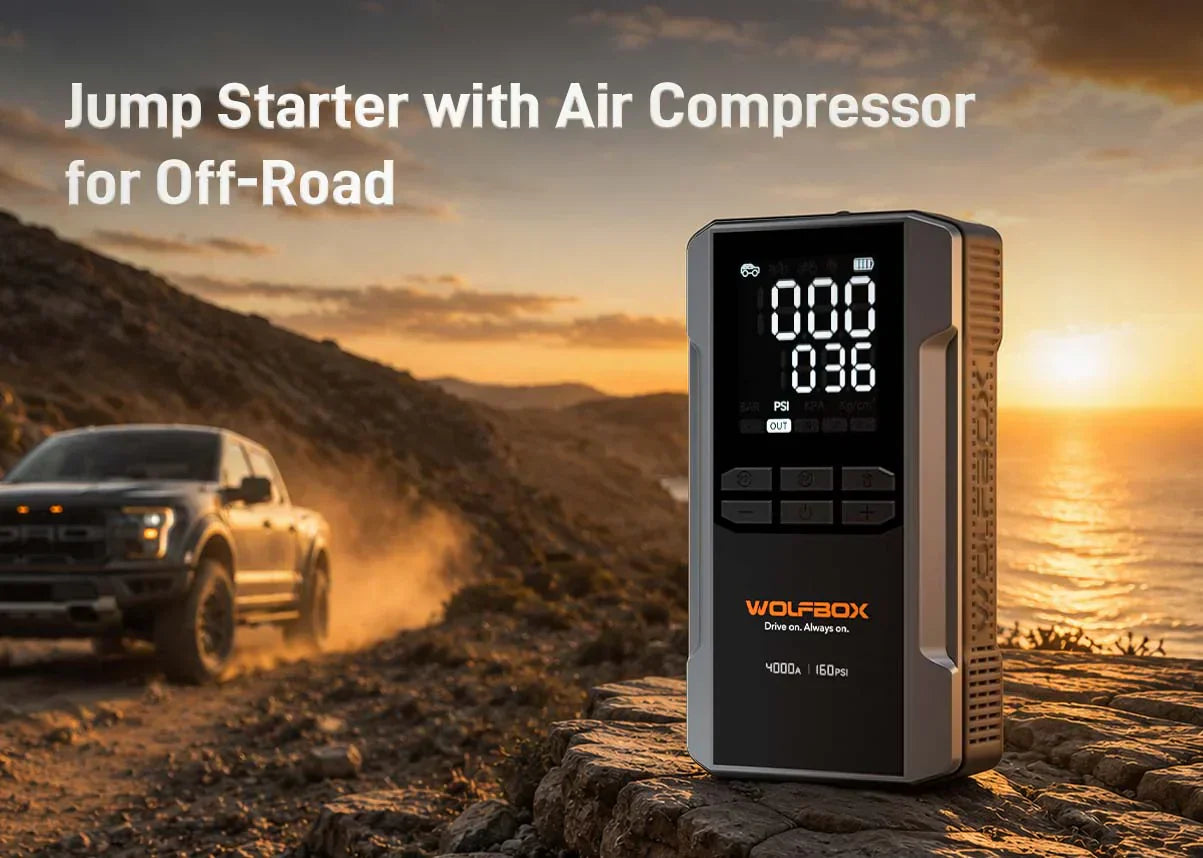
On the trail, a dead battery and a flat tire are literally trip-enders. No roadside assistance app reaches a canyon wash or a forest service road two hours from the nearest town. What reaches it is what you packed.
That's why choosing the right jump starter with air compressor for off-road use is a completely different decision from picking up a basic unit at a gas station. The demands are different. Off-road rigs run bigger engines.
Tires get aired down and need refilling every time you return to pavement. Gear sits in hot truck beds and cold mountain nights. This guide covers exactly what separates a capable off-road combo from an underpowered one.
Off-Road Demands More: Why Standard Combo Units Fall Short?
Most portable jump starters serve a specific case: a sedan with a weak battery in a suburban parking lot. That's a legitimate use case. It's just not your use case.
Standard Vehicle Use vs Off-Road Load Stress on Portable Units
A standard compact jump starter is engineered for occasional use. It takes one or two emergency starts per year, a brief air-up of a standard tire, then back in the glove box. Off-road driving flips that model entirely.
You might air down four tires at the trailhead, drive for hours over rough terrain that drains the battery, then need a jump start when a recovery attempt kills the battery. That's repeated high-load cycling in a single afternoon.
Tire Inflation Demand: Normal Road Pressure vs Frequent Air-Down Cycles
Highway drivers inflate a tire maybe once a month, if that. Off-road drivers air down at the start of every trail run. It drops from 35 PSI to 15–20 PSI across all tires, then air back up before hitting again.
That's eight full inflation cycles per outing for a standard four-wheel setup. A compressor rated for occasional residential use will run hot and slow under that workload.
Off-road air compressor performance is measured by CFM (cubic feet per minute) and fill time per tire, not just max PSI. A weak compressor shows its limits fast when you're filling 35-inch tires in the field.
Environmental Impact: Stable Storage vs Extreme Field Conditions
The jump starter sees climate-controlled garage temperatures, smooth roads, and maybe a few hot summer days. The one in your overlanding rig experiences 100°F in the truck bed, sub-freezing mountain mornings, trail dust, creek crossings, and constant vibration.
Lithium batteries lose peak capacity in extreme heat and deliver reduced output in severe cold. A unit without adequate thermal management and a ruggedized housing isn't just inconvenient. They become unreliable in those conditions when you're counting on them most.
Self-Reliance Requirement: Roadside Assistance Available vs Remote Trail Dependency
When your battery dies on a city street, your phone connects you to help within 30 minutes. When it dies on a remote trail, your phone might not have signal — and help is measured in hours, not minutes.
A jump starter with air compressor for off-road use must function as a complete self-rescue kit. It needs enough/sufficient reserve capacity for multiple jump attempts.
Also, it should feature enough compressor endurance for a full set of tires and satisfactory durability. Otherwise, it may not work the first time after sitting in your rig for three months between trips.
What Matters When Choosing an Off-Road Jump Starter with Air Compressor?
Knowing the right specs is mandatory. It signals the difference between a unit capable of handling real trail emergencies and one that looks capable on a product page.
|
Selection Factor |
Why It Matters Off-Road |
What to Look For |
|
Peak amperage |
Larger gas and diesel engines need more cranking power to start |
2500A+ for trucks/SUVs; 4000A for diesel or cold climates |
|
Compressor CFM and PSI |
Aired-down tires (15–20 PSI) need a fast refill to get moving again |
2.0+ CFM; 150 PSI max; measure fill time for 35"+ tires |
|
Battery capacity (Wh) |
Multiple jumps and full tire sets drain capacity fast in the field |
Enough for 2–3 jump starts + all 4 tires in one charge cycle |
|
Standby retention |
Units sitting in a hot or cold vehicle lose charge faster |
Lithium iron phosphate (LiFePO4) holds charge longer in extremes |
|
Durability rating |
Dust, mud, rain, and vibration are all guaranteed off-road |
IP64+ rating; rubberized housing; reinforced cable connectors |
One spec that often gets overlooked is standby retention. It indicates how much charge the unit holds after sitting unused for weeks or months.
A unit that loses 40% of its charge during storage may not have enough remaining to make a successful jump. Lithium iron phosphate (LiFePO4) holds a charge significantly better at extreme temperatures than standard lithium-ion.
Portability vs Power: Finding the Right Balance for Your Setup
It's the tension every off-road buyer faces. The compact units are easy to store/carry, but high-capacity units deliver the performance that big rigs and long trips actually need. The right answer depends on your specific vehicle and how you use it.
Compact Units: Best for Light Trucks, SUVs, and Weekend Trails
A mid-range combo unit in the 2000–2500A range handles the jump-start comfortably for a mid-size SUV or a light truck with a standard gas engine. The compressor in compact units fills standard off-road tires in 4–6 minutes per tire.
It's manageable for a trail day, though slower than dedicated inflators. The real advantage is size: a compact unit fits easily in a storage organizer, a roof rack bag, or under a rear seat. That too, without consuming much cargo space.
Heavy-Duty Models: Built for Full-Size Trucks, Diesel Engines, and Expedition Setups
Full-size trucks, diesel engines, and vehicles with heavy electrical loads need significantly more cranking power. Units in the 3000–4000A peak range are for such scenarios.
They're larger and heavier, but the weight trade-off is justified when the alternative is a failed jump-start. Expedite overlanders mount these units in a dedicated gear organizer or a lockable storage drawer.
Weight and Storage in an Overlanding Rig
Every pound matters on a long trail, and every cubic inch of cargo space gets contested between gear, water, food, and recovery equipment. Before committing to a unit, measure the available storage space.
A high-capacity jump starter that won't fit cleanly in your setup is a hazard. It's because an unsecured gear becomes a projectile on rough terrain. Plan the storage location before you buy, not after.
Pro Tip: Look for jump-starter and air-compressor combos with a carry case. Structured cases stack cleanly and protect the unit from vibration damage.
Off-Road Buying Checklist: 5 Questions to Answer Before You Buy
Before committing to a unit, run through the following questions. They'll quickly separate the options that work for your rig from the ones that may fall short in the field.
1. Is it powerful enough for your engine?
Match the unit's peak amps to your engine's cold cranking amps (CCA). For gas engines up to 5.0L, 2000–2500A is mostly sufficient. For large gas engines (6.0L+) or any diesel, look at 3000A minimum. Go for 4000A for operating in cold climates where battery output drops.
2. Can it handle multiple emergency uses?
Verify how many consecutive jump starts the unit can deliver on a single charge. A unit rated for 30 starts in a lab test may deliver 8–10 under real field conditions with a large engine. Look for real-world user data, not just spec sheet claims.
3. How long does a single charge last on the trail?
Check both the self-discharge rate and the total energy capacity in watt-hours (Wh). A unit with more Wh can inflate more tires and attempt more jumps before needing a recharge. For multi-day trips without power access, it becomes a critical number.
4. Is the compressor strong enough for off-road tires?
Confirm the CFM rating and calculate realistic fill times for your tire size. A 35-inch tire aired down to 15 PSI requires more volume than a standard 17-inch passenger tire. Weak compressors overheat under extended cycles (check the duty cycle rating).
5. Is it durable enough for trail conditions?
Look for an IP rating of at least IP64 (dust-tight and water-resistant), rubberized or reinforced housing, and heavy-gauge cables with reinforced clamps. Thin cables and flimsy connectors fail under repeated use or in extreme cold when materials contract.
Jump Starter with Air Compressor or Buy Separately for Off-Road?
The separate argument has circulated in Jeep forums and overlanding communities for years. Early combo units paired undersized batteries with underpowered pumps. It resulted in a unit that did neither job well enough to trust on the trail.
|
Factor |
All-in-One Combo |
Separate Units |
|
Storage Space |
One compact unit — ideal for tight setups |
Two separate cases, more cargo consumed |
|
Weight |
One device to carry |
Combined weight is often higher |
|
Power per Function |
Modern high-capacity combos match dedicated units |
Each unit is optimized for its task |
|
Cost |
Better value — one purchase covers both needs |
Higher total spend for quality in both |
|
Reliability in the Field |
One battery to manage and maintain |
Two separate charge levels to track |
|
Best for |
Overlanders, weekend off-roaders, daily trail drivers |
Competitive builds with dedicated electrical systems |
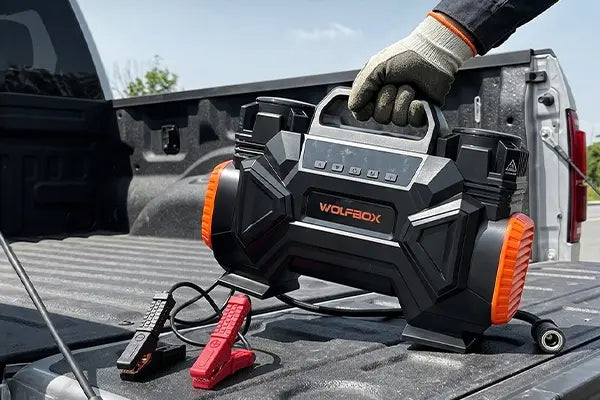
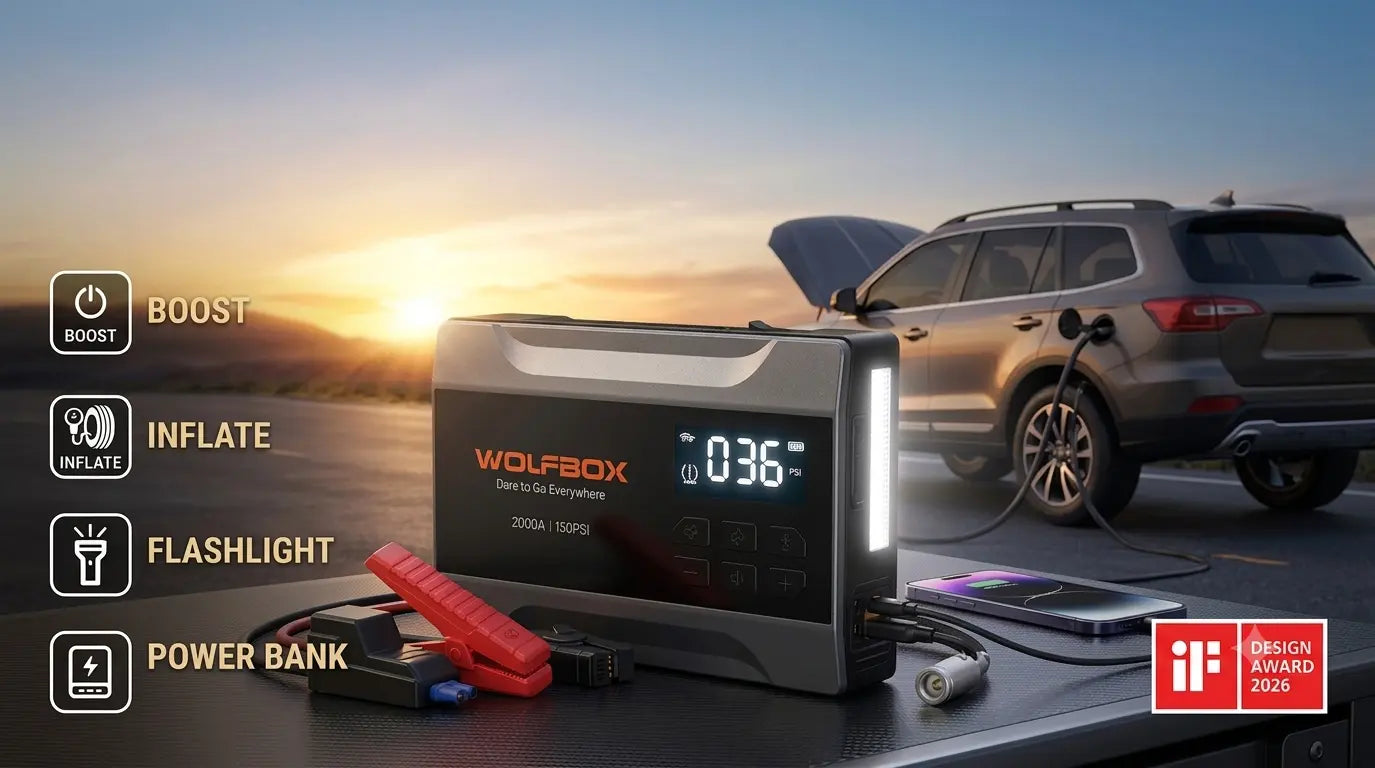
The honest answer: modern high-capacity combo units like Wolfbox 4-in-1 Jump Starter With Air Compressor closed the performance gap. The case for buying separates still holds for drivers with extreme electrical demands. For everyone else, a quality all-in-one combo is the smarter, simpler, and more space-efficient choice.
Heads Up: If the shared battery is depleted from compressor use, you may lack enough reserve. Always check the charge level before a long air-up session + lock in at least 30% reserve for emergencies.
Wolfbox Off-Road Jump Starter with Air Compressor
Wolfbox designed all-in-one devices specifically for drivers who go beyond pavement. And the specs reflect that priority.
1. Wolfbox MegaVolt 24Air: High-Capacity Expedition Option
The MegaVolt 24Air serves drivers who need maximum reserve capacity. It delivers enough combined power to inflate all four tires from trail pressure back to highway PSI in a single charge cycle. And it still retains enough battery reserve for an emergency jump start.
The built-in compressor delivers CFM and PSI outputs calibrated for large-format off-road tires. The housing meets IP64 standards, and the structured carry case grants secure storage.
Key specs:
- Battery capacity: 24,000mAh / 88.8Wh
- Peak jump output: 4000A (for 12V vehicles; up to 10L gas / 10L diesel)
- Max tire pressure: 160 PSI
- Airflow: 45L/min
- Charging / outputs: 65W USB‑C fast charge; includes 160W DC output
- Light: 400‑lumen emergency light
- Durability rating: IP64

2. Wolfbox MegaVolt16 Air: Rated Top Pick for Versatile Trail Use
The MegaVolt16 Air earned top ratings from TechGearLab for its balance of power, performance, and portability. It handles the jump-start requirements of most full-size gas trucks and mid-size SUVs with room to spare.
Meanwhile, the onboard compressor fills 33-inch tires efficiently without overheating. The digital display shows both battery level and real-time PSI during inflation. It fits cleanly in a standard gear bag or overlanding storage.
Key specs:
- Battery capacity: 16,000mAh
- Peak jump output: 3000A
- Max tire pressure: 160 PSI
- Inflation claim: up to 45 tires per charge (usage varies by tire size and pressure change)
- Light: 400‑lumen LED flashlight
- Charging: USB‑C fast charging + power bank capability
- Storage temp range: -4°F to 140°F
Read more: Best Portable Jump Starter with Air Compressor

Conclusion
A jump starter with air compressor for off-road use needs a different level of demand. It starts with higher peak amps, faster compressor output, durable construction, and enough battery capacity. The ultimate goal is to survive the full outing, not just serve a one-time emergency.
The Wolfbox all-in-one devices are engineered specifically for drivers who leave pavement behind. Both units deliver the power, endurance, and durability that off-road use actually requires. Explore the full Wolfbox jump starter with air compressor collection to make your rig ready before the trail demands it.
Frequently Asked Questions (FAQs)
1. Can a jump starter with an air compressor work on a diesel pickup truck?
Yes, but only with sufficient peak amps. Most diesel trucks need at least 2500A peak, and larger diesels (6.7L+) can require up to 4000A in cold conditions. Always check your engine's CCA rating and match it to the jump starter's peak output.
2. Can a jump starter with an air compressor handle airing up all four tires on one charge?
A high-capacity unit like the Wolfbox MegaVolt 24Air can inflate all four tires from 15 PSI to 35 PSI in a single charge. Lower-capacity units may only manage two or three tires before needing a recharge.
3. How much PSI is needed for off-road tires?
Most off-road tires run between 10–20 PSI on the trail, which need to be aired back up to 30–40 PSI for highway speeds. Your compressor needs to reach at least 150 PSI max output to fill efficiently.
4. Is an all-in-one unit better than separate tools for overlanding?
For most overlanders, yes. Modern high-capacity combos have closed the gap with dedicated units. The main case for separates is when running a vehicle with extreme electrical demands – a large diesel engine, winch, or dual batteries.

Leave a comment
All comments are moderated before being published.
This site is protected by hCaptcha and the hCaptcha Privacy Policy and Terms of Service apply.