









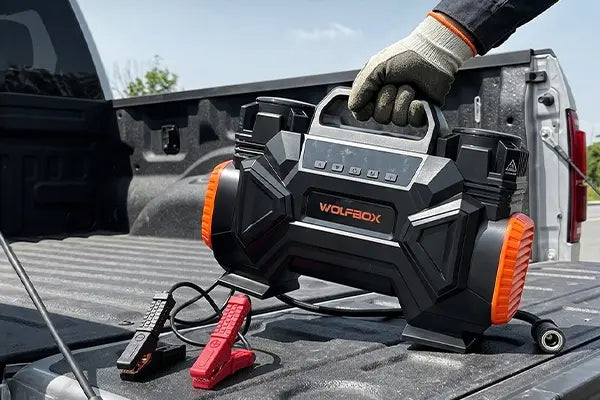
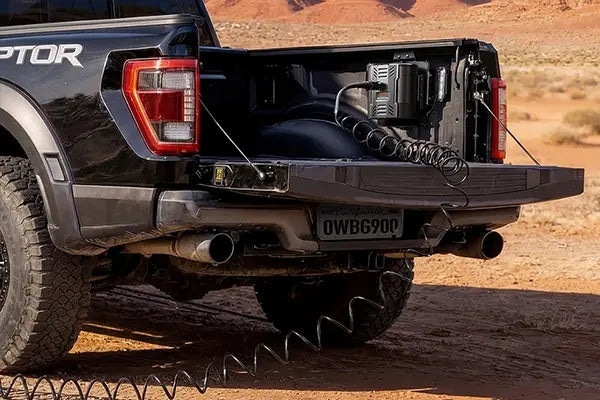
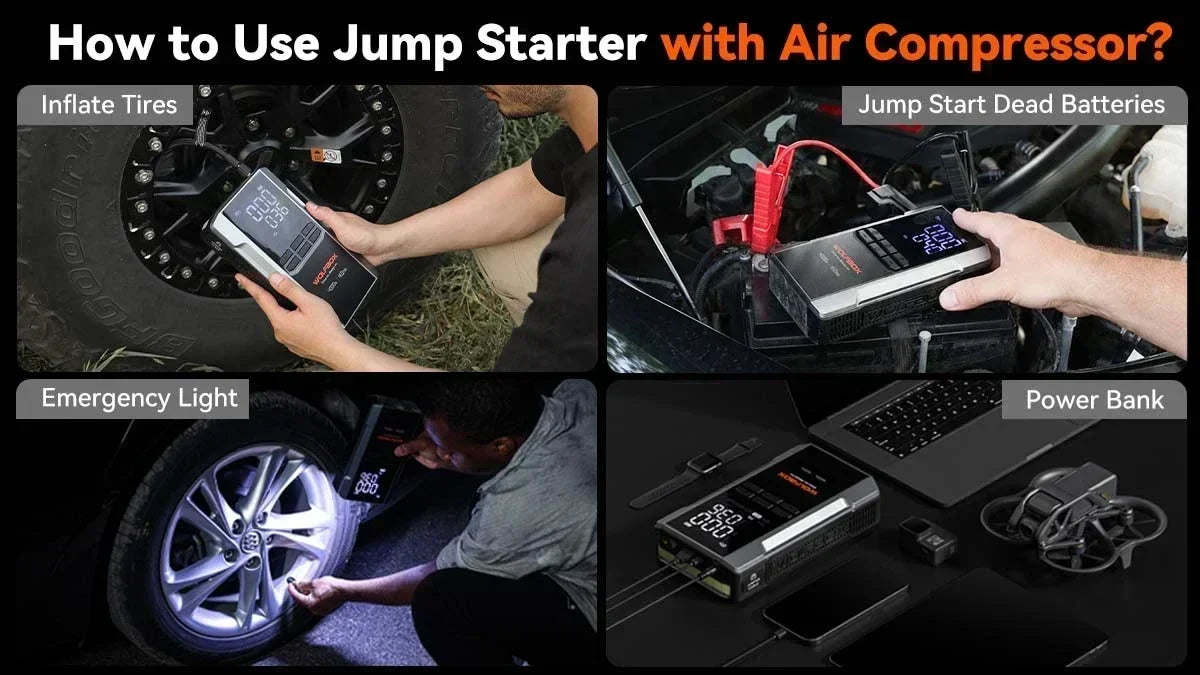
Learning how to use a jump starter with air compressor devices properly can turn a stressful roadside moment into a five-minute fix. A smart one is a 4-in-1 tool that can jump-start a dead battery, inflate a low tire, charge your phone, and light your way in the dark.
You're working with hundreds of amps of current and a pressurized air hose. So, getting it right matters just as much as doing it fast. This guide walks through, step by step, exactly how to use both the jump-starting and air-compressor functions on the right model.
What Is a Jump Starter with Air Compressor and How Does It Work?
A jump starter with air compressor is a battery-powered portable device. It combines two roadside tools in one. There, you have a lithium-ion power pack strong enough to start a dead car battery. And it's followed by a built-in tire inflator for inflating low tires.
Instead of separate jumper cables and a compressor, you carry a single compact unit that handles both jobs. Modern units rely on lithium battery technology, not the old lead-acid jump boxes. [1] And that’s what makes the whole 4-in-1 concept possible.
A lithium-ion cell packs far more energy into a smaller, lighter case. Thus, the same device delivering thousands of amps to your engine can also run a compressor motor. You can even charge a phone through USB-C and power an LED light without a car battery.
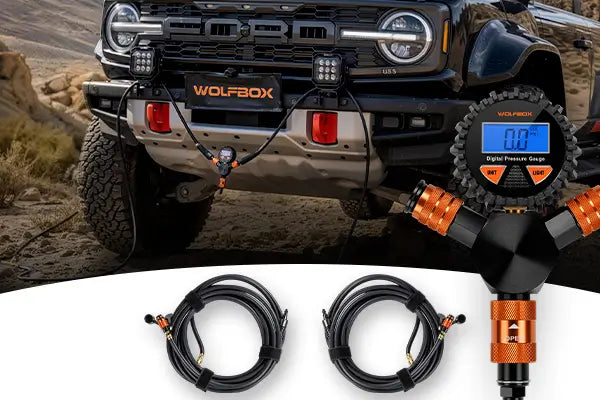
Most portable jump starter units share some common parts. There are smart battery clamps with reverse-polarity protection, a rechargeable lithium battery pack, an integrated air compressor with a digital pressure display, USB-A and USB-C charging ports, and an LED light for visibility.
Dead batteries and low tires are two of the most common reasons drivers end up stranded. [2] Therefore, such an all-in-one tool has quickly become a standard item in vehicle emergency kits rather than a nice-to-have extra.
Choosing the Right Jump Starter with Air Compressor for Your Vehicle
The right jump starter with an air compressor for your vehicle comes down to matching peak amperage to your engine. Then, you’re to check the air compressor's PSI and battery capacity to see if they fit your use. [3] A unit that's underpowered for your engine won't start reliably, no matter how many built-in features it has.
Key Factors to Consider Before Buying
- Peak Amperage: It determines whether the unit can deliver sufficient current for your engine size.
- Air Compressor Pressure (PSI) and Flow Rate: Higher PSI and flow rate mean faster tire inflation, especially on larger tires.
- Battery Capacity: Measured in mAh or Wh, this determines how many jump starts and inflations you get per charge.
- Safety Features: Look for reverse-polarity, over-current, and short-circuit protection at a minimum.
- Portability: A small-sized, lightweight unit is easier to store and carry. However, they often trade off some capacity.
Matching the device to your vehicle is crucial. A 2000A unit is plenty for most gasoline engines up to about 5.0L. Whereas a 4000A unit is what you want if you're driving something larger, like a truck or diesel SUV with an engine up to 10L. [1] [3] Buying more amperage than you need isn't a problem. However, buying less than your engine requires means the unit may simply fail to start your car.
Summary Comparison: WOLFBOX MegaVolt 10Air vs MegaVolt 16Air vs MegaVolt 24Air
|
Model |
Peak Current |
Battery |
Max PSI |
Engine Coverage |
|---|---|---|---|---|
|
MegaVolt 10Air |
2,000A |
37Wh |
150 PSI |
Up to 5.0L gas / 2.5L diesel |
|
MegaVolt16 Air |
3,000A |
59.2Wh (16,000mAh) |
160 PSI |
Up to 8.0L gas / 6.0L diesel |
|
MegaVolt 24Air |
4,000A |
88.8Wh (24,000mAh) |
160 PSI |
Up to 10.0L gas / 10.0L diesel |
The WOLFBOX MegaVolt 10Air is a budget-friendly option for sedans, small SUVs, and most everyday gasoline engines up to 5.0L. [4] [5] The MegaVolt16 Air steps up to 3,000A and a larger 59.2Wh battery, a solid ground for trucks and SUVs with engines up to 8.0L gas or 6.0L diesel. [6] [7]
The MegaVolt 24Air sits at the top of the lineup with 4,000A of peak current and an 88.8Wh battery. It’s exclusively built for drivers with larger trucks, vans, or diesel engines up to 10.0L. [8] [9] Anyone looking for the widest possible coverage and the fastest 65W charging should get it.
How to Use the Jump Starter Function: Step-by-Step Guide
Safely using the jump starter function comes down to several steps. It includes inspection, connection, clamping, and following. Rushing is where most jump-starting mistakes and injuries happen.
Before you touch a single clamp, take a moment to inspect the dead battery. The case may look cracked, bulging, or leaking, or you may smell a strong rotten-egg odor. In that case, don't attempt a jump start. Lead-acid batteries in use generate hydrogen gas. A damaged battery raises the risk of that gas igniting and causing an explosion. [10] A frozen battery carries the same risk and should never be jump-started.
- Power on the unit by pressing the main power button. Confirm the display shows adequate remaining charge.
- Connect the smart clamps to the jump starter's output port before touching the vehicle's battery at all.
- Attach the red (positive) clamp to the battery's positive terminal. Then, attach the black (negative) clamp to an unpainted metal ground point or the negative terminal. Always keep the clamps away from fuel lines and moving parts.
- Check the indicator light or display. A green light or correct-polarity signal confirms a safe connection. Meanwhile, a warning tone or red light means you should recheck the clamp placement first.
- Start the vehicle. Most units deliver power within seconds. In case the engine doesn't turn over on the first try, wait a minute and try again. However, don't hold the attempt continuously.
- Disconnect in reverse order once the engine is running. Remove the black (negative) clamp first, then the red (positive) clamp. It should minimize the risk of an accidental short circuit. [11]
- Recharge the unit as soon as you reasonably can afterward. Thus, it gets back to full capacity for the next emergency.
Safety Precautions Worth Remembering
- Never let the red and black clamps touch each other while connected to the unit. It can cause a dangerous short circuit.
- Keep sparks, open flames, and lit cigarettes away from the battery area. Such things can ignite hydrogen gas in an instant. [12]
- Avoid leaning directly over the battery while connecting or disconnecting clamps. It's particularly crucial during unexpected sparks. [13]
- Only use the jump starter on 12V vehicle batteries to stay safe. Always follow the manufacturer's direct recommendation.
How to Use the Air Compressor Function: Step-by-Step Guide
Using the air compressor function is simpler than jump-starting. Still, setting your target pressure first can ensure a quick, hands-off top-off. Modern units, such as WOLFBOX's MegaVolt series, include a preset-pressure feature to automate the entire process. [3]
- Power on the unit and select the air compressor mode on the display or via the button interface.
- Attach the hose to the tire valve, screwing or pressing it on firmly until you no longer hear air hissing out.
- Set the target pressure using the display. Check your vehicle's door-jamb sticker for the correct PSI.
- Start the compressor by pressing its start button. The motor should begin pumping air while showing the real-time pressure.
- Let the auto-stop feature do its job. The compressor shuts off automatically once your target pressure is reached.
- Remove the hose once inflation stops. Double-check the reading with a separate tire gauge before replacing the valve cap.
- Repeat for each tire that needs air. Keep an eye on the unit's remaining battery if you're airing up more than one or two tires in a row.
Performance Reference
A WOLFBOX MegaVolt 10Air can inflate a standard 195/65 R15 tire from 29 to 36 PSI in about a minute. [4] [5] Meanwhile, the higher-output MegaVolt16 Air handles a larger 315/70 R17 pickup tire, inflating it from 30 to 36 PSI in about 2.5 minutes. [6] [7] Actual times vary with tire size, starting pressure, and ambient temperature.
Safety Note
Never exceed the maximum PSI rating printed on your tire's sidewall. Stop immediately if you notice any bulging, heat, or hissing from the tire rather than the valve connection. Overinflating a tire increases the risk of a blowout.
Using the Extra Features – Power Bank, LED Light, and More
The extra features on a jump starter with air compressor are what turn it into an emergency kit. A dead phone or a dark roadside stop can be equally stressful, where the built-in extras can deliver support.
Power Bank
The same lithium battery that powers the jump-starting function doubles as a USB power bank. It lets you charge a phone, tablet, or other USB device through the built-in USB-A or USB-C ports. You can do so whenever you're stranded without a working outlet nearby.
LED Emergency Light
A built-in LED light usually comes with steady, strobe, and SOS modes. It helps you see what you're doing after dark. You can even make your vehicle more visible to passing traffic if you're stopped on a shoulder.
LCD Screen
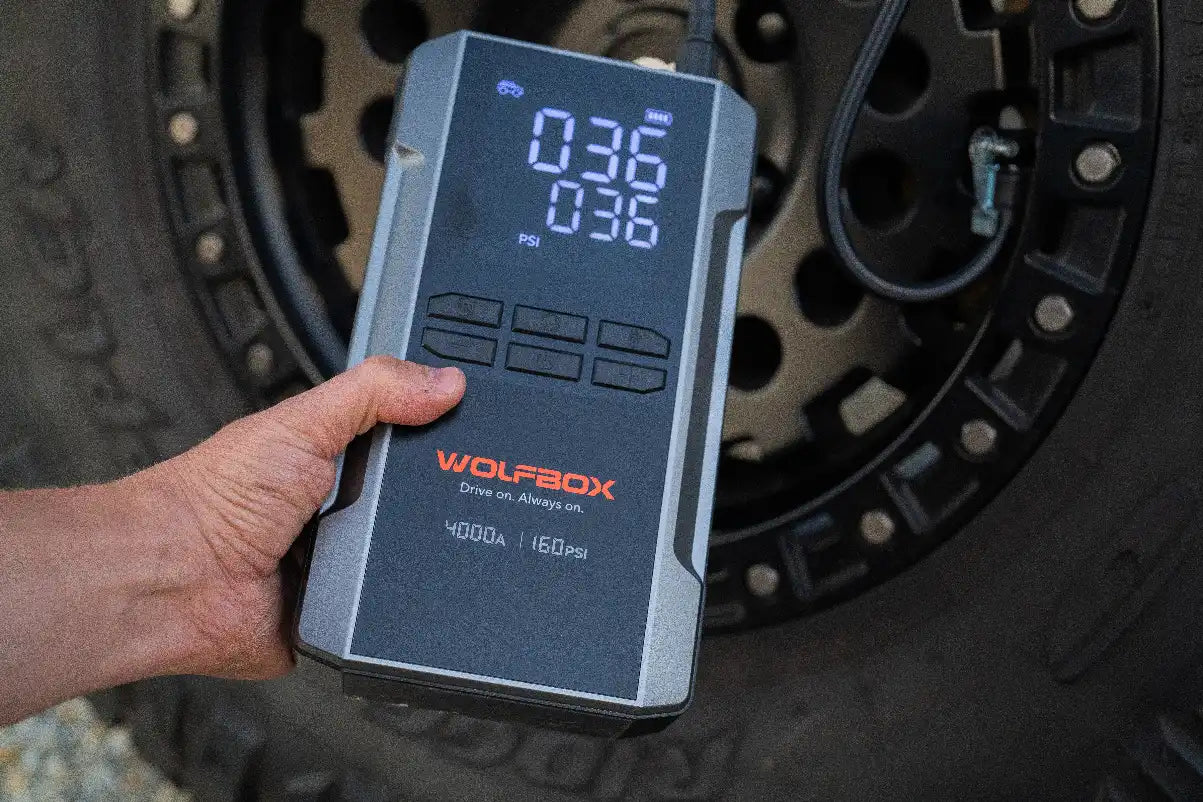
The LCD display shows battery level, tire pressure readings, and charging status at a glance. You can even check whether the unit itself is charging or actively powering another device. Thus, you’ll never have to guess about how much capacity you have left.
Common Mistakes to Avoid When Using a Lithium Jump Starter with Air Compressor
Most problems with a lithium jump starter with an air compressor come down to a handful of avoidable mistakes. Once you understand how to use a lithium jump starter with air compressor the right way, those issues become easy to overcome.
Reversing Battery Polarity
Connecting clamps backward can trip the unit's protection circuit or, on unprotected devices, cause a dangerous short circuit. Always double-check red-to-positive and black-to-negative before starting. [12]
Attempting to Jump-Start a Severely Damaged Battery
A cracked, leaking, swollen, or frozen battery should never be jump-started. It’s because internal damage exponentially increases the risk of an explosion. [13]
Overinflating the Tires
Exceeding the sidewall's maximum PSI stresses the tire, significantly increasing the risk of a blowout. It’s quite the opposite of why you should choose a jump starter with an air compressor for your vehicle.
Failing to Recharge the Unit Regularly
A jump starter left uncharged for months may not have enough capacity when you actually need it. Top it off every one to two months, even if your unit hasn't been used.
Improper/Poor Storage
Leaving the unit in extreme heat or cold outside its rated temperature range accelerates battery aging. It can trigger built-in temperature protection that blocks use until it returns to a safe range.
It’s possible you'll encounter an error message or the unit will refuse to jump-start. Most models display a specific cause, like reversed clamps or a low starting voltage, on the screen. Correcting the specific issue rather than repeatedly attempting to fix it is almost always the faster fix. [14]
How to Maintain and Store Your Jump Starter for Long-Term Reliability
Keeping a jump starter with an air compressor reliable over the long term takes a few minutes of upkeep every month or two. The end goal is to discover issue(s) for a fix before an actual emergency.
- Charge It Regularly: Recharge every 1 to 2 months, even when not in use. It's because lithium batteries slowly self-discharge over time.
- Store within the Recommended Temperature Range: Most WOLFBOX units are rated for storage between -4°F and 140°F. It covers a car's glove compartment in most climates, but still, check your specific model's rating.
- Inspect the Jumper Cables and Air Hose: Look for cracks, fraying, or exposed wiring before each use. And replace the unit if you find damage to the clamps or cables.
- Clean the Unit: Wipe down the housing and clamps periodically to prevent corrosion or dust buildup. It's particularly important if it's stored in a trunk or truck bed.
- Test Both Functions Periodically: Conduct a quick jump-start test on a healthy battery and a short burst test once every couple of months. It confirms everything still works.
Conclusion
You have to know how to use a jump starter with air compressor devices correctly first. And then, roadside emergencies stop being so stressful. You can search for a jump starter with air compressor to use in a hurry, or you can plan ahead before a road trip. Nonetheless, the process is relatively simple.
Choose a model that matches your engine size. You have various options, from the compact MegaVolt 10Air to the heavy-duty MegaVolt 24Air. Keep the tool charged, store it properly, and test it occasionally, and a WOLFBOX jump starter with an air compressor will earn its spot in your trunk.


Frequently Asked Questions (FAQs)
Can I jump start a completely dead battery?
Yes. Modern lithium jump starters, including WOLFBOX's MegaVolt lineup, include a boost function specifically designed to start vehicles under severe low-voltage conditions. It can effectively handle a completely dead battery rather than just a weak one.
How long does it take to inflate a tire?
It depends on the model and tire size. However, most WOLFBOX units inflate a standard passenger tire in about one minute and a larger pickup or SUV tire in two to three minutes. Such a speedy inflation comes from the built-in preset pressure and auto-stop features.
Can I leave it in my car in summer/winter?
Yes. Most WOLFBOX jump starters are rated to withstand storage temperatures from -4°F to 140°F. It covers the vast majority of glove compartment and trunk conditions across all four seasons. Extremely hot climates may still benefit from more shaded storage when possible.
How do I know when it's charging?
The built-in LCD screen displays the charging status directly. An “IN” indicator usually shows that the unit itself is charging. Meanwhile, an “OUT” indicator shows it's actively charging another device, such as a phone or tablet, through the USB ports.
References
[1] Wolfbox: “Jump Starter with Air Compressor” – https://wolfbox.com/blogs/jump-starter-with-air-compressor
[2] RTA Fleet Management: “5 Most Common Reasons for Vehicle Breakdowns” – https://rtafleet.com/blog/5-most-common-reasons-for-vehicle-breakdowns
[3] Wolfbox: “Jump Starter with Air Compressor” – https://wolfbox.com/collections/jump-starter-with-air-compressor
[4] Wolfbox: “Wolfbox 2000A Jump Starter with Air Compressor: WOLFBOX MegaVolt 10Air” – https://wolfbox.com/products/wolfbox-2000a-jump-starter-with-air-compressor-wolfbox-megavolt-10air
[5] Wolfbox: “Wolfbox Jump Starter Review: 2000A, Air Compressor & USB-C Tested” – https://wolfbox.com/blogs/jump-starter-with-air-compressor/wolfbox-jump-starter
[6] Wolfbox: “WOLFBOX MegaVolt16 Air Portable 4-in-1 Jump Starter with Air Compressor” – https://wolfbox.com/products/megavolt16-air-portable-all-in-one-air-compressor-with-jumper-starter
[7] Tech Gear Lab: “Wolfbox MegaVolt16 Air Review” – https://www.techgearlab.com/reviews/tools/jump-starter/wolfbox-megavolt16-air
[8] Wolfbox: “4-in-1 Jump Starter with Air Compressor Tire Inflator | MegaVolt 24Air” – https://wolfbox.com/products/jump-starter-with-air-compressor-tire-inflator-wolfbox-megavolt-24air
[9] Tech Gear Lab: “Wolfbox MegaVolt16 Air Review” – https://www.techgearlab.com/reviews/tools/jump-starter/wolfbox-megavolt24
[10] Empower It: “Can Lead Acid Batteries Catch Fire? Understanding the Risks and Safer Alternatives” – https://empowerit.tech/docs/can-lead-acid-batteries-catch-fire-understanding-the-risks-and-safer-alternatives/
[11] InterState Batteries: “How to Disconnect a Car Battery? Disconnect Black First” – https://www.interstatebatteries.com/blog/how-to-disconnect-car-battery-terminals-safely
[12] Occupational Safety and Health Administration (OSHA): “Green Job Hazards – Hydrogen Fuel Cells: Fire and Explosion” – https://osha.gov/green-jobs/hydrogen/fire-explosion
[13] Occupational Safety and Health Administration (OSHA): “Standard Interpretation on lead-acid battery hazards and hydrogen gas emission” – https://osha.gov/laws-regs/standardinterpretations/1997-06-20
[14] AAA: “How to Jumpstart a Car and Keep the Battery Healthy” – https://mwg.aaa.com/via/car/how-to-jumpstart-car-keep-battery-healthy


Leave a comment
All comments are moderated before being published.
This site is protected by hCaptcha and the hCaptcha Privacy Policy and Terms of Service apply.