









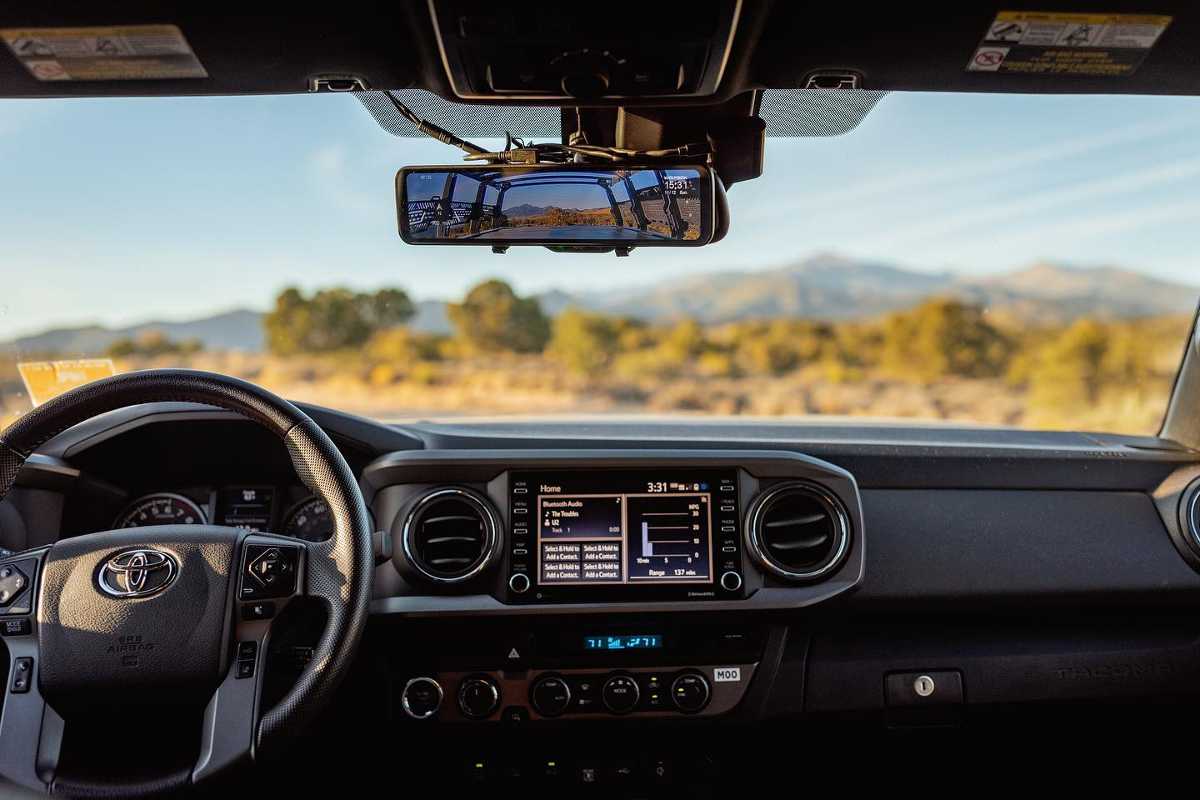
A dash cam left on a dashboard in direct sun can push cabin temperatures past 150°F within an hour, and that's exactly the kind of heat that shuts some units down, corrupts footage, or shortens their working life within a year or two. The difference often comes down to one component most buyers never check: whether the camera stores its backup charge in a lithium battery or a supercapacitor[1][2].
What That Backup Power Source Is Actually For
Every dash cam needs a small reserve of power to finish saving the current video file if the car's power cuts out mid-recording — during a collision, or simply when the ignition turns off. Lithium batteries and supercapacitors both handle this job, but heat affects them very differently. Lithium-ion cells degrade faster under sustained high temperatures and carry a small risk of swelling in extreme heat, while supercapacitors store energy electrostatically rather than through a chemical reaction, which makes them far more tolerant of temperature swings[1][3]. That's the mechanical reason manufacturers market supercapacitor-equipped models specifically around hot-climate reliability, not just as a premium add-on.
Where the Two Technologies Actually Diverge
|
Condition |
Lithium Battery Dash Cam |
Supercapacitor Dash Cam |
|---|---|---|
|
Short daily parking, moderate climate |
Performs fine, minimal long-term stress |
No meaningful advantage over a lithium unit in mild conditions |
|
Extended parking in direct sun, 90°F+ ambient |
Battery capacity degrades faster with repeated heat cycles[1][3] |
Rated for a wider operating range — WOLFBOX's G900TriPro Bumper lists -4°F to 158°F[4] |
|
Multi-hour heat soak (all-day parking, summer rest stops) |
Higher long-term failure risk from repeated thermal stress |
Built to handle sustained heat exposure without the same degradation curve |
|
Cold starts in winter |
Reduced capacity in freezing temperatures |
Also affected by cold, but without the compounding heat-driven failure pattern |
What Buyers in Hot Climates Actually Report
Owner discussions about summer dash cam failures follow a consistent pattern: units built around a small internal lithium cell are more likely to show battery error messages or shut down entirely after a season of repeated heat exposure, especially in vehicles parked outdoors without shade[2][5]. This isn't a flaw unique to one brand — it's a known trait of lithium chemistry under sustained heat, which is why dash cam makers targeting hot-climate markets increasingly spec supercapacitors on their higher-tier models. WOLFBOX's G900TriPro line, in both the Bumper and Cabin versions, uses what WOLFBOX describes as an upgraded supercapacitor built for reliability under extended thermal stress[4][6].
What to Actually Check Before Buying for a Hot Climate
- Look at the operating temperature range on the actual spec sheet, not the marketing copy — a wider range signals a component built for heat soak, not just typical daily use.
- Check whether the power source is listed as a supercapacitor or a lithium battery; this one spec line predicts more about summer reliability than resolution or screen size ever will.
- If you park outdoors regularly in a hot-climate region, a supercapacitor unit is worth the modest price premium, since the difference shows up months into ownership, not in the first few weeks.
- A higher price doesn't automatically mean better heat tolerance — some premium dash cams still run on lithium batteries, so the spec has to be confirmed directly.
What a Supercapacitor Doesn't Fix
A supercapacitor doesn't make a dash cam immune to heat damage across the board — extreme, prolonged exposure can still affect the display or the adhesive mount regardless of what powers the backup circuit. What it specifically prevents is the compounding battery degradation that shortens a lithium-based unit's working life in vehicles that spend a lot of time parked in direct sun. For drivers in consistently hot regions, or anyone whose vehicle sits outside for long stretches, this one spec is a more reliable signal of hot-weather readiness than anything else on the box[1][3][4].
Frequently Asked Questions
Do supercapacitor dash cams actually last longer in hot climates?
Yes — supercapacitors handle sustained heat exposure without the battery degradation pattern lithium cells experience, making them more heat-tolerant over time[1][3].
What operating temperature range should I look for in a hot climate?
Check the product spec sheet directly; WOLFBOX's G900TriPro Bumper, for example, lists a rated range of -4°F to 158°F using a supercapacitor[4].
Does a supercapacitor cost more than a lithium battery dash cam?
Supercapacitor-equipped models are often positioned at a higher price tier, but the tradeoff is specifically improved heat tolerance, not just a marketing upgrade[4][6].
Can heat still damage a dash cam that has a supercapacitor?
Yes — extreme prolonged heat can still affect the display or mounting adhesive regardless of power source; a supercapacitor specifically reduces battery-related degradation, not every heat effect[1][3].
References
[1] WOLFBOX: Dash Cam with Battery or Supercapacitor: Which One Should You Choose? — https://wolfbox.com/blogs/dash-cams/dash-cam-with-battery-or-supercapacitor
[2] Reddit r/askcarguys: Supercapacitor vs. lithium-battery dash-cam discussion — https://www.reddit.com/r/askcarguys/comments/1ukhmws/for_those_with_dashcams_do_you_prefer_a/
[3] dashcameras.net: Dash Cam Battery vs Capacitor, Which Is Better? — https://dashcameras.net/battery-vs-capacitor/
[4] WOLFBOX G900TriPro Bumper Version 3 Channel Rearview Mirror product page — https://wolfbox.com/products/wolfbox-g900tripro-bumper-version-3-channel-rearview-mirror
[5] Reddit r/askcarguys: Supercapacitor vs lithium battery dash cam discussion — https://www.reddit.com/r/askcarguys/comments/1ukhmws/for_those_with_dashcams_do_you_prefer_a/
[6] WOLFBOX G900TriPro Cabin Version 3-Channel Dash Camera product page — https://wolfbox.com/products/wolfbox-g900tripro-cabin-version-3-channel-dash-camera
[7] RedTiger: What Is a Supercapacitor in a Dash Cam? — https://redtigercam.com/blogs/dash-cam/what-is-a-supercapacitor-in-a-dash-cam

Leave a comment
All comments are moderated before being published.
This site is protected by hCaptcha and the hCaptcha Privacy Policy and Terms of Service apply.