






A dash cam that runs fine in a commuter sedan faces a harder job in a long-haul truck cab: hours of continuous heat during mandated rest breaks, sustained highway vibration over thousands of miles, and mounting rules that carry regulatory weight during a roadside inspection. None of that shows up on a spec sheet unless you know what to look for[1][2].
Where You're Actually Allowed to Mount It
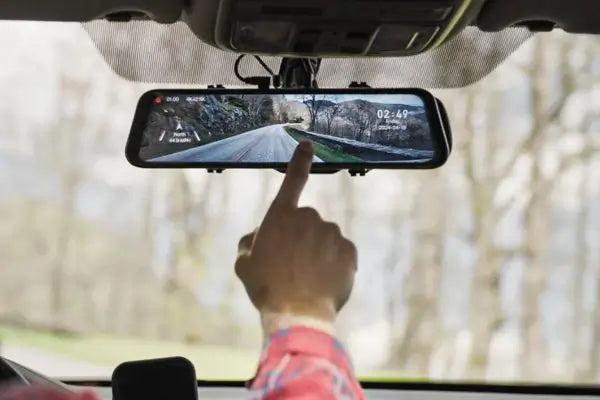
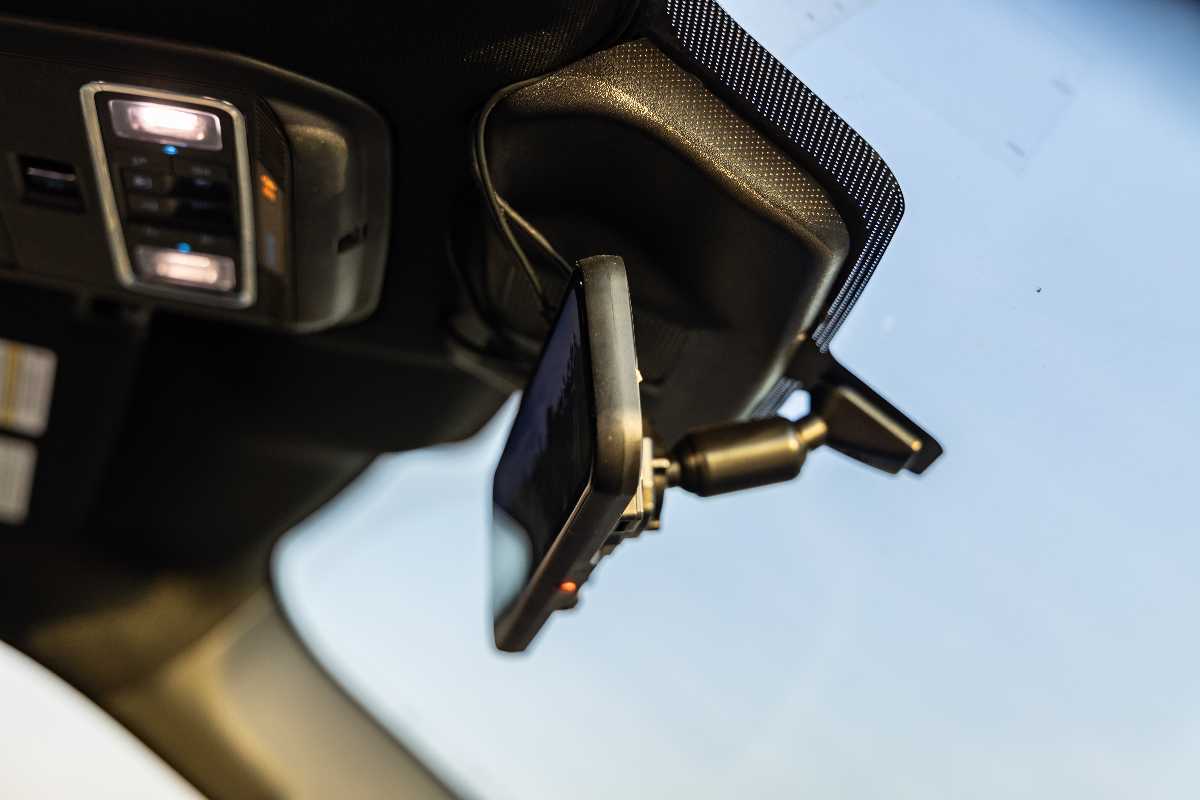
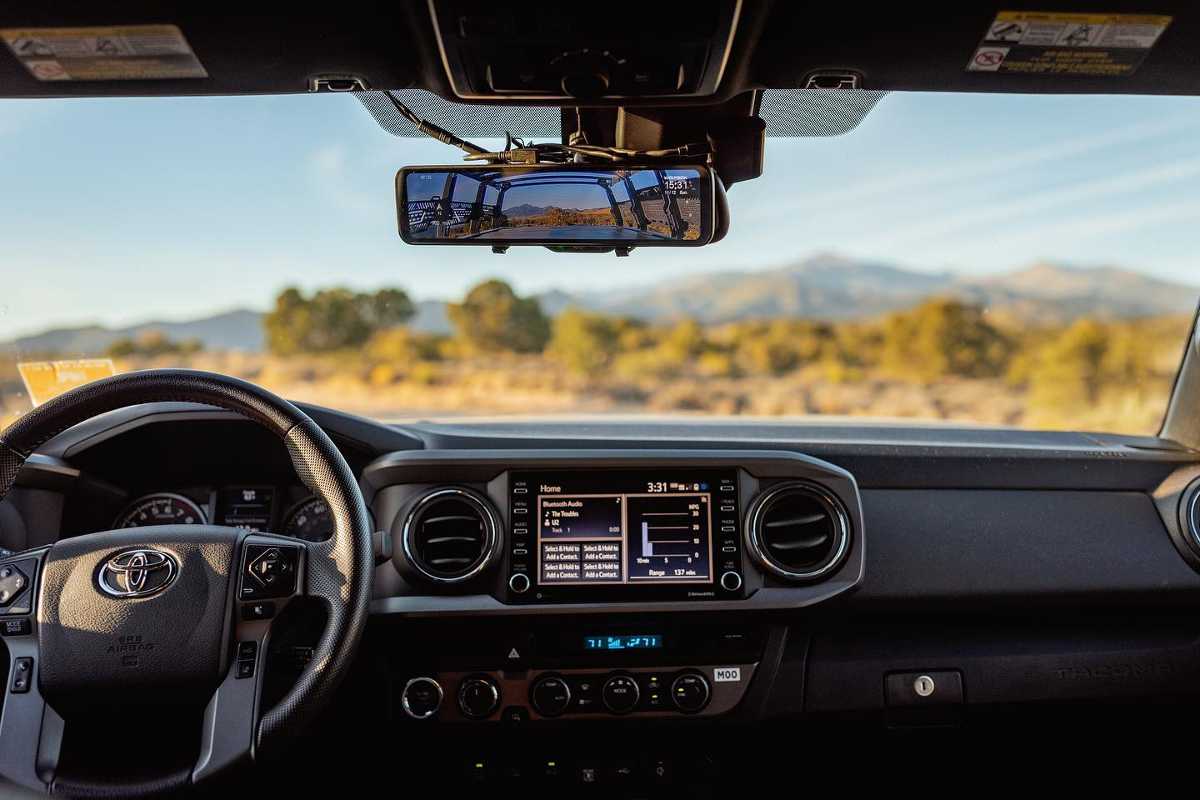
Federal regulation 49 CFR §393.60(e)(1) permits mounting vehicle safety technology, including dash cams, within 8.5 inches of the upper edge of the windshield's wiper-swept area, or within 7 inches of the lower edge, as long as the device doesn't block the driver's view of the road or posted signage[2][3]. This carries more weight for commercial drivers than personal-vehicle owners, since commercial vehicles go through roadside inspections where mounting placement can actually get flagged; the same federal rule applies specifically to devices classified as vehicle safety technology, a category that explicitly includes dash cams[2][4]. A mirror-style unit that replaces the rearview mirror, like the G900TriPro Bumper, sidesteps this entirely by occupying the mirror location instead of a separate windshield bracket that has to be positioned within that specific zone[5].
Heat and Vibration Are the Two Failure Points That Actually Matter Here
|
Stress Factor |
Why It Shows Up More on Long Hauls |
What to Check |
|---|---|---|
|
Sustained cabin heat |
Rest-stop parking in direct sun for hours, repeated daily, cycles the cabin through high heat far more than a commuter's short parking stops |
Operating temperature range; supercapacitor-based units are typically rated for a wider heat range than lithium-battery units[7] |
|
Continuous highway vibration |
Thousands of miles of sustained low-frequency vibration loosens standard adhesive windshield mounts faster than stop-and-go city driving does |
Mount type — mirror-replacement units skip the adhesive mount question entirely |
|
Storage write cycles |
Full-shift continuous recording writes to a card far more than intermittent commuter use |
A high-endurance card rated for continuous recording, and the unit's maximum supported card capacity[8] |
|
Power source stability |
Commercial electrical systems and auxiliary devices introduce voltage behavior that lithium batteries and supercapacitors handle differently |
The unit's documented power source type and temperature tolerance[7] |
Why Supercapacitors Come Up More in Trucking Conversations Than Passenger Cars
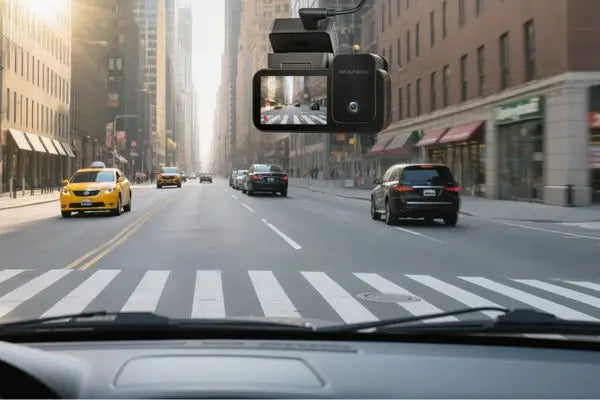
Dash cams use either a small lithium battery or a supercapacitor to save the final clip if power cuts out mid-recording. Supercapacitors generally handle a wider temperature range than lithium batteries, which matters specifically for a vehicle sitting parked in direct sun for hours during a mandated rest break rather than moving with airflow cooling the cabin[7]. The G900TriPro line is offered in Bumper and Cabin configurations; choose the Cabin version only when its additional interior-facing camera is useful for the job[5][6]. Lithium-battery dash cams aren't unusable in a truck, but they're more sensitive to prolonged heat soak, and that's a condition long-haul parking patterns create far more often than typical commuter driving does.
What Actually Changes When Trips Stretch Across Multiple Days
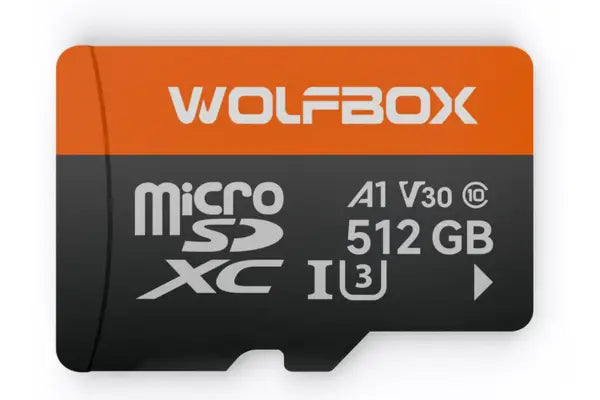
- Storage requirements scale up fast: a 10-hour shift fills a card far quicker than two 30-minute commutes, so maximum supported card size stops being a spec-sheet afterthought and becomes a real limit. Check the camera's documented card-capacity limit before buying, and choose a high-endurance card intended for continuous recording[5][6][8].
- Overnight parking mode at a rest stop works the same way it does for a car parked on a street, but the power draw needs managing against the truck's electrical system across a longer idle window.
- GPS-stamped location logging becomes more useful across multi-state routes, since it documents exact position and speed at any point along a trip that crosses several jurisdictions.
- Mount failure from vibration surfaces faster over sustained highway mileage than it does in city driving, so mount stability matters more the longer and more frequent the routes get.
Where Long-Haul Buyers Actually Go Wrong
The most common mistake is choosing a camera on resolution alone without checking its operating temperature rating — sharp footage doesn't help if the unit can't hold up in a 140°F cab during an August rest break. The second is sizing the storage card for personal driving habits instead of full-shift recording, which leads to the camera overwriting footage sooner than expected. The third is mounting a standard adhesive-bracket dash cam without checking the windshield placement rule that applies specifically to commercial vehicles, creating a compliance question during inspection that personal-vehicle drivers simply never run into[2][3][4].
Frequently Asked Questions
Do I need a special dash cam for a commercial truck?
Not a fundamentally different category, but one rated for wider heat tolerance and continuous recording, since trucks face more heat soak and mileage than personal vehicles[7].
Where can I legally mount a dash cam on a commercial truck?
Federal rule 49 CFR §393.60(e)(1) permits mounting within 8.5 inches of the windshield's upper wiper-swept edge without obstructing the driver's view[2][3].
Does heat actually damage dash cams parked at rest stops?
Extended heat soak during rest breaks is harder on lithium battery components than on supercapacitor-based units, which are rated for a wider temperature range[7].
How much storage does a long-haul dash cam need?
More than personal-use models, since continuous multi-hour daily recording fills storage faster; check the maximum supported card capacity before buying[8].
References
[1] FMCSA: ELD Functions FAQs (commercial vehicle regulatory context) — https://www.fmcsa.dot.gov/hours-service/elds/eld-functions-faqs
[2] Electronic Code of Federal Regulations: 49 CFR §393.60 — https://www.ecfr.gov/current/title-49/subtitle-B/chapter-III/subchapter-B/part-393/subpart-G/section-393.60
[3] SafetyTrack: New Dash Cam Obstruction Rules — Implications for Fleet Managers — https://www.safetytrack.com/blog/dash-cam-obstruction-rules/
[4] Expert Market: Dash Cam Laws in Every US State — Mounting & Recording — https://www.expertmarket.com/dash-cams/dash-cam-laws-by-state
[5] WOLFBOX G900TriPro Bumper Version 3 Channel Rearview Mirror product page — https://wolfbox.com/products/wolfbox-g900tripro-bumper-version-3-channel-rearview-mirror
[6] WOLFBOX G900TriPro Cabin Version 3-Channel Dash Camera product page — https://wolfbox.com/products/wolfbox-g900tripro-cabin-version-3-channel-dash-camera
[7] dashcameras.net: Dash Cam Battery vs Capacitor, Which Is Better? — https://dashcameras.net/battery-vs-capacitor/
[8] WOLFBOX Dash Cam 512GB/256GB/128GB Micro SD Card product page — https://wolfbox.com/products/wolfbox-dash-cam-512gb-256gb-micro-sd-card-class-10-u3-tf-card

Leave a comment
All comments are moderated before being published.
This site is protected by hCaptcha and the hCaptcha Privacy Policy and Terms of Service apply.