







WOLFBOX Brands
WOLFBOX Brands
You want to keep your car safe even when you are not around. A dash cam works like another set of eyes for your car. Many people think you need to work with wires or dig into the fuse box for round-the-clock protection. That is not the case. You can set up a dash cam parking mode without hardwire easily.
Table of contents
Parking mode on a dash cam is a feature that keeps your camera monitoring your vehicle even when the engine is off. Here's how it works.
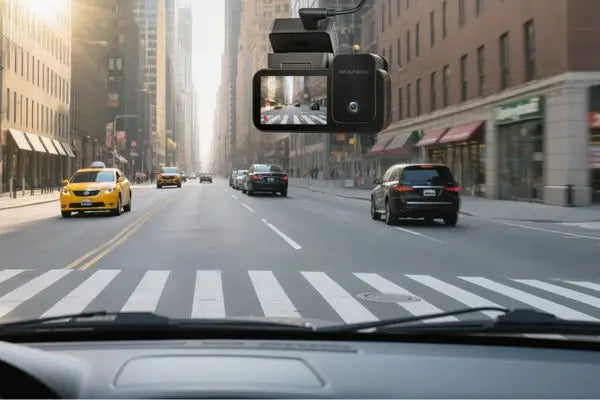
In parking mode, your dash cam continues to monitor your vehicle even when the engine is off. To save storage and reduce power consumption, some dash cams, like Wolfbox G900TriPro, usually record in time-lapse mode, capturing footage at a lower frame rate. However, if the camera detects a collision or impact, it automatically switches to event recording mode, capturing real-time video of the incident. This approach balances efficiency with security, ensuring important events are recorded without filling your memory card with unnecessary footage.
Some people do not want to try hardwiring because it asks you to touch the car's fuse box. That can feel too hard or scary, especially with a brand-new car. You might worry about your warranty or damaging your car's wires. That is why a dash cam parking mode without hardwire is helpful. You get the protection without needing to break into your vehicle's wiring.
If you want 24-hour dash cam protection without installing a hardwire kit, there are several convenient ways to keep your camera powered while your car is parked. You can use your vehicle's OBDII port, an external battery pack, or an always-on 12V outlet, each offering a different balance of convenience, battery safety, and recording time.
If your car has an OBDII port under the dashboard, you can use this as a power source. You just plug a special cable into this port to keep your dash cam running. Since this adapter draws from the car's battery, your camera gets power even after you stop your engine. Most adapters also have a way to protect your battery from losing too much power.
You can get a special battery to power your dash cam only. This battery charges up while you drive and then powers your camera while your car is parked. It will not use your main car battery, so your car won't have trouble starting up. A separate battery pack works well if you care about keeping your car's battery strong, especially on long trips or if you leave your car for long periods.
If your car keeps the cigarette lighter or accessory socket active even after the engine turns off, you can use it to power your dash cam. Just leave your dash cam plugged in. This option is simple and quick, but you need to pay attention to your car's battery level so it does not get too low. Read more:
When you understand your choices, you can try these clear steps to make your dash cam work while parked without any hard wiring.
For many people who use Wolfbox dash cams, plugging into the OBD-II port is a simple choice that works well.
If you want to keep your car's battery safe, you can use a dedicated dash cam battery instead.
For cars with a power outlet that stays on after the key is removed, you can leave your dash cam plugged in all the time.
You want to have a neat and safe setup for your dash cam, so here are some simple tips for each power choice.
You will want to know where your OBD-II port is before buying the cable. For most cars, it sits under the driver's dashboard area. Push the adapter in with steady hands but never force it. It should go smoothly and stay put. Make sure the OBD plug won't hit your feet while driving for extra comfort.
The battery should sit where there is a little breeze, like under the front seat. Use hook-and-loop strips so the battery does not slide if the car moves or you brake fast. Hide all cords under carpet mats or along car trim pieces so you and your passengers do not trip over them.
If you need to run a long wire, secure it from your console to your dash cam. Use small sticky clips along the windshield and the inside pillar of your car to guide the cable neatly. Never let it hang loose across the dash. A tidy look also means you do not bump the wire with your hands or gear shifter.
Using a non-hardwired dash cam parking mode requires understanding how your setup affects performance. Here are the main factors to consider:
Not all OBD-II ports or 12V outlets provide constant power, and some dash cams cannot distinguish between driving and parked states if they always receive power. Using cables or adapters that simulate the engine off signal (ACC detection) ensures your dash cam switches correctly into parking mode.
External batteries or non-hardwired solutions have limited power capacity, which affects how long your dash cam can record. Extreme temperatures (hot or cold) can reduce battery efficiency and shorten runtime. Plan your setup based on expected parking durations and environmental conditions.
Many modern vehicles automatically cut power to outlets after a short period to preserve the car battery. Check whether your always-on 12V sockets truly provide constant power. If not, your parking mode recording may stop earlier than expected.
By keeping these factors in mind, you can optimize your non-hardwired parking mode setup to maximize dash cam surveillance while protecting your car battery.
Now that you have a clear understanding of non-hardwired dash cam options, it's important to weigh convenience, reliability, and safety. Non-hardwired and hardwired setups each have distinct advantages depending on your vehicle, usage habits, and installation preferences.
You can avoid paying a mechanic by using methods that don't use wires. A hardwired kit might not cost much at first, but it usually needs to be installed by a professional, which adds to the cost. You can set up other easy options in just a few minutes, but they might cost more to buy.
When you hardwire, the camera gets steady power for as long as you need. Non-wired picks are good for short parking or if you only need the dash cam for a few hours. If you park for a week or more, hardwired setups often last longer without trouble.
If you use OBD adapters or a dash cam battery, you avoid tampering with wires, so your warranty stays safe. Hardwire kits may sometimes lead dealers to blame any electrical trouble on your dash cam install. Non-wired choices cause no harm and can be removed quickly, making them smart for leased cars.
Feature |
OBD-II Adapter |
External Battery Pack |
Always-On 12V Socket |
Hardwiring Kit |
Installation |
Very Easy (Plug & Play) |
Easy (Just place it) |
Easiest (Standard plug) |
Hard (Take more time) |
Cost |
Low ($20-$40) |
High ($150-$300) |
Free (Comes with camera) |
Low ($15-$30) + Install |
Battery Safety |
Good (Protects battery) |
Best (No drain risk) |
Poor (Might drain) |
Good (Has cutoff) |
Warranty Risk |
None |
None |
None |
Some risk |
Best For |
Daily Driving |
High Value Cars |
Short Parking |
Long-Term Stays |
You learned simple ways to keep your car protected without working on your car's wires. With a dash cam parking mode without hardwire method, you choose how you want to set up your dash cam with parking mode. Your car stays safe and your warranty stays strong. Each method has its benefit, depending on how you use your car.
No, you do not. You can use OBD-II cables or battery packs to power your camera. Hardwiring is just one of many ways to run parking mode.
You can plug your dash cam into an OBD-II port, use an external dedicated battery pack or use your car's always-on 12V socket if it stays active.
Yes, you can use a power bank, but it should be made for dash cams. Regular phone power banks might not work well in hot or cold cars.
It is possible. If you do not use a device that shuts off when the battery gets low, your car's battery could run out. OBD cables and most hardwire kits help prevent this.


