







Handing your teenager the car keys for the first time is a milestone, and being honest, it's also a little terrifying. And the best dash cam for new teen drivers becomes a second set of eyes. It gets your family through the nervous first months of independent driving with more information and less guesswork.
A well-chosen dash cam for new drivers won't prevent every close call. However, it captures moments that give you facts instead of a shrug and "I don't know what happened." Think of it less like a surveillance tool and more like a black box for a plane.
This guide breaks down exactly what to look for in a teen driver dash cam and why back-to-school season is the right time to install one. You’ll also know how two WOLFBOX models, the G900Pro and the G900TriPro Cabin, compare for families getting a new driver road-ready.
What Makes a Dash Cam "Teen-Driver Ready"?
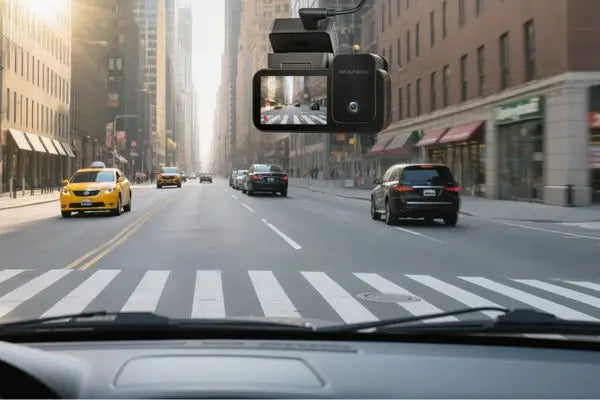
A dash cam for teen drivers needs three things above everything else. the first one is a dependable video in daylight and after dark. The next one would be a wide enough field of view to catch merging traffic and blind-spot surprises. And the last thing is a footage that's easy enough to pull up for uses. [1]
The right setup turns raw video into a teaching tool instead of a pile of files nobody ever opens. A camera that's technically impressive but too complicated to actually check after a stressful drive isn't doing its job. That’s why ease of use deserves just as much weight as resolution specs on the box.
Core Safety Features to Look For
Several specs define a useful teen-driver setup from a camera that just sits to keep recording into voids.
- 4K or near-4K front resolution keeps license plates and road signs readable even after you zoom in on a clip.
- A wide-angle lens (130 degrees or more) captures traffic merging from the side, not just what's directly ahead.
- Strong night vision seems mandatory, since a large share of serious crashes by teen drivers happen after dark.
- A G-sensor automatically locks footage the moment it detects a hard stop or impact; no overwriting by loop recording.
- GPS logging timestamps speed and location which significantly matters for insurance claims or DMV paperwork.
Nice-to-Have Extras for Peace of Mind
Checking the core safety boxes isn’t everything. A few extra features keep everything simpler for busy parents.
- Consider a cabin camera for interior visibility. It becomes useful for confirming seatbelt use or checking on younger siblings riding along.
- Take your shot at voice control. It lets your teen drive the car without touching the screen. Reverse assist with adjustable guideline levels.
- Pay attention to reasonably fast WiFi-based app access. It should let you pull clips without digging a microSD card out of the unit.
- Keep parking mode with a supercapacitor in mind. Such capacitors can handle temperature swings in any parked car more reliably.
Why Teen and New Drivers Face Higher Crash Risk
Inexperience, not recklessness, is the largest factor behind teen driver crash rates. Federal data shows drivers aged 15 to 20 make up only about 5 percent of licensed drivers. However, they’re involved in roughly 8.5 to 9 percent of fatal crashes. [1] [2]
They’re also involved in more than 12 percent of all police-reported crashes, a gap that points squarely to a lack of seat time behind the wheel. The first year of solo driving carries the highest risk of the entire teen driving period; the window a dash cam is built to cover.
The Numbers Behind the Risk
NHTSA reports that the fatal crash rate per mile driven for 16 to 19-year-olds is close to three times the rate for drivers 20 and older, with risk peaking at ages 16 and 17.
The National Safety Council's analysis of NHTSA data found that motor vehicle crashes remain the leading preventable cause of death for US teens. [2] [3]
The Insurance Institute for Highway Safety found that strong graduated driver licensing laws tend to lower fatal crash rates among 16 and 17-year-old drivers.
Common Risk Factors Parents Can Coach Around
Most of the risk clusters around a short list of behaviors that a dash cam can help you catch early.
- Distracted driving, including phone use, adjusting music, or reaching for objects while the car is moving.
- Extra teenage passengers, which government safety guidance flags as a major risk multiplier for new drivers. [2]
- Nighttime driving, when visibility drops and reaction time matters more.
- Speeding and following too closely, common in drivers still building judgment about following distance and stopping time.
- Not wearing a seatbelt, a factor NHTSA has linked to a large share of teen crash fatalities. [2]
No factors are unique to any one teenager. They're simply the predictable result of low mileage and limited experience. That’s why documented footage turns a vague warning into a teachable moment.
Best Dash Cam for New and Teen Drivers: Top WOLFBOX Picks
Most families choose by weighing the best dash cam for new drivers. The WOLFBOX G900Pro covers the road ahead and behind with strong clarity for a straightforward daily-driving setup.
Meanwhile, the WOLFBOX G900TriPro Cabin adds a third camera aimed at the interior, especially useful for road footage, seatbelt habits, and carpool checks.
WOLFBOX G900Pro: Best Everyday Pick for New Drivers
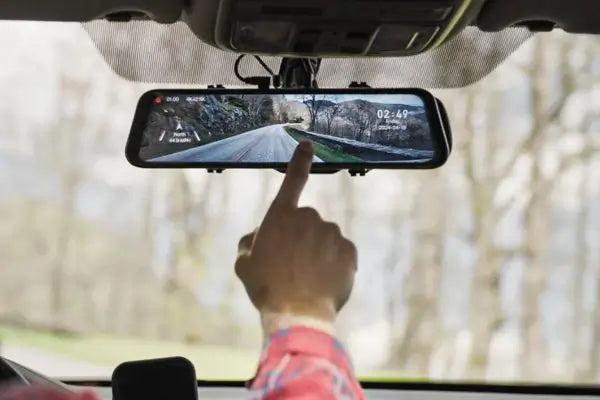
The G900Pro is a two-channel mirror dash cam with a built-in Sony STARVIS 2 IMX678 sensor. It remains a strong fit for a first-time driver who mainly needs clear road coverage without extra complexity. [4] [5]

- Front camera records at true 4K (3840×2160) using the 1/1.8-inch IMX678 sensor. In contrast, the rear camera shoots at 2.5K.
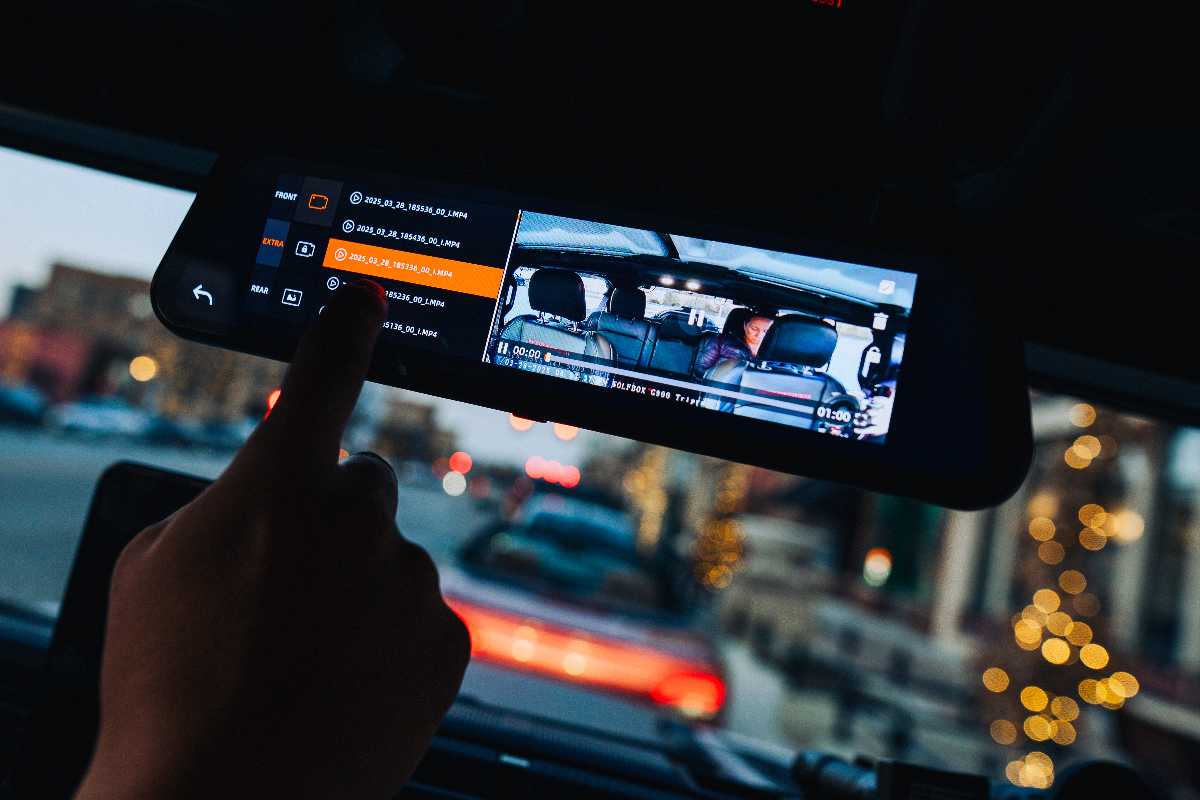
- A 12-inch IPS touchscreen replaces the factory mirror and supports split-screen front and rear viewing.
- Reverse assist adds adjustable parking guidelines. And the rear camera can mount inside or outside the vehicle depending on the setup. [5] [6]
- GPS (external plug-in antenna, included) logs real-time speed and route. Its 5.8GHz WiFi lets you pull footage into the WOLFBOX app.
- Parking mode (with a hardwire kit) uses battery-drain protection that cuts power once the vehicle's voltage drops to a preset threshold.
WOLFBOX G900TriPro Cabin: Best for Full Visibility Inside and Out
The G900TriPro Cabin builds on the same front and rear camera setup. However, it adds a dedicated interior lens, turning it into a stronger pick for the perfect teen driver dash cam with full-car awareness.
- Three simultaneous channels (4K front, 2.5K rear, and a 1080P infrared cabin camera) enable low-light interior recording. [7]
- The front sensor pairs a Sony IMX678 with an OmniVision OS04J10 rear sensor for detailed footage in both directions.
- 24-hour parking monitoring with an upgraded supercapacitor holds up across wide temperature swings. [8]
- Hands-free voice control and 5.8GHz WiFi give the G900TriPro Cabin the same connectivity as the G900Pro.
- Well suited to households that also use the vehicle for rideshare, carpooling, or want a documented record of driver(s). [9]
Both models carry an 18-month warranty when purchased directly through WOLFBOX's official site. They also come with a 14-day window for a full refund, plus 15 to 30 days with a 10 percent restocking fee, if the fit isn't right for your vehicle.
The G900Pro's dual-camera setup usually covers what a new driver needs for a daily commuter. And the G900TriPro Cabin seems perfect for families who want cabin views with long-term value.

How a Cabin-View Dash Cam Supports (Not Spies On) Your Teen
A cabin camera works best as a tool you're upfront about, not a surprise your teen discovers later. An interior footage should become a shared reference point for talking through a close call. The goal isn't constant surveillance; it's having context on the rare occasions something goes wrong. [10]
Building Trust with Transparency
- Tell your teen the cabin camera exists and explain that it's there for safety documentation, not daily monitoring.
- Agree on when footage actually gets reviewed, such as after an incident, a near-miss, or a specific concern.
- Let your teen see how footage review works at least once, so the process feels transparent instead of mysterious.
What to Discuss Before Installing
A short conversation before the camera goes in prevents most misunderstandings down the road.
- Who has access to the footage and how it's stored or deleted.
- Whether friends riding along will be told the cabin is recorded.
- What happens if or when the footage shows a rule violation.
Setting Up the Dash Cam Before Handing Over the Keys
A dash cam helps only if it's installed securely, connected to power correctly, and configured before being pulled out of the driveway. Plan on setting aside 30 to 60 minutes for a clean install, plus a few extra minutes in the companion app to turn on the alerts. [11]
Installation Checklist
A mirror dash cam mounts without drilling, but a few details are easy to overlook on a first install.
- Confirm the rubber straps are securely wrapped around your factory mirror before mounting the unit over it.
- Route the rear camera cable along the roof liner and A-pillar for a clean, factory-look finish.
- Install a hardwire kit for a 24-hour parking monitoring, and set the low-voltage cutoff to protect your car battery.
- Connect the rear camera's reverse wire to your reverse light circuit to activate parking guidelines automatically when shifting into reverse.
- Test the front, rear, and (if applicable) cabin feeds before your teen's first solo drive, not after.
App, Alerts, and Parking Mode Settings to Turn On
A few settings inside the app separate a passive recorder from an active safety tool.
- Enable G-sensor collision detection so hard stops or impacts automatically lock that clip.
- Turn on GPS so trips are logged with speed and route data.
- Set parking mode to active if a hardwire kit is installed, so the car is monitored while unattended.
- Pair the app to your own phone to keep reviews a parent-initiated process.
Pairing a Dash Cam with a Parent-Teen Driving Agreement
AAA's StartSmart program encourages families to put driving expectations in writing through a parent-teen driving agreement. And it should cover everything from passenger limits to curfew and what happens after a violation. [12]
What to Include in the Agreement
A written agreement works best when it's specific enough that there's no ambiguity about expectations.
- Passenger limits, since the Insurance Institute for Highway Safety linked additional teens to a sharply higher fatal crash risk.
- Curfew and check-in rules for where your teen is going and when they'll be back.
- Phone-use rules, ideally zero tolerance while the car is in motion.
- Clear, pre-agreed consequences tied to specific violations, decided before an incident happens rather than in the heat of the moment.
How Footage Reinforces the Conversation
Footage works best as a coaching tool rather than a "gotcha." And it keeps the conversation focused on skill-building.
- Review a clip together shortly after a concerning drive, while details are still fresh.
- Focus on specific, observable habits, such as following distance or checking blind spots.
- Recognize good decisions too, since positive reinforcement builds confidence with caution.
Back-to-School Season: Why Now Is the Right Time
Back-to-school season means more solo trips: morning drop-offs, after-school activities, and weekend drives with friends. That jump in independent mileage is exactly when a dash cam for new drivers earns its worth.
It covers the routes and routines your teen hasn't fully settled into yet. Many parents neglect camera installation and household driving agreement signing before the first week of school. They only proceed to do so after a scare. [13] [14]
That differentiates being proactive from playing catch-up. It also gives your teen some low-stakes days to get comfortable with the screen and voice commands before traffic picks up around school zones and bus routes.
Conclusion
No single gadget can replace practice, patience, and an ongoing conversation about safe driving. Still, the best dash cam for new teen drivers gives your family something practical and relieving. You’ll have a clear record of what actually happened, features that reward good habits, and a shared reference point for parent-teen conversations.
You can choose the WOLFBOX G900Pro for straightforward front-and-rear coverage. Or, you may go for the WOLFBOX G900TriPro Cabin for full interior and exterior visibility. Start the setup to walk through the footage together after the first few drives. Then, let the dash cam do what it does best: give your family clarity instead of guesswork.
Frequently Asked Questions (FAQs)
What is the best dash cam for a new teen driver?
A mirror dash cam with a 4K front camera, strong night vision, and GPS logging covers the basics for most. The WOLFBOX G900Pro suits drivers who need clear front-and-rear coverage. Meanwhile, the WOLFBOX G900TriPro Cabin adds a third interior camera for households that also want cabin visibility.
Do dash cams actually lower car insurance costs for teen drivers?
Some insurers offer discounts or usage-based programs. However, the exact policy varies by provider and state. Contact your insurer about how dash cam or telematics data affects your teen's premium.
Is it legal to record inside my own car with a cabin camera?
Laws on audio recording and consent vary by state. Check your state's specific recording laws regarding audio. Many families choose to disable audio recording on the cabin channel and rely on video alone.
How long does dash cam footage typically stay on the memory card?
Most dash cams use loop recording, automatically overwriting older footage once the memory card fills up. The G-sensor locks and protects specific clips, like hard stops, from being overwritten.
Should I tell my teen that the cabin camera is recording?
Yes. Being upfront about a cabin camera builds trust and keeps the tool focused on coaching. The same goes for safety documentation instead of surprised/exposed surveillance.
References
[1] National Highway Traffic Safety Administration (NHTSA): "Teen Driving" – https://www.nhtsa.gov/road-safety/teen-driving
[2] National Highway Traffic Safety Administration (NHTSA): "Countermeasures That Work: Young Drivers" – https://www.nhtsa.gov/book/countermeasures-that-work/young-drivers
[3] National Safety Council: "Teen Drivers" – https://injuryfacts.nsc.org/motor-vehicle/road-users/teen-drivers
[4] Wolfbox: “Wolfbox G900Pro Parking Monitor Dash Cam” – https://wolfbox.com/products/wolfbox-2024-g900-pro-wifi-touch-screen-parking-monitoring-dash-cam-smart-mirror-with-starvis-678-sensor
[5] BroncoSport Forum: “Wolfbox G900Pro Review: Installation, Testing, and Long-Term Impressions” – https://www.broncosportforum.com/forum/threads/wolfbox-g900pro-review-installation-testing-and-long-term-impressions.14708/
[6] TechRadar: “Wolfbox G900Pro Dash Cam Review” – https://www.techradar.com/vehicle-tech/dash-cams/wolfbox-g900-pro-dash-cam-review
[7] Wolfbox: “Wolfbox G900TriPro Cabin Version” – https://wolfbox.com/products/wolfbox-g900tripro-cabin-version-3-channel-dash-camera
[8] The Bronco Nation: “Wolfbox G900TriPro Honest Review” – https://thebronconation.com/bronco-how-to-n.141/wolfbox-g900-tripro-honest-review-t.22889/
[9] DashCamGuys: “Wolfbox G900TriPro Review: Cabin vs Bumper Tested at Home” – https://dashcamguys.com.au/blogs/reviews/wolfbox-g900-tripro-review-cabin-vs-bumper-tested-at-home
[10] Insurance Institute for Highway Safety (IIHS): "Study of Teen Fatal Crash Rates Adds to Evidence of GDL Benefits" – https://www.iihs.org/news/detail/study-of-teen-fatal-crash-rates-adds-to-evidence-of-gdl-benefits
[11] Wolfbox: “Dash Cam Installtion Guide: In-Depth Guide for a Seamless Setup” – https://wolfbox.com/blogs/news/dash-cam-installation-guide-in-depth-instructions-for-a-seamless-setup
[12] AAA Exchange: “Pointers for Parents” – https://exchange.aaa.com/safety/teen-driver-safety/pointers-for-parents/
[13] Gallon Law: “Back-to-School Teen Driving Safety” – https://www.gallonlaw.com/back-to-school-teen-driving-safety/
[14] My Drive Academy: “Why Summer is the Best Time for Teens to Learn to Drive” - https://mydriveacademy.com/why-summer-is-the-best-time-for-teens-to-learn-to-drive/



Leave a comment
All comments are moderated before being published.
This site is protected by hCaptcha and the hCaptcha Privacy Policy and Terms of Service apply.