







If you've ever watched a dash cam slowly droop down the windshield on a hot afternoon, you already understand why the mount matters as much as the camera. A dash cam can have great resolution and clean night vision, but none of that helps if the unit shifts every time you hit a pothole or falls off entirely on a July commute. Shaky, misaligned footage is often a mounting problem, not a camera problem, since even a slight tilt can mean missing the one angle that actually mattered. The mount is what turns a good camera into reliable evidence, and it's also the part of the install most people rush through without really comparing their options.
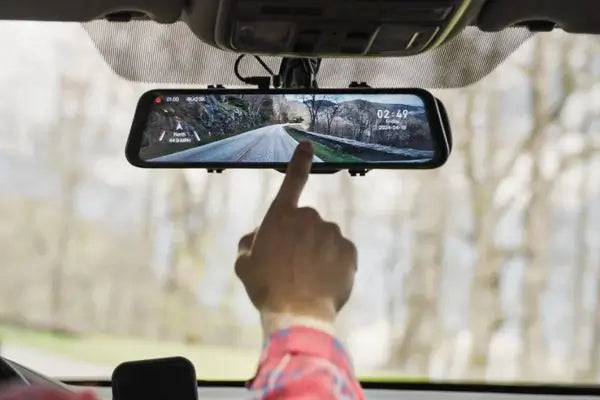
Most windshield-mounted dash cams give you a choice between two mounting styles: suction cup and adhesive. Both hold a camera to the glass, but they do it in very different ways, and each one fits a different kind of driver. Some Wolfbox dash cams also come as mirror-style units that skip windshield mounting altogether, which is worth knowing before you decide. This guide breaks down how suction and adhesive mounts actually perform in daily use, so you can pick the one that matches how and where you drive.
Suction Cup Mounts: Flexible and Reusable
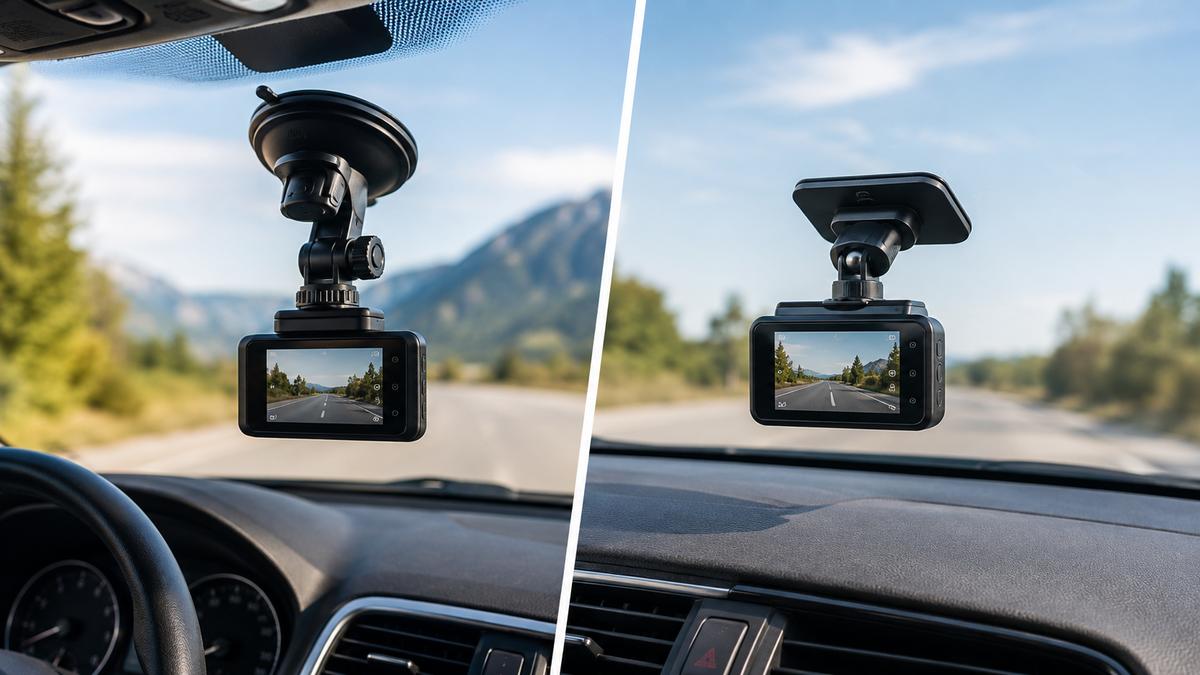
A suction cup mount uses a rubber or silicone cup with a locking lever to grip the windshield through air pressure. Press it against clean glass, flip the lever, and the seal holds. It's the same basic mechanism as a phone holder or GPS mount, and most drivers have used one before without thinking twice about it.
Pros
- Installs and removes in seconds, no tools needed
- Fully repositionable, so you can fine-tune the angle after the camera is running
- Moves easily between vehicles if you own more than one car or swap cameras often
- Leaves no residue or marks on the glass when removed
Cons
- Can loosen over time in extreme heat or cold if the seal isn't reset periodically
- Adds a bit more bulk near the mirror than a low-profile adhesive mount
- Occasionally needs a fresh press after a rough drive on bad roads
Installation Process
Wipe the windshield with glass cleaner and a lint-free cloth, remove any dust or old adhesive residue, then press the cup firmly against the glass and engage the locking arm. That's the entire process, and it takes less than a minute once the glass is clean. The suction cup mount picks go into more detail on getting a seal that actually holds for the long haul.
Stability and Durability
A properly seated suction mount is more durable than people expect. It won't budge on normal roads, and the locking lever design used on most modern dash cams. That said, suction does rely on a physical seal, so it's worth a quick check every few weeks, especially if your car sits in direct sun.
Best Use Cases
Drivers who want flexibility get the most out of a suction mount. If you switch cars, lend your vehicle out, rent often, or just like being able to adjust the angle without starting over, suction wins here.

Adhesive Mounts: Permanent and Low-Profile
An adhesive mount uses a strong double-sided tape, often a foam-core VHB-style adhesive, to hold a mounting bracket against the glass. The camera clips into the bracket, so you can still remove the camera whenever you like. This is the mounting method WOLFBOX mini dash cams are designed around. They also include an electrostatic sticker, which sits between the adhesive mount and the windshield as a protective layer.
Pros
- Sits flush and low against the glass with almost no wobble
- Doesn't rely on a seal, so temperature swings have less effect on holding power
- Cleaner, more discreet look since there's no visible suction cup
- Stays secure once installed, with little need for readjustment
- With an electrostatic sticker layer, the mount is easier to reposition or remove, and the adhesive stays off the glass
Things to Consider
- Adhesive mounts hold firmly once bonded, so it's worth choosing your placement and angle before pressing the mount into place
- Without a protective layer such as an electrostatic sticker, removing an adhesive base later may leave some residue on the glass
- If you swap between vehicles often, check that your mount setup allows for easy removal
Installation Process
Clean and dry the windshield thoroughly, since any residue or fingerprint oil can weaken the bond. If your dash cam includes an electrostatic sticker, apply it to the glass first and attach the adhesive mount to the sticker rather than directly to the windshield. Peel the backing, press the mount firmly for the recommended time, then let it set for a few hours before attaching the camera.
Stability and Durability
Adhesive mounts are known for a steady hold. Once bonded, they resist vibration well and don't loosen the way a suction seal occasionally can. That makes them a good fit for drivers who log long highway miles or regularly travel on rough roads.
Best Use Cases
Adhesive mounts suit drivers who want a secure, low-profile setup near the mirror. They work well in owned vehicles and long-term installations. With an electrostatic sticker in place, they're also a practical option for drivers who want the option to reposition or remove the mount later.

Suction vs. Adhesive: Quick Comparison
|
Feature |
Suction Cup Mount |
Adhesive Mount |
|---|---|---|
|
Ease of installation |
Very easy, no curing time |
Easy, but needs cure time before use |
|
Stability |
Strong, with occasional reseating |
Very strong, no reseating needed |
|
Adjustability |
Fully repositionable anytime |
Fixed after bonding |
|
Removal |
Instant, no residue |
Difficult, may leave residue |
|
Best for |
Multiple vehicles, rentals, flexibility |
Permanent installs, smooth roads, clean look |
Which Mount Is Best for Your Situation
Daily Drivers
If this is your own car and it's not going anywhere, either mount works well over the long run. Adhesive tends to win for daily drivers who want a set-it-and-forget-it install with zero wobble over years of use.
Rental Cars
Suction cups are really the only sensible option here. You can't leave adhesive residue on a rental windshield, and you need to remove the camera cleanly when you return the keys.
Ride-Share Drivers
This is a case where suction cup flexibility really matters. Ride-share drivers often adjust the camera angle to capture the cabin better, switch cars during maintenance, or want the option to move a camera to a second vehicle. A three-channel dash cam with a suction mount gives that flexibility without sacrificing footage quality.
Road Trips
For long-distance driving, adhesive mounts hold up better against the constant vibration of hours-long highway stretches. If your dash cam is coming along for a cross-country trip, a properly cured adhesive mount means one less thing to check at rest stops.
Extreme Climates
This one depends on which direction you're worried about. Suction cups can soften and lose grip in extreme heat if left unchecked, since the rubber expands and the vacuum weakens. Adhesive mounts handle heat better once fully cured, but very cold climates can make some adhesives more brittle during the initial install. In general, adhesive mounts perform more consistently across seasonal swings, while suction mounts just need a quick check-and-reseat during heat waves or after a hard freeze.
Wolfbox Recommendation: Matching the Mount to the Camera
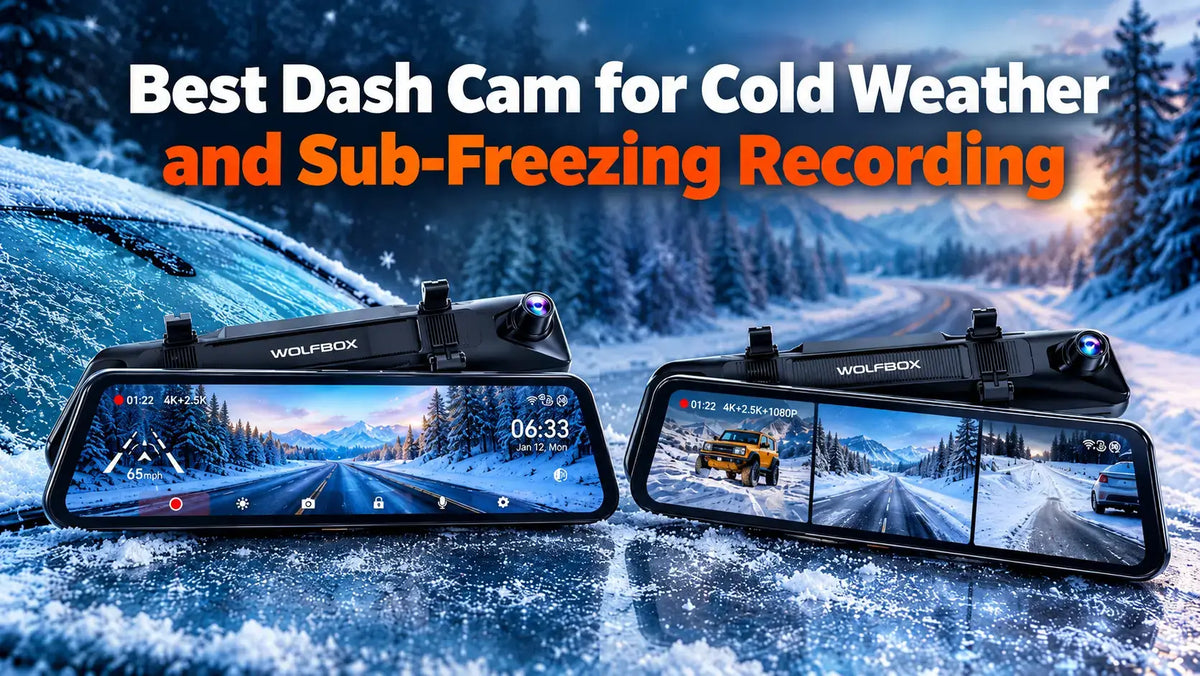
Not every Wolfbox dash cam even needs this decision. The mirror-style models, like the G900TriPro and G900Pro, attach to the existing rearview mirror with an adjustable strap instead of bonding to the glass at all. That sidesteps the suction-versus-adhesive question entirely, which is one reason mirror dash cams have become popular with drivers who don't want to deal with windshield mounts in the first place.
For WOLFBOX’s windshield-mounted models, such as the compact X5 and X3 Mini series or the i07 three-channel system, the cameras use an adhesive mount for a secure, low-profile installation. The package also includes an electrostatic sticker that goes between the windshield and the adhesive mount. This sticker helps prevent adhesive residue from being left on the glass and makes the camera easier to remove or reposition when needed, without sticking the adhesive directly to the windshield.
Either way, the mounting hardware only performs as well as the setup behind it. A stable mount paired with correct wiring, from the power cable routing to a hardwire kit for parking mode, is what actually delivers smooth, usable footage when you need it most. Our best placement guide cover both the mechanical and electrical sides, so the mount isn't fighting against a loose cable pulling it out of position.
Dash Cam Installation Tips
A few habits make either mount type perform better and last longer.
- Clean the glass properly. Use actual glass cleaner, not an all-purpose spray, and let the windshield dry completely before mounting. Oil and residue are the number one reason suction seals and adhesive bonds fail early.
- Mount within the wiper's path. Placing the camera where the wiper blade reaches keeps the lens clear of rain and road grime automatically.
- Keep the mount out of your direct line of sight. According to the National Highway Traffic Safety Administration, distracted driving contributed to over 3,200 deaths in 2024 alone, and anything that blocks your forward view, including a poorly placed dash cam, works against safe driving rather than for it.
- Route the power cable along the headliner and A-pillar, not loose across the dash, so it doesn't dangle in front of the mount or tug the camera out of alignment over time.
- Give adhesive mounts time to cure before hanging the full camera weight on them. Rushing this step is the most common reason adhesive mounts fail within the first week.
- Recheck suction mounts periodically, especially after a stretch of very hot or very cold weather, since that's when seals are most likely to need a fresh press.
Frequently Asked Questions
Do suction cup mounts damage windshields?
No. A quality suction mount leaves no marks or residue and can be removed and reapplied indefinitely without affecting the glass.
Can I switch from a suction mount to an adhesive mount later?
Yes. Most dash cams use a standardized bracket size, so you can swap the base without replacing the camera itself. Just be sure the windshield is fully cleaned of any old residue before applying new adhesive.
Will an adhesive mount come loose in hot weather?
Once properly cured, a quality adhesive mount holds up well in heat. Most failures happen when the camera is mounted before the adhesive has had time to fully bond, which usually takes a few hours at minimum.
Which mount is better for a rental car?
Suction cup mounts, without question. They install and remove cleanly with no risk of leaving residue behind, which matters when you have to return the car in its original condition.
Do mirror dash cams need a suction or adhesive mount at all?
No. Mirror-style dash cams, like several Wolfbox models, attach with an adjustable strap over your existing rearview mirror, so there's no windshield mounting decision to make in the first place.
Final Thoughts
There's no universal winner between suction and adhesive mounts, only the one that fits how you actually use your car. Suction cups give you flexibility and easy removal, adhesive mounts give you a rock-solid, permanent hold, and Wolfbox's mirror-style cameras skip the debate entirely. Take a look at the full lineup of Wolfbox dash cams and mounting accessories to find the setup that matches your driving, whether that's a daily commute, a ride-share gig, or the next long road trip.




Leave a comment
All comments are moderated before being published.
This site is protected by hCaptcha and the hCaptcha Privacy Policy and Terms of Service apply.