





WOLFBOX Brands
WOLFBOX Brands
Is There a Wireless Dash Cam? Many drivers wonder if a truly cable-free dash cam exists for their car. While "wireless" often refers to how you access footage via Wi‑Fi or LTE, most dash cams still need power from your vehicle.
In this article, we'll explain what wireless really means, explore battery-powered, Wi‑Fi, and LTE dash cams, and guide you on choosing the right option for smooth recording, parking mode, and easy access to your videos.
Table of contents
Many people think a wireless dash cam should work with no wires at all. For most dash cams, the word 'wireless' often stands for how you access your footage, not how the camera gets power. It usually means you can connect your camera to your phone with Wi-Fi or Bluetooth. Once your camera links to your phone, you can see your recordings easily. You do not need to pull out an SD card just to check your latest drive.
You will see some models that are advertised as completely 'wireless' or 'cordless.' However, true wire-free dash cams are very rare. These cameras almost always still need power from your car's battery or a plug for normal daily use. Their 'wireless' label usually means they send videos to your phone without needing data cables, not that you can put the camera anywhere without charging it.
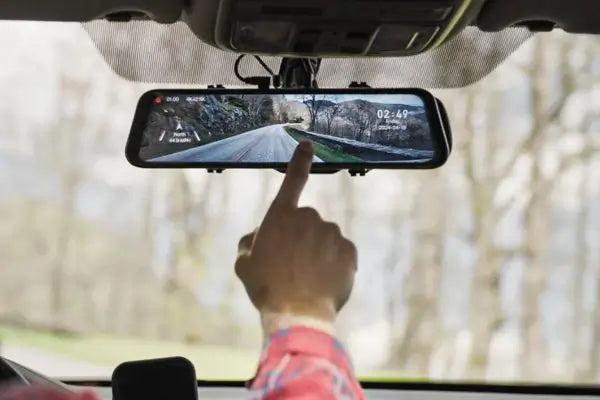
You may want to know exactly what you get from a wireless connection. With a dash cam that has Wi-Fi, your phone can control some or all of its features. For example, you control the recording settings, see the camera feed and save video clips with just your phone. This saves you time because you skip the step of taking a memory card out and plugging it into a computer.
You might ask, why does a wireless dash cam still depend on wires for power? The answer is straightforward. Your dash cam needs a lot of power to work right. To cover your whole drive, your camera must stay on and record smoothly. When your car is parked, you still want the camera ready for impact alerts or motion.
For your dash cam to keep recording and capturing events, it needs a stable supply of power from your car's battery. If it had to run from a small battery alone, your camera would shut down too soon. Then you could lose important recordings or miss vital moments.
Think about the features that matter most to you. Your dash cam may offer loop recording to save every moment from your drive. This uses a steady amount of power all the time. If you use 4K video, the power needs go up. Even when parked, your camera's sensors must stay active to watch for bumps or movement. These sensors keep your car safe but also use energy non-stop.
You deserve to know the types of dash camavailable, so you do not waste your time.
Some dash cams come with built-in batteries. These are sometimes called cordless because they can work for a short time without power. The built-in battery is really just for backup. It helps only during emergencies, maybe just a few minutes if the car loses power, enough to save your last recording.
If you want remote alerts or the ability to see your dash cam's footage from far away, LTE dash cams might fit you. LTE models let your camera connect to cellular data, just like your mobile phone. With these dash cams, you can get alerts on your phone if your car is hit or moved. You can also see a live video feed anytime.
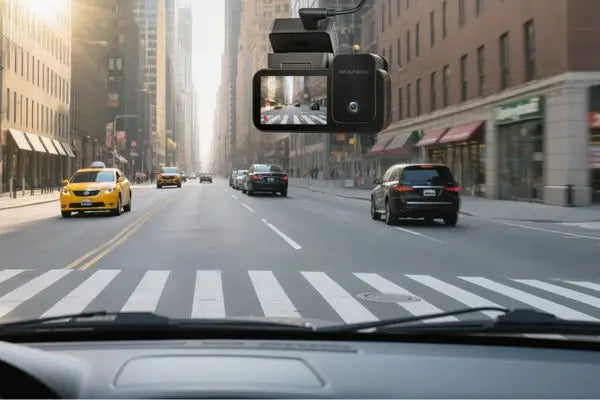
Many drivers like you choose Wi-Fi dash cams above all. These connect to your car for power, but set up a Wi-Fi network you access with your phone. You use an app to keep track of recordings, change camera settings and download clips right to your mobile. Wi-Fi dash cams like the WOLFBOX G900TriPro Bumper Version and G900Pro let you skip cables and cards when you want your videos fast.
Feature |
Dash Cam with Battery |
Wi-Fi Dash Cam |
LTE Dash Cam |
Primary Use |
Short-term emergency backup |
Daily driving and video sharing |
Remote monitoring and security |
Power Source |
Needs a wired connection for normal use |
Requires a constant wired connection |
Requires a constant wired connection |
Video Access |
Must remove SD card (unless it also has Wi-Fi) |
Via app within Wi-Fi range |
Via app from anywhere with internet |
Special Need |
Limited battery life |
Smartphone and app needed |
Requires a cellular data plan |
You need to match your dash cam choice to your daily habits. Think about where you drive, how long you park and how you want to view your recordings.
You should know what to look for in a battery-powered dash cam.
You might prefer the convenience and speed of Wi-Fi dash cams.
LTE dash cams can give you security from a distance.
Every dash cam type comes with strengths and some drawbacks.
You might have high hopes for what a wireless dash cam can do, but the reality is often a little different.
Consideration |
What to Look For |
Why It Matters |
Video Quality |
1080p, 2K or 4K resolution at 30fps or 60fps |
Higher resolution and frame rate help capture license plates and details for evidence. |
Connectivity |
Strong Wi-Fi or good LTE with a fair data plan |
This will affect how you view your recordings and get alerts on your phone. |
Power Method |
Accepts a hardwire kit and has voltage protection |
This keeps your dash camera ready, even when you park, without draining your main battery. |
Ease of Use |
Easy-to-use app and simple controls |
You want to save and find your footage quickly when you need it most. |
A lot of you still ask "is there a wireless dash cam". Yes, you can buy wireless dash cams like Wolfbox, but "wireless" usually just means you can easily access your videos through apps, Wi-Fi, or the cloud. It doesn't mean that your dash cam doesn't need to be plugged into your car to work. There aren't many fully cordless dash cams, and most of the time they don't stay on for very long.
Dash cams with no power wires are rare and can only record for short times on battery. Most 'wireless' dash cams connect by Wi-Fi to your phone but still use a power cable.
That's up to you. A wired dash cam is very stable for recording your whole trip. A wireless (Wi-Fi) model lets you get videos to your phone much faster.
Even a wireless dash cam must take power from your car. You plug it into the 12V socket or use a hardwire kit into the fuse box.
That depends on what matters to you. WOLFBOX models like the G900Pro are favorite choices because they connect fast by Wi-Fi and record clear video every day.

