







WOLFBOX Brands
WOLFBOX Brands
Can you save money by using your action camera for car recording? Can you use a GoPro as a dashcam? The short answer is yes, but you'll regret it. Real-world testing shows GoPros fail when you need them most. This guide reveals why using a GoPro as a dashcam creates more headaches than protection.
Many drivers consider this option because they already own a GoPro. Why buy another camera when you have a $400 action camera sitting at home?
However, automotive experts who tested this setup for months discovered major problems. Using a GoPro as a dashcam might seem like a brilliant idea, but it's actually a risky business.
The main issue comes down to purpose. GoPros were built for adventure videos, not daily car protection. When you try using adventure gear for automotive safety, problems pile up fast.
Now let's break down exactly how these two camera types differ in real-world use.
GoPro cameras capture adventure footage for short periods. The Hero 12 records stunning 5.3K video at 60fps with advanced stabilization.
These cameras excel at making exciting videos for sports, travel, and outdoor activities. They're built to be portable, removable, and versatile.
Real dashcams are explicitly engineered for cars. They start recording when you turn on your engine.
They stop when you turn off your vehicle. Everything happens automatically without any button pressing or remembering.
Related: How Do Dash Cams Work?
GoPro loop recording is basic and not optimized for use in automotive applications.
Real dashcams utilize G-sensors to save crucial footage during accidents automatically. At the same time, continue to record the standard loop.
GoPros cannot handle extreme temperatures on car dashboards. Dashcams are specifically designed to withstand the harsh conditions of year-round vehicle use.
The fundamental difference is simple. One makes cool videos, the other protects your car and wallet from expensive problems.
To make an informed decision, we need to examine both the advantages and disadvantages of this setup. Testing reveals both strengths and significant weaknesses when evaluating GoPro as a dashcam.
There are several pros for GoPro as a dashcam; these are:
GoPro Hero 10 records 5.3K at 60fps and 4K at 120fps. It delivers sharper footage than most dashcams. The video quality is professional-grade with excellent color accuracy.
GoPros offer multiple lens options, including Super View, Wide, and Linear views. The ultra-wide-angle lens captures various traffic lanes and roadside details in a single frame.
GoPros are designed to be mounted on a variety of surfaces. You can remove them easily for other activities, maximizing your camera investment.
GoPro Hero 10 features advanced HyperSmooth 4.0 stabilization, which keeps footage smooth even on bumpy roads.
Waterproof up to 33 feet (10 meters). GoPros are better equipped to handle changes in car humidity and temperature than regular cameras.
There are several cons for GoPro as a dashcam; these are:
Basic GoPro costs about $399, while quality dash cams typically range from $100 to $250. You're paying two times more for features you don't need in a car.
GoPro Hero 10 provides up to 140 minutes of continuous recording. Long commutes or road trips drain the battery, leaving you unprotected.
GoPros cannot auto-launch when the vehicle is turned on. You must manually start recording every single trip.
GoPros lack G-sensors that detect accidents or sudden impacts. Real dashcams automatically save collision footage.
GoPros cannot withstand extreme temperatures and can overheat in hot weather or fail in icy conditions.
Most GoPros don't have GPS tracking built in to record location and speed, which insurance companies need for claims processing.
Here are the specific problems that make using a GoPro as a dashcam unreliable for serious car protection.
Real dashcams start recording automatically when you turn the key in your car. GoPros require manual operation every trip. Forget to press record during a stressful morning? You're driving unprotected.
Intelligent Parking Mode records movement or bumps when the car is parked. GoPros don't have this feature. Someone hits your parked car? No recording exists.
Having a GoPro mounted on your dash shows everyone what you have inside. People are aware of the cost of GoPros. Which could be an invitation for theft. Professional dashcams look boring, but they help you stay safer.
GoPros can overheat in hot weather. It is causing automatic shutdowns during critical moments. Summer heat renders expensive cameras useless.
Action cameras struggle in low-light conditions. License plates become unreadable after sunset. It makes accident evidence worthless for insurance claims or legal proceedings.
While wide-angle lenses seem helpful. They make distant license plates too small to read clearly. Dash cams are designed to capture essential details. Such as license plates, at the proper zoom levels.
These problems aren't minor inconveniences. They're fundamental design flaws that leave drivers vulnerable during emergencies.
Despite the problems, some drivers still want to try GoPro as a temporary dashcam setup. Here's how to minimize the issues based on real testing data.
Securely mount the GoPro using a suction cup or adhesive mount on your windshield or dashboard. Position it where it captures the road clearly but does not obstruct your driving view.
The suction cup mount, as tested, proved reliable. But requires daily removal to prevent theft. Mount just left of the rearview mirror for the best road coverage.
Power the camera by connecting it to a power bank with a USB cable for uninterrupted recording. The GoPro's internal battery lasts only 1-2 hours.
Car USB ports are more reliable than power banks. Keep the internal battery installed as backup power during engine-off moments.
Enable loop recording in the GoPro's settings so older videos are automatically overwritten. When the memory card is full. Set these specific settings:
Install a large memory card. Such as one with a capacity of 64GB or higher. Using a high-speed card type, such as Class 10 or UHS-I. It prevents recording lag and storage errors.
Start and stop recording manually by pressing the record button at the beginning and end of each trip. Create this habit:
Protect your GoPro from overheating by keeping it out of direct sunlight. Position it near an air vent.
Use windshield sunshades and park in shade when possible. Even with precautions, expect occasional heat shutdowns during the summer driving season.
Understanding why professional dashcams outperform makeshift solutions helps drivers choose proper vehicle recording systems.
Entry-level dashcams provide automatic recording, basic loop functionality, and simple collision detection. These models cost less than half the price of a GoPro while offering superior automotive functionality.
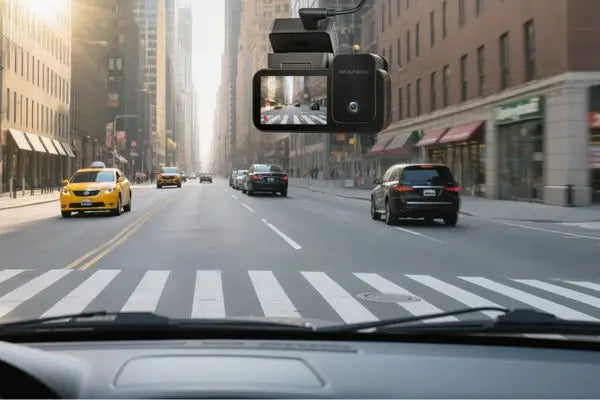
Many dash cams offer 2-channel functionality. Automatically captures video from two different cameras to cover more of your vehicle.
These include GPS tracking, parking mode surveillance, and improved night vision sensors. Some advanced models, like the Wolfbox G850Pro, also feature ADAS for safer driving.
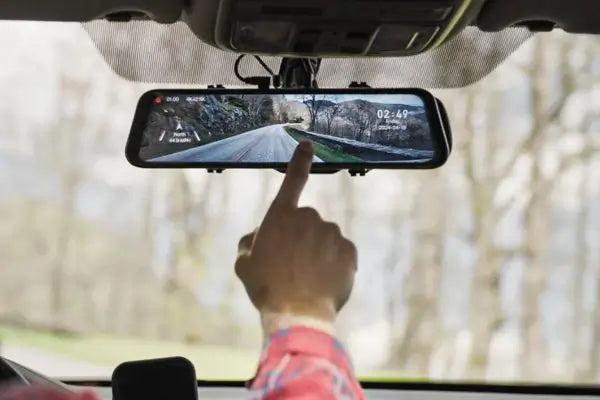
High-end models like the Wolfbox G900 Tripro (cabin version and bumper version) offer sharp 4K recording with a smart mirror touch screen, three-view coverage, 5.8GHz Wi-Fi, voice control, and 24/7 parking monitoring for safer, more convenient driving.
Compared to standard dash cams, they provide clearer footage, smarter features, and more comprehensive protection.
Dash cams utilize motion detection and G-force sensors to automatically record essential moments. Securely locking files after accidents or break-ins.
Parking mode acts as an extra set of eyes. When you exit your vehicle, it automatically captures any suspicious activity.
Professional dashcams operate reliably in temperatures ranging from -4°F to 158°F. Whereas GoPros shut down in both summer heat and winter cold.
Real dashcams require zero daily interaction. They start when you start your car. Stop when you park, and save important footage automatically during incidents.
For drivers seeking reliable vehicle recording systems. Wolfbox offers comprehensive dashcam solutions explicitly engineered for automotive surveillance needs.
Unlike makeshift GoPro setups. Wolfbox systems offer dedicated functionality with automatic operation, parking protection, and temperature resistance. It ensures protection when you need it most.
Related: Why Get a Dash Cam?
After examining real testing data and automotive expert opinions, the answer to the question 'Can you use a GoPro as a dashcam?' is clear: technically, yes; practically, no.
Using a GoPro as a dashcam creates multiple failure points. Leaving drivers vulnerable during critical moments. Manual operation requirements, overheating issues, missing parking protection, and expensive replacement costs make this approach impractical for serious vehicle protection.
While GoPros excel at their intended purpose of creating amazing adventure content. They lack essential automotive features that dedicated dashcams provide. Dash cams are designed to operate with minimal user input. Only requiring your attention. When you need the footage following an accident.
Professional dashcam systems from companies like Wolfbox offer automatic operation, reliable performance, and automotive-specific features at lower costs than premium GoPros. Using a GoPro as a dashcam may seem creative, but proper dashcams offer better protection for a lower price.
Automotive experts do not recommend GoPro as a dashcam. GoPros lack features inherent to almost every price level of dash cams. Such as long battery life and auto-launch capability.
Real-world testing reveals reliability issues during hot weather and daily use.
The GoPro, used as a dashcam, provides up to 140 minutes of continuous recording under ideal conditions. Hot car temperatures cause earlier shutdowns.
The internal battery lasts only 1 to 2 hours. It makes external power essential for trips lasting longer than this.
Can GoPro be used as a dashcam with complete protection? No. Missing features include automatic recording, G-sensors for accident detection, intelligent parking mode, GPS tracking, and extreme temperature resistance.
These gaps make GoPros unreliable for serious vehicle protection compared to purpose-built dashcam systems.