







A flat or low tire always seems to happen at the worst possible time. It occurs during an early-morning commute, at the start of a road trip, or miles from the nearest gas station. Knowing how to use a portable air compressor turns that stressful moment into a five-minute fix.
It's one of the most practical skills any driver can have. And modern portable tire inflators turn the process quite straightforward. This guide walks you through everything, from checking your tire pressure to disconnecting safely, to help you get it right every time.
What Is a Portable Air Compressor and How Does It Work?
A portable air compressor is a self-contained, compact device. It draws in ambient air to pressurize it to inflate tires, sports equipment, air mattresses, and more.
Those portable units are small enough to fit in a glove compartment or trunk. Most models should run directly from the car's 12V power outlet or from a built-in rechargeable battery.
Understanding a few basic terms makes the whole process easier. You can also avoid the most common mistakes.
Key Terms You Need to Know
PSI (pounds per square inch): The unit of measurement for tire pressure. Most passenger car tires run between 30 and 36 PSI. SUVs and trucks often sit between 35 and 45 PSI.
CFM (cubic feet per minute): How fast the compressor moves air. Higher CFM means faster inflation. It's important for larger tires like those on trucks or off-road vehicles.
Max PSI: The maximum pressure your compressor can reach. Always confirm that your compressor's max PSI is higher than your tire's recommended pressure.
Auto-Shutoff: A feature on quality compressors that stops inflation automatically when your target PSI is reached. It proactively prevents potential over-inflation.
Valve Stem: The small rubber or metal port on your wheel where you can attach the compressor hose.
Types of Portable Air Compressors
12V Plug-in Compressors: Connect to your car's 12V outlet (cigarette lighter port). Reliable for emergency use, but output is limited by the port's amperage. Best for passenger car tires.
Battery-Powered Compressors: Rechargeable units with built-in batteries. Fully cordless and convenient, but you need to keep them charged. Great for emergencies where no car power is available.
High-CFM Dual-Cylinder Compressors: They use a dual-cylinder design to move more air. They specifically serve truck and off-road tires that take much longer to inflate.
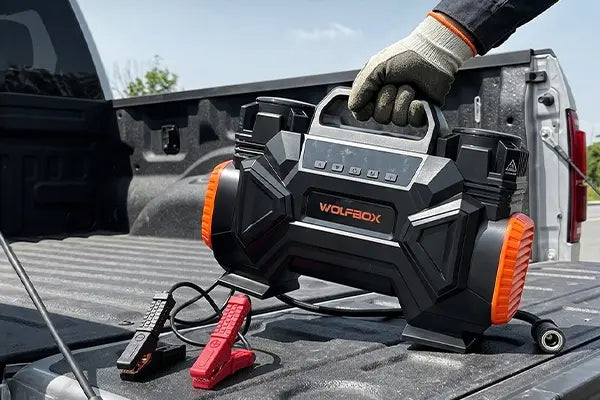
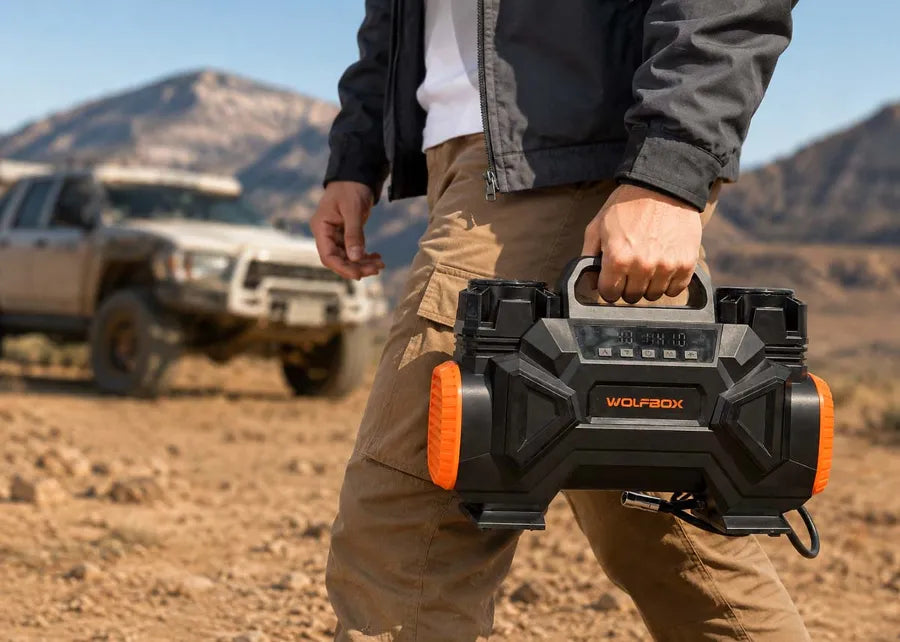
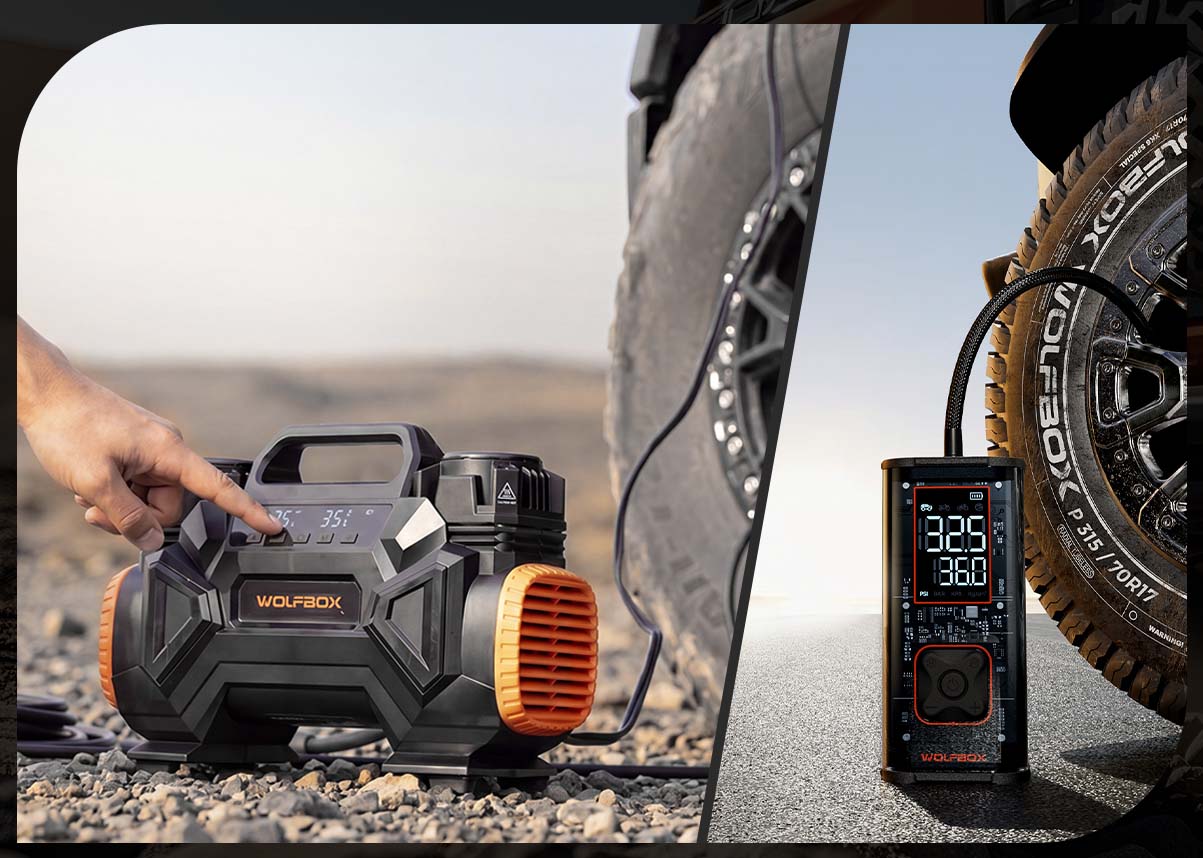
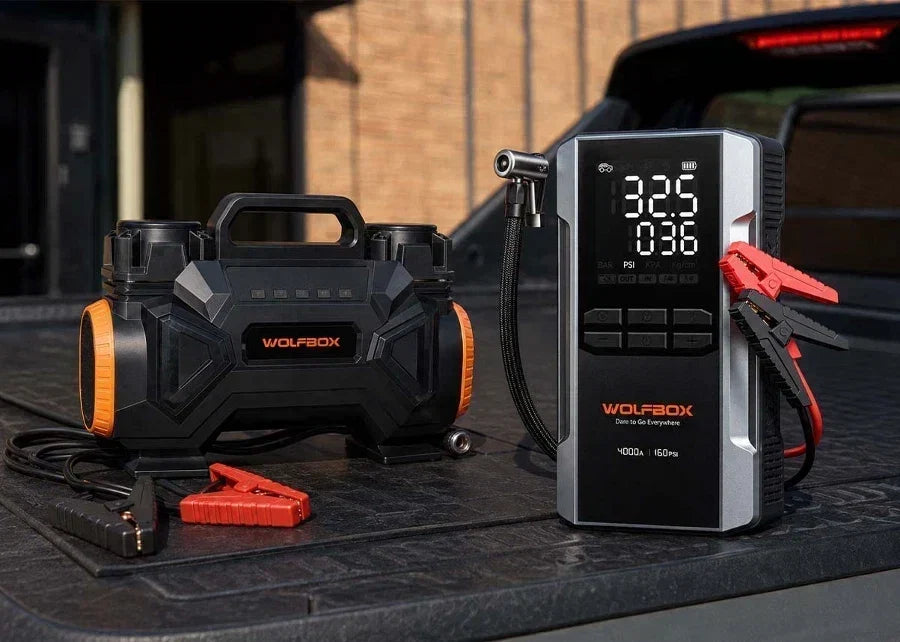
High-CFM models like the Wolfbox HyperFlow 60D feature a dual-cylinder design. It moves significantly more air than most single-cylinder models.
A mid-range 12V portable tire inflator handles most everyday driving needs. A high-CFM unit seems worth the investment for trucks and off-road vehicles (large tires).
How to Use a Portable Air Compressor for Tires: Step by Step
Using a portable air compressor for tires takes less than 10 minutes. The steps are straightforward. However, the biggest mistakes people make are skipping the pressure check beforehand or leaving the compressor connected after the tire is full.
Step 1: Find Your Target Tire Pressure
Before you touch the compressor, you need to know what PSI you're aiming for. Don't use the number on the tire sidewall. Your target PSI lives in one of three places –
- The driver's door jamb sticker (most common location).
- The inside of the fuel door.
- Your vehicle owner's manual.
Front and rear tire pressures can differ on SUVs and trucks. Check both. Write them down or take a quick photo before you start.
Step 2: Check Your Current Tire Pressure
Remove the valve stem cap from the tire you're inflating. Also, set it somewhere you won't lose it; a cup holder or your pocket works fine.
Your portable compressor may have a built-in pressure gauge (most do). In that case, press the gauge end firmly onto the valve stem for a clean reading.
Alternatively, use a separate tire pressure gauge for a quick check before connecting the hose. Note how far below the target PSI you are.
If you're 5 PSI low, inflation takes under a minute on most passenger tires. If you're 15+ PSI low, expect two to four minutes depending on the CFM output.
Popular Science put those numbers to the test on a Wolfbox MegaVolt24Air, topping off an SUV tire from 25 to 35 PSI in about a minute and confirming a full pump from flat takes roughly three to five minutes (Popular Science).
Step 3: Power Up Your Compressor
Connect your compressor to its power source before attaching it to the tire.
For 12V Models: Plug into your car's 12V outlet with the engine running. Running the engine keeps your battery from draining during inflation.
For Battery-Powered Models: Confirm the unit has enough charge. Most quality units display the remaining battery level on startup.
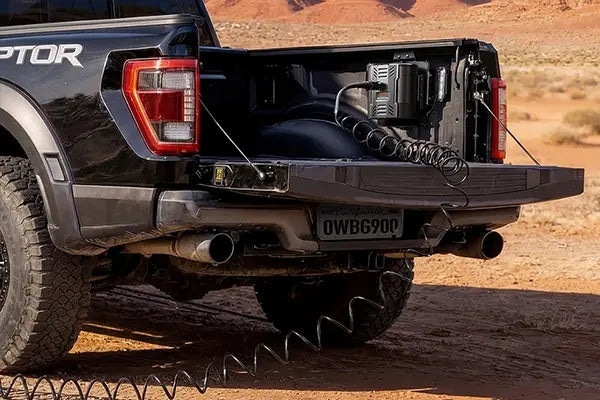
For High-CFM Models: Connect the power cable to your vehicle's battery terminals directly for maximum current and output.
Power up the unit before connecting it to the tire. It lets you verify the display is working and set your target PSI when your compressor has a digital preset function.
Step 4: Connect the Hose to the Valve Stem
Thread or press the hose connector onto the valve stem firmly. Most portable compressors use a screw-on connector or a quick-connect clip.
Screw-on Connectors: Turn clockwise until snug. Don't overtighten, as hand-tight is enough.
Quick-Connect (Push-Lock) Connectors: Push straight onto the valve stem until you feel it click into place.
A secure connection makes a small hiss when you attach it. For continuous hissing, the seal isn't tight. Disconnect, reposition, and try again.
Step 5: Set Your Target PSI (If Your Compressor Supports It)
Many modern portable tire inflators, like Wolfbox air compressors, let you dial in a target pressure before you start inflating. The compressor then runs until it hits that exact PSI and shuts off automatically.
It's the safest way to inflate tires as it eliminates the risk of over-inflation. Set your target pressure to the number from the door jamb sticker. If your unit doesn't have the feature, monitor the pressure manually.
Step 6: Start Inflating and Monitor Pressure
Switch the compressor on and let it run. If you set a target PSI, it will stop automatically. If you're monitoring manually, check the gauge every 30 to 60 seconds.
Stop the compressor when the gauge reads your target PSI without overshooting it. If you accidentally go over, press the small release valve on the hose connector.
Alternatively, briefly depress the valve stem pin with your fingernail. It should bleed a small amount of air out until you hit the right number.
Step 7: Disconnect and Replace the Valve Cap
Turn the compressor off before disconnecting the hose. Unscrew or unclip the connector from the valve stem, then immediately replace the valve cap.
The cap keeps dirt and moisture out of the valve core. It's a small thing to prevent bigger problems over time. Repeat the process for any other tires that need air.
When you're done, coil the hose neatly and store the compressor in its case or bag. That's all, and the setup remains ready for next time.
Pro Tips for Getting Better Results from Your Portable Compressor
Always Check Cold Tire Pressure
Tire pressure rises as tires heat up during driving. The Tire Industry Association recommends checking tire pressure when tires are cold. It means the vehicle hasn't been driven for at least 3 hours or hasn't traveled more than a mile at low speed.
Don't Ignore the Spare
Most drivers check their four active tires and forget the spare. A flat spare is useless in an emergency, and discovering when you already have a flat tire is miserable. Check and inflate your spare every time you service your active tires.
Use a High-CFM Compressor for Large Tires
Standard 12V compressors top out around 1.0–1.5 CFM. That's fine for a Honda Civic but genuinely slow for a Ford F-150 running 35-inch tires. The Wolfbox HyperFlow 60D dual-cylinder compressor delivers significantly higher CFM output.
Know When to Inflate vs When to Stop and Get Help
A portable air compressor effectively handles low tire pressure and slow leaks. It doesn't fix a tire with a nail, a sidewall cut, or a blowout. If an inflated tire loses pressure again within a few minutes, you have a leak that needs a patch or plug, not more air.
Common Mistakes When Using a Portable Tire Inflator
Knowing the steps is one thing. Avoiding the mistakes that make those steps go wrong is what separates a quick, clean inflation.
Over-Inflating the Tire
Over-inflation is the most common, and it's worse than under-inflation in some ways. An over-inflated tire has a smaller contact patch, reducing grip. It also makes the ride noticeably harsher and accelerates wear in the tread's center.
Running the Compressor Without the Engine On
For 12V plug-in portable air compressors, drawing current from the car battery without the engine running will drain the battery. It's especially true with older batteries that have reduced capacity. Engine on before you plug in; engine stays on during inflation.
Using the Wrong PSI Rating
The PSI printed on the sidewall is the maximum cold inflation pressure the tire safely holds. Inflating to the sidewall max (often 44–51 PSI on passenger tires) is dangerous. Always inflate to the recommended PSI, found on the door jamb sticker.
Forgetting to Let the Compressor Rest
Most portable compressors have a duty cycle, a recommended run time before cooling down. A typical 12V unit might run for 10 minutes, then rest for 5–10 minutes. Running past the duty cycle can cause the motor to overheat, cutting out mid-inflation.
Can You Use a Portable Tire Inflator as a Full Air Compressor?
Technically yes, but with clear limits. Most portable tire inflators include nozzle attachments for inflating sports balls, bicycle tires, pool floats, and air mattresses. What they can't do is power air tools, run a spray gun, or operate pneumatic equipment.
What a Portable Compressor Can Inflate
- Passenger car, truck, and SUV tires.
- Bicycle and e-bike tires.
- Motorcycle tires (check max PSI compatibility).
- Sports balls (basketball, soccer, football).
- Inflatable kayaks and paddleboards.
- Air mattresses and camping pads.
- Pool inflatables.
Where Portable Units Hit Their Limits
A portable air compressor does inflation tasks, not continuous-flow pneumatic uses. Don't expect it to power an impact wrench, run sandblasting equipment, or quickly fill a large air tank.
The CFM output is too low and the duty cycle is too short for sustained tool use. For those applications, a stationary compressor is the right tool. But if your priority is having a smaller, more convenient solution for vehicle emergencies and everyday inflation, a portable unit like the Wolfbox MegaVolt 24Air offers the portability you need.
Conclusion
A portable air compressor is one of the most genuinely useful tools you can keep in your vehicle. It turns a roadside inconvenience into a quick self-fix, saving you time and money. The process is simple: know your target PSI, connect securely, inflate slowly, and stop at the right number.
A reliable 12V tire inflator does the job for an everyday passenger car. Truck owners, off-road drivers, and anyone looking for faster inflation and broader capability need a different approach. In those cases, check the Wolfbox HyperFlow 60D and Wolfbox MegaVolt 24Air. Either one delivers the performance through features that make the whole experience fast, intuitive, and reliable.


Frequently Asked Questions (FAQs)
1. How long does it take to inflate a tire with a portable air compressor?
Inflation time depends on tire size and pressure loss. A passenger-car tire that's a few PSI low can typically be topped off in about a minute, while larger truck and SUV tires take longer. For serious off-road use, the dual-cylinder Wolfbox HyperFlow 60D can inflate a 37-inch tire from 10 PSI to 40 PSI in about 3 minutes, making it well suited for airing up after trail driving.
2. Can I use a portable air compressor on a completely flat tire?
Yes. A portable compressor inflates tires normally with a slow leak or when sitting unused. Once inflated, check again after 10 minutes and again the next morning. If it holds pressure, you're fine. If it loses air quickly, there's a leak that needs professional repair.
3. What's the best portable air compressor for road trips?
Prioritize a unit with auto-shutoff, a digital pressure display, a long hose, and a carrying case. Battery-powered models are enough for road trips. The Wolfbox MegaVolt 24Air features several features that make it a strong all-around road trip companion.
4. How do I know when to stop inflating?
Stop when your gauge reads the PSI listed on your vehicle's door jamb sticker. If your compressor has an auto-shutoff preset, it will shut off for you. If you're monitoring manually, check every 30 seconds as you approach your target.

Leave a comment
This site is protected by hCaptcha and the hCaptcha Privacy Policy and Terms of Service apply.