WOLFBOX Brands
WOLFBOX Brands

Choosing a dash cam in 2026 isn't just about chasing the biggest numbers on the box. We broke down the tech specs, image sensors, parking monitor features, and long-term ownership costs across today’s top models—then put five industry leaders head-to-head to see which ones actually deliver complete coverage for your vehicle.
We looked past flashy '4K' marketing to inspect the actual hardware. After all, a true Sony STARVIS 2 sensor will capture readable license plates at night far better than a budget sensor artificially upscaled to 4K.
From basic front-only setups to complete multi-channel systems covering the rear, cabin, and bumper—every extra angle eliminates a potential blind spot when you need evidence the most.
We evaluated night-vision performance across all models, testing whether 24/7 parking mode operates seamlessly out of the box without draining your vehicle's battery or succumbing to extreme summer heat.
We assessed how user-friendly each unit is to install and hardwire, its maximum storage capacity, and whether key features are locked behind hidden monthly subscription fees.
After comparing specs, features, and real ownership cost, here are the Top 5 Dash Cams for 2026.



Why It’s Our #1 Pick for 2026
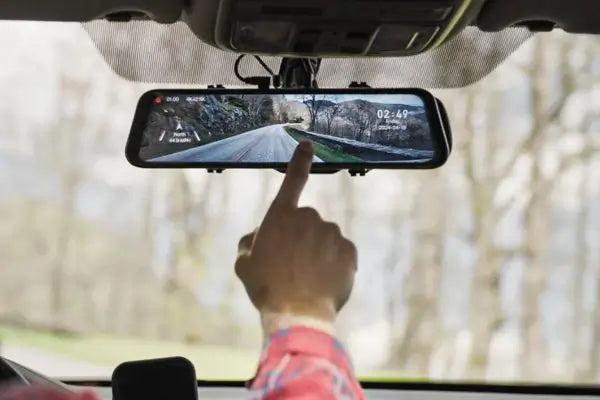
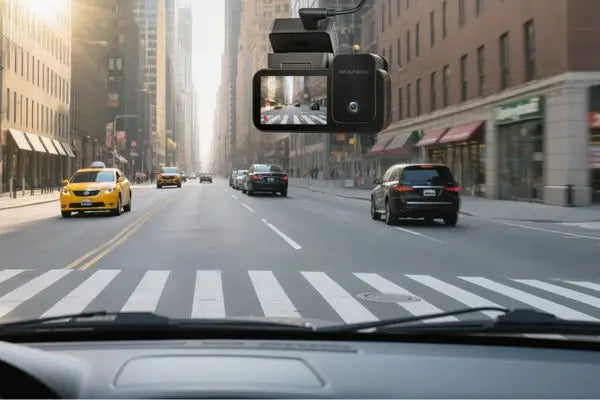
The WOLFBOX G900 TriPro takes our top spot as the only system in this lineup offering true three-channel coverage. Beyond the crisp 4K front and 2.5K rear cameras, it includes a dedicated 1080P front bumper camera to capture the road right at your wheels. While most mirror dash cams stop at dual-channel coverage, this bumper view is a rare game-changer for eliminating low-angle blind spots.
Unmatched Night Vision & Optics
Up front, it packs a genuine Sony STARVIS 2 IMX678 sensor—ensuring night footage stays crisp and license plates remain readable, rather than turning into a blurry, noisy mess. With a ultra-wide 170° front and 150° rear field of view, critical coverage gaps are practically eliminated.
All-Weather Parking Protection
Built for harsh environments, the G900 TriPro relies on a supercapacitor instead of a volatile lithium battery. Rated from -4°F to 158°F, it handles scorching summer heat without swelling or shutting down. Best of all, it ships with a 4-fuse hardwire kit in the box—enabling 24/7 parking surveillance and automatic impact detection right out of the box with zero extra purchases required.
Zero Monthly Fees & Easy Setup
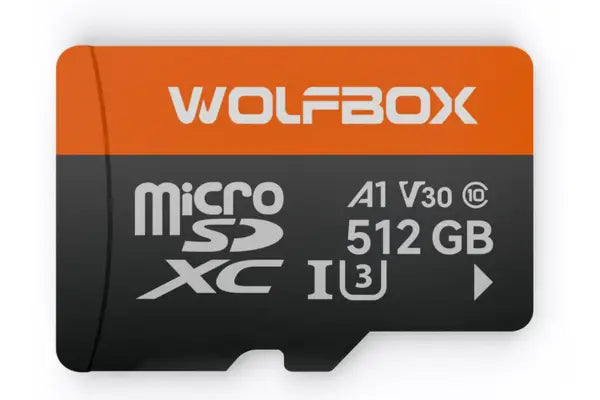
Storage is straightforward: it supports up to a 512GB microSD card locally, meaning no hidden cloud subscriptions or recurring monthly fees. Featuring a vibrant 12-inch IPS touchscreen and an OEM-style mount, it offers the most intuitive setup in its class—all for $310.58.
 Only camera here with a 4K front, 2.5K rear, and 1080P front bumper viewReal Sony STARVIS 2 IMX678 front sensor for readable plates at nightSupercapacitor power rated from -4°F to 158°F, safer than lithium in summer heat4 fuse hardwire kit included, so 24/7 parking works with no extra purchaseLocal microSD up to 512GB with no cloud subscription or monthly fee12 inch IPS touchscreen with an OEM style mount for a clean, familiar installWide 170° front and 150° rear coverage
 Rear channel is 2.5K rather than full 4KThree camera coverage means a little more wiring than a front only unit
The WOLFBOX G900 TriPro earns the top spot by doing what no competitor can: total 3-angle protection—including a front bumper view—powered by a true STARVIS 2 4K sensor and extreme-heat supercapacitor parking mode. With the hardwire kit included and local storage with NO monthly fees, it’s the ultimate zero-compromise choice for 2026.
Check Price
The 70mai 4K T800 is the closest competitor on paper. Powered by a real Sony STARVIS 2 IMX678 sensor, it offers sharp dual-4K front/rear coverage, a 1080P cabin camera, and heat-resistant supercapacitor reliability. Build and image performance are undeniably strong.
However, two key factors hold it back. First, its third lens points inside the cabin rather than at the front bumper—leaving you unprotected against low-speed parking scuffs and curb damage. Second, its flagship 4G LTE feature demands an ongoing cellular data subscription, adding extra monthly costs to its $319.99 price. If remote cloud monitoring is a must and you're willing to pay a monthly fee, it’s worth considering—otherwise, the G900 TriPro offers better value out of the box.
Dual 4K front and rear recording with a Sony STARVIS 2 IMX678 sensorSupercapacitor power for better summer heat tolerance4G LTE and WiFi 6 for remote connectivity and fast transfersAI detection and ADAS driver alertsThird camera faces the cabin, not the road or front bumper4G LTE features need a paid SIM data plan, an ongoing monthly costCosts more than our top pick at $319.99
The Vantrue Nexus 5 packs the most lenses of any system here, offering a 4-channel setup that records front, front-cabin, rear-cabin, and rear views simultaneously. Equipped with dual infrared night-vision cabin cameras, it's undeniably the ultimate tool for rideshare drivers needing round-the-clock passenger recording.
However, that heavy interior focus comes at a steep compromise for the average car owner. The front camera maxes out at 1944P rather than genuine 4K, and without a dedicated front-bumper view, lower road hazards remain unprotected. To top it off, at $379.99, you’re paying a premium over the G900 TriPro while getting lower-resolution footage of the actual road. Unless recording passengers is your top priority, those extra cabin lenses are just coverage you’ll rarely use.
Four channels record front, front cabin, rear cabin, and rear at onceInfrared cabin cameras, the best pick here for rideshare driversSupports microSD cards up to 512GB with no subscription10 second pre recording captures the moment before an eventFront camera tops out at 1944P rather than true 4KNo road facing front bumper cameraMore expensive than our top pick at $379.99
At $229.99, the VIOFO A229 Plus serves as our top value pick if you only need basic front and rear coverage. Equipped with Sony STARVIS 2 IMX675 sensors and front/rear HDR, it delivers crisp low-light footage without forcing you into a monthly subscription.
What you sacrifice, however, is complete coverage. It’s strictly a 2-channel setup, meaning zero protection for your front bumper or interior cabin. Furthermore, 24/7 parking surveillance isn't ready out of the box—you’ll need to buy a separate hardwire kit for $25.99. If your budget is tight and two angles suffice, it’s a reliable, no-nonsense option. But if you want true all-around protection, spending a little extra on the WOLFBOX G900 TriPro gets you significantly more.
Lowest price in this comparison at $229.99Sony STARVIS 2 IMX675 sensors front and rear with HDRDual band 5GHz and 2.4GHz WiFi, GPS, and voice controlLocal storage with no subscriptionTwo channels only, no cabin or front bumper coverageHardwire kit for 24/7 parking is a separate $25.99 purchaseFront and rear cap at 2K rather than 4K
The BlackVue DR970X-2CH LTE Plus II is tailored for fleet operators needing cloud-connected security. With 4K front and 1080P rear recording, support for 1TB microSD cards, and built-in 4G LTE for real-time smartphone alerts, it’s a powerful option for remote commercial tracking.
For standard vehicle owners, however, the value proposition quickly falls apart. At $540.99, it’s by far the most expensive model here, yet it only covers two camera angles, downgrades the rear camera to 1080P, and relies on an older-generation STARVIS sensor rather than STARVIS 2. Worse yet, its headline LTE features demand an active monthly subscription, and parking protection requires add-on accessories. You end up paying top dollar for fewer road angles—making the subscription-free G900 TriPro the much wiser investment for daily commuters.
Built in 4G LTE with BlackVue cloud for remote live view and alertsSupports microSD cards up to 1TB4K front recordingStrong choice for fleets and remote vehicle monitoringMost expensive in this comparison at $540.99Two channels only, rear camera drops to 1080POlder STARVIS sensor rather than STARVIS 2Parking mode needs a separate battery or hardwire accessoryCloud and LTE features depend on a paid subscriptionA multi channel dash cam records more than just the road ahead. Depending on the model it can also cover the rear, the cabin, or even the front bumper at the same time, so you have footage from several angles if something happens. Rearview mirror models replace your existing mirror and put a large touchscreen right where you already look, which keeps the windshield clean and the setup familiar. The real quality gap between a cheap unit and a well built one comes down to the image sensor, how many angles it truly covers, how it handles night and parking, and whether it quietly charges a monthly fee.
 Clear front footage that can actually read plates at night, not just a big 4K labelCoverage from more than one angle, so rear and low bumper incidents are on record too24/7 parking protection that captures hit and run damage while you are awayA supercapacitor design that survives summer heat far better than a lithium batteryLocal storage you own outright, with no forced monthly subscription