









WOLFBOX Brands
WOLFBOX Brands
You might think learning how to inflate car tires is difficult, but it is much easier than it looks.
In this article, you will read about how to properly inflate car tires whether you do it at a gas station or need to know how to inflate car tires at home. You will find answers to questions like how much PSI needed to inflate car tire and how long does it take to inflate a car tire.
Table of contents
It is smart to keep your tires at the right pressure. They are the only parts of your car that touch the road. Your safety, your fuel economy and how your car handles all depend on them. When your tires are set to the correct pressure, your car drives like it should. You get steady steering, safe stops and good grip on the road. This easy check keeps you away from a lot of needless problems later.
You can see that driving with the wrong tire pressure is risky, but the problems you get from too much or too little air are not the same. When your tires are overinflated or underinflated, your car does not drive right and you might run into trouble. Simple checks on your tires help you stay safe and avoid headaches.
Reduced Traction: Overinflated tires touch less of the road. Your car will not grip the road well and can slide on wet or slick roads. If you need to stop fast, your car might not do what you want.
A Harsher Ride: Extra air in the tire makes the tire hard. Your car goes over bumps and holes much harder and you feel every one of them. The bumps make your ride less comfortable and also put stress on your car's suspension.
Uneven Tire Wear: When you put in too much air, the middle part of each tire wears out much faster. This means you will have to buy new tires sooner, which costs you extra money.
Increased Risk of Blowouts: Tires with too much air get stretched thin. They can break or burst if you hit a pothole or drive over sharp things. That could make you lose control while you are driving.
Poor Fuel Economy: When your tires are soft, your car has to work harder. You need more fuel to drive the same miles, so you make extra trips to the gas station.
Overheating and Failure: Less air lets the tire sides bend too much. This build up heat and can damage your tires inside. If it gets too hot, the tire can break or burst.
Sluggish Handling: With soft tires, turning the wheel feels heavy. Your car might not move in a straight line or turn like you want. Driving is less easy and feels less safe.
Accelerated Edge Wear: If you drive on underinflated tires, the sides wear out fast. Even if the center still looks fine, you will have to change the tire soon because the edges wear thin.
If you ask how much psi needed to inflate car tire, you should know the answer is not the same for every car. The number you need depends on the car you drive. Do not use the highest number printed on the tire itself because that is the most the tire can hold, not what is best for your car. Use the number the carmaker gives you for the safest and best results.
On a sticker on the driver's door pillar: Open the driver’s door and look at the frame. Most cars have a sticker that lists the best PSI for the front and rear tires and the size of the tires you should use.
On the back of the fuel filler flap: Some cars show this number inside the flap you open when filling gas. If you do not see it on the door frame, check here.
In the vehicle user guide: Your car's manual has a section about tires. Flip to that page to see the PSI you need and other facts about your tires.
Vehicle Type |
Common Recommended PSI Range (Cold) |
Sedan |
30-35 PSI |
Hatchback |
32-36 PSI |
SUV |
32-38 PSI |
Crossover |
32-38 PSI |
Minivan |
35-40 PSI |
Pickup Truck |
35-45 PSI (may vary with load) |
Performance Car |
33-40 PSI |
Electric Vehicle (EV) |
38-45 PSI |
If you want to inflate your tires, park so the air hose reaches all tires without stretching. You do not want to move your car halfway through. Make sure you have enough hose for every tire, front and back, before you start.
On each tire, you will see a small round cap on the valve. Turn it off with your fingers and put it somewhere safe like your pocket or cup holder. These caps keep dirt out of the valve.
Take the air hose and push it onto the valve. Wait for the hissing sound to stop. That means you have a good connection and the air can go into the tire. You might need to hold it or lock it on, depending on the hose.
Some pumps ask you to set the pressure you want. Enter the PSI from your car's sticker and the machine does the job for you. If your pump does not set itself, squeeze the lever in short bursts, checking with your own gauge until you get to the number you want.
If you accidentally add too much air, use the tool on the air hose to let some out. Press the pin or button and the air comes out in small puffs. Use your gauge to see if the pressure returns to the safe range.
When you finish with all four tires, screw the caps back on the valves. It keeps dirt and water out and helps keep your valves in good shape. With this step done, you learn how to properly inflate car tires without stress.
When inflating your tires at home, a portable air compressor is ideal for quick and efficient inflation. For more details on using these devices and their advantages, check our guide to the mini air compressor.
Twist or clip the end of the air hose onto the valve stem. Make it tight so air does not leak out. If the connection is straight and snug, the air will fill the tire just right.
Set your compressor to the right number for your car's tires. Use the buttons to pick the PSI your car needs. This helps you avoid putting too much air in, so the tires stay healthy.
Push the button to start your compressor. You will see the numbers change on the display as your tire fills up. Many compressors stop when they reach the PSI you set, making the job safe and easy.
When the compressor stops, it helps to check the tire a second time with your own simple gauge. Even good compressors sometimes do not match your gauge, so checking again makes you sure you did it right.
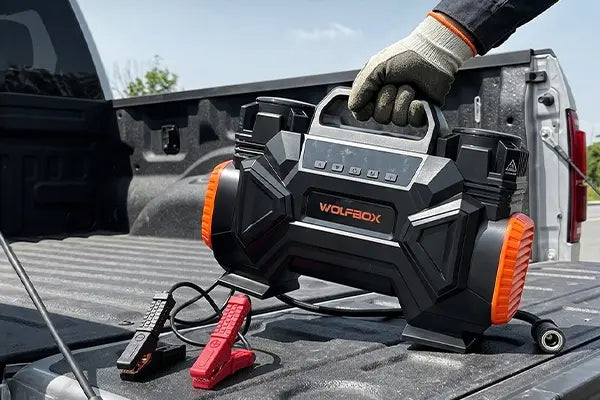
You can make roadside jobs easier with a tool that does more than fill tires. Wolfbox Jump Starter with Air Compressor is a single, smart device that combines multiple essential functions.
This all-in-one tool is perfect for flat tires or a dead car battery, eliminating the need to carry multiple gadgets. Whether it's a sudden roadside issue or a planned adventure, one device handles it all.
To learn more about its jump start feature and how it works, check out our portable car jump starter guide for detailed tips and instructions.
The built-in air compressor quickly fills your car, SUV, or truck tires—faster than many small inflators—so you can get back on the road in minutes instead of waiting around.
The Wolfbox device also works as a portable power bank. Charge your phone and tablet during emergencies, keeping you connected and able to call for help.
With a bright LED flashlight, you can handle nighttime emergencies with ease. Illuminate your surroundings and signal to others, ensuring safety even in the dark.
The amount of time you need to pump up your tire depends on the tire size, how much air it needs and how strong your compressor is. The time needed to inflate a car tire depends on the tire size, initial pressure, and the type of air source. Here's a quick breakdown:
Check When Tires Are Cold: Your best time to check and fill tires is before you drive or when your car has sat for a few hours. If you check hot tires, the number will be off.
Use a Reliable Gauge: Some gas station gauges do not show the right number. When you use your own gauge, you know your tires have the right amount of air every time.
Inflate Slowly: Add air in short bursts near the end. Going slow helps you stop at the right number without going over.
Regular Checks: Look at your tires once a month and after big changes in the weather. Colder days drop your pressure, while warm days might make it go up. Regular checks help you stay safe and avoid problems.
Now you know how to inflate your car tires at home or on the go. Spending just a few minutes each month checking and filling your tires keeps you safe, improves driving performance, and can even save money on fuel.
For ultimate confidence, consider a Wolfbox 4-in-1 Jump Starter with Air Compressor. This all-in-one tool handles tire inflation, jump starting, device charging, and emergency lighting, ensuring you're prepared for any roadside situation. Keep one in your car to stay safe and ready, no matter what comes your way.
Check your tires every month. They lose about 1 PSI every month. When seasons change or it gets cold or hot fast, check again. You will catch problems before they get worse.
Find the right number on a sticker in the driver's door, on the gas cap door or in your manual. Don't use the number on the tire, as it just shows the most air the tire holds but is not for everyday use.
Use a tire gauge to check all four tires. Looking at them might not be enough. Some cars have a light or message on the dash that turns on if you need more air.