Jump Starter vs Battery Charger: Which One is best for Your Car?
Trying to start a car that has a dead battery can be very irritating. Using the right tool when needed can help you save time and money. Jump starters vs. battery chargers work best for you, depending on what you intend to use them for.
A jump starter immediately boosts your car battery to start the engine, whereas a battery charger gradually replenishes a battery's charge. Connect the jump starter's red clamp to the positive terminal, the black to the negative, power on the jump starter, and start the car. When the car starts, take the clamps off.
What is a Battery Charger, and How Does it Work?
A battery charger draws electricity from an AC outlet and uses it to replenish the charge in your car battery. The machine requires you to connect it to an electrical outlet to operate. The Battery Chargers Market had reached USD 1.2 billion in 2023 and is anticipated to grow at a CAGR of around 5.5% from 2023 to 2032.
Types of Battery Chargers
Low Amp Chargers (1–2A): Perfect for slow and continuous charging or keeping your battery in good condition.
High Amp Chargers (10A or more): This method allows dead batteries to recharge more quickly.
Smart Chargers: They prevent overcharging by automatically regulating the voltage supplied.
How It Works
They deliver energy slowly to the battery so that it can be recharged.
When to Use It
Controlled connections are used for maintaining charging over prolonged periods.
What Is a Jump Starter and How Does It Work?
A jump starter is a device that allows your car to start instantly, even if the battery is completely drained, without the help of another vehicle. It keeps a reserve of electricity and can quickly transmit a strong pulse to the battery. The portable jump starter market stood at USD 1.2 billion in 2023 and is projected to reach USD 2.3 billion by 2030, growing at a 9.1% compound annual growth rate from 2024 to 2030.
Types of Jump Starters
Lithium-ion Jump Starters: Compact, lightweight, and rechargeable
Lead-acid Jump Starters: Bulkier but more powerful, suitable for larger vehicles
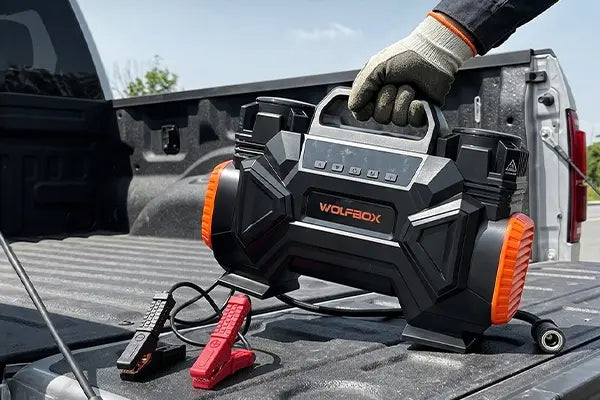
Jump Starter with Air Compressor: Multi-functional design that not only jump-starts your vehicle but also inflates tires and sports equipment
How It Works
It uses clamps to attach to the battery. With the starter button pressed, a quick jolt of power is sent to the engine to start it. You need at least 1000A for cars and 2000A for trucks.
When to Use It
It is best to have a jump starter for emergency breakdowns.
Battery Charger VS. Jump Starter: Pros and Cons
Advantages of a Jump Starter
Instant Start-Up: Jump starters provide the necessary power to start your vehicle when you have an emergency and the battery has been drained.
Portable and Cordless: Jump starters are designed to be compact and able to be powered directly from your car's battery, making them perfect for use in any location.
Multipurpose Features: Many modern jump starters have USB ports, lights, and air compressors to help make your roadside assistance even more effective.
No Need for Another Vehicle: A jump starter makes it possible to get your vehicle running without having another car to give you a jump start.
Disadvantages of a Jump Starter
Temporary Solution: Using a jump starter can help start your engine, but it won't completely recharge the battery itself. Once your battery has been jump-started, it's best to drive it for a few minutes or attach it to a charger.
Limited Battery Life: To guarantee that a jump starter is fully charged whenever you need it, frequent recharging is necessary. If you don't use a jump starter for a few months, it may gradually lose its charging.
Not Ideal for Maintenance: They do not help maintain or revive a weak battery by charging as a conventional battery charger does.
May Lack Power for Larger Vehicles: Smaller jump starters might not provide enough power to a large or heavy-duty diesel vehicle.
Advantages of a Battery Charger
Full Battery Recharging: Charging with a compatible charger fully charges the battery and improves overall performance.
Battery Maintenance: Some chargers include float or trickle charging, keeping your battery fully charged without damaging the cells.
Safe for Long-Term Use: Many models come with automatic shut-off and voltage monitoring to protect your battery from being overcharged when left alone.
Extends Battery Life: Daily use with a regulated charger can preserve the life of your battery, benefiting by saving money over time.
Disadvantages of a Battery Charger
Not Ideal for Travel: As most chargers rely on being connected to a power source, they're not very useful in situations where electricity is unavailable.
Takes Time to Recharge: The amount of time needed to charge a battery varies greatly based on the type of charger and the size of the battery.
Limited Help in Emergencies: Standard chargers rarely offer fast enough charging for a dead battery. You'll probably have to find some other method to keep going.
Bulky to Carry Around: Jump starters tend to be lighter and smaller than traditional battery chargers, making them easier to carry along when you need them.
Jump Starter vs Battery Charger: What is the Difference?
It's crucial to know how each tool operates and when to use them in order to choose the best fit for your needs.
Charging Time and Performance
Jump Starter: They provide enough voltage to start your car without restoring the battery. They're ideal for jump-starting a vehicle but won't keep a battery fully charged in the long run.
Battery Charger: Chargers supply a consistent stream of power to keep your battery fully charged and in good shape.
Ease of Use and Portability
Jump Starter: They are easy to carry and can be operated without a power source anywhere.
Battery Charger: They're heavier and need to be plugged in, making them better suited to use at a fixed location.
Durability and Longevity
Jump Starter: The longevity of a jump starter depends on how regularly it is used and how well you care for it. It mostly lasts for 12 to 24 months.
Battery Charger: They are designed to work well for extended periods and tend to serve you for many years before needing replacement.
Risk of Overcharging
Jump Starter: It delivers power only briefly to start the engine, not to charge the battery continuously, so it poses no overcharging risk.
Battery Charger: Some older chargers continue to deliver power even after your battery reaches full capacity. These newer models are designed to ensure that your battery will not be overcharged.
Cost Comparison
Jump Starter: Costs will depend on the added features, starting at around $50 and going up to $150 or more. A more expensive jump starter may have additional features such as USB ports, lights or an air compressor.
Battery Charger: The price can range from $30 to $100, with the most sophisticated models starting from $100.
Jump Starter with Air Compressor: The All-in-One Upgrade
For drivers who want more than just a quick battery boost, a jump starter with air compressor is the ultimate upgrade. A jump starter with air compressor combines multiple tools into one device, giving drivers more convenience and safety on the road. Key features include:
Jump-start your vehicle instantly
Inflate tires and sports equipment
Provide LED emergency lighting
Work as a power bank for phones or laptops
With a single device in your trunk, you're prepared for unexpected dead batteries, flat tires, or power outages—making it a must-have for road trippers, daily commuters, and anyone who values peace of mind on the road.
How to Use a Battery Charger for Car Battery Maintenance
Attach the red wire to the positive terminal on the battery.
Connect the black charger wire to the negative charging socket.
Connect the charger to an electrical outlet.
Allow the battery to finish charging before you unplug it.
When the device is fully charged, unplug it from the charger starting with the black cable, followed by the red cable.
Read and understand the safety instructions carefully before using the charger.
How to Jump a Car Battery with a Jump Starter Safely and Effectively
Check first that the car's battery is not already linked to any external power source. Give the car a jump-start when you want to start it. The engine should roar to life if everything is hooked up correctly. After the engine starts, disconnect the jump starter, then take away the clamps in the reverse order. Always follow the manufacturer's instructions.
Conclusion
A jump starter provides immediate assistance when your vehicle won't start, while a battery charger helps keep your battery in top shape when you don't use your car often. Whether you're dealing with a dead battery or simply want to keep it fully charged, always follow safety guidelines and manufacturer instructions to ensure proper use.
Ready to find a reliable jump starter? At Wolfbox, we offer not only professional jump starters for quick starts but also powerful all-in-one devices that keep you covered on the road. Whatever your lifestyle or journey, you'll always have the right tool at hand.
FAQs
What are the key differences between a battery charger and a jump starter?
A jump starter is used to quickly start a car, while a battery charger adds and maintains your battery's power gradually.
Which is better, a jump starter or a battery charger?
Your Jump starters are most useful in an emergency. Battery chargers are suitable for looking after and maintaining batteries in the long run.
How long does it take to jump-start a car?
As soon as the device is properly attached, it takes only a few minutes to jump-start your car.
How long does a car battery charger take?
Charging a car battery using a battery charger may take 4 hours or up to a day, depending on the type of charger you use.
Can a jump starter damage a battery?
They are designed to preserve battery life if you drive safely, but improper handling can cause them to become damaged.