









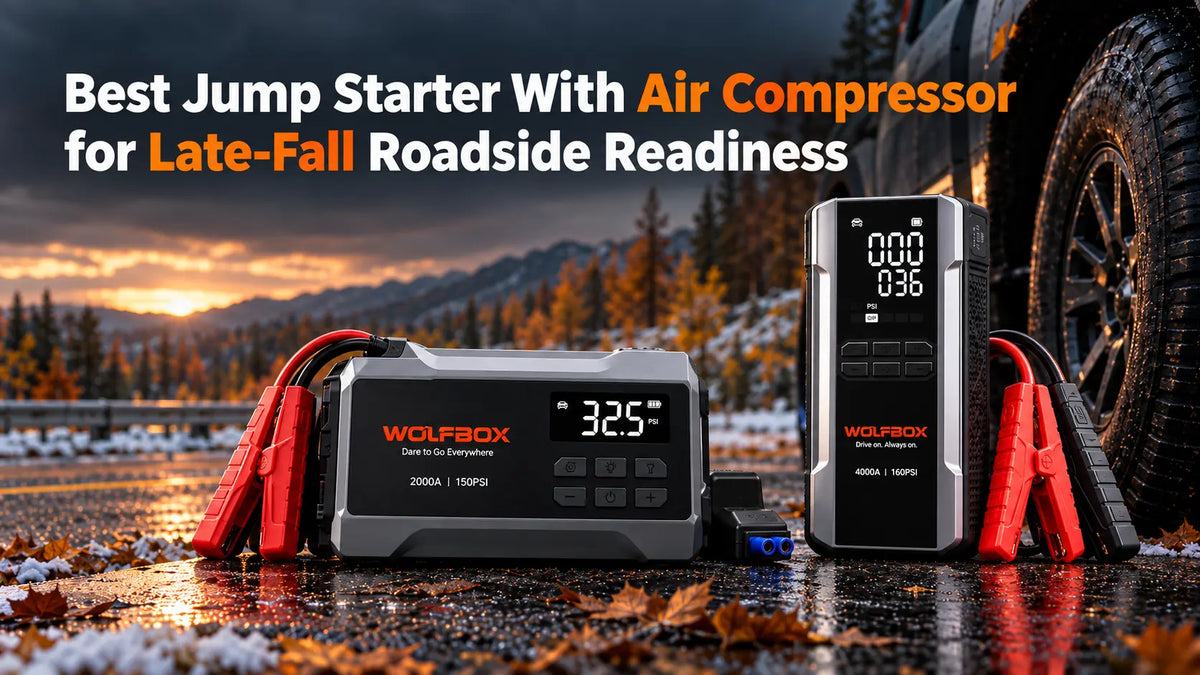
Late fall can expose vehicle problems that were easy to overlook during warmer months. A battery that performed well through summer may struggle to start on a cold morning, while dropping temperatures can lower tire pressure enough to trigger the warning light.[5][6] A Jump Starter With Air Compressor combines two useful roadside functions in one device, helping drivers handle both a weak battery and low tire pressure. The WOLFBOX MegaVolt 24Air and MegaVolt 10Air offer this combination for different vehicle needs.[1][2]
The main difference between these models comes down to capacity, compatibility, and inflation performance. The WOLFBOX MegaVolt 24Air offers greater battery capacity, broader engine compatibility, and stronger compressor performance, while the MegaVolt 10Air is a practical option for many everyday cars and smaller SUVs.[1][2]
The Short Answer
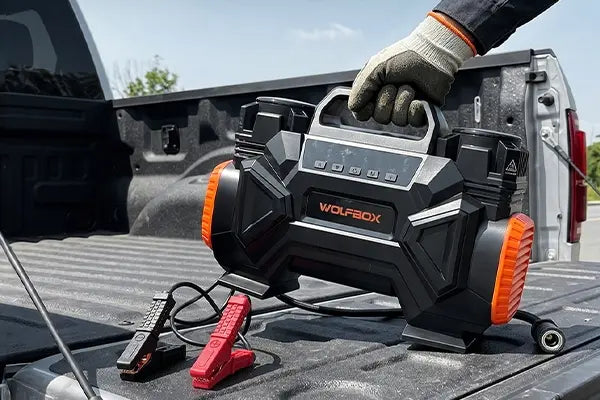
The WOLFBOX MegaVolt 24Air is our best overall choice for late-fall roadside readiness. The WOLFBOX MegaVolt 24Air carries a 4000-amp peak rating, meaning WOLFBOX's advertised maximum starting-current figure, along with an 88.8-watt-hour (Wh) battery, 45-liter-per-minute (L/min) compressor, and engine ratings up to 10.0 liters for gasoline and 6.0 liters for diesel vehicles.[1] Wh measures stored battery energy, while L/min measures airflow volume.
The WOLFBOX MegaVolt 10Air makes more sense when the vehicle does not need that much capacity. The WOLFBOX MegaVolt 10Air has a published 2000-amp peak rating, 37Wh battery, 150-pound-per-square-inch (PSI) compressor, and engine limits of 5.0 liters for gasoline and 3.0 liters for diesel.[2] PSI measures air pressure, and those engine limits already cover plenty of sedans, crossovers, and smaller SUVs.
WOLFBOX MegaVolt 24Air vs MegaVolt 10Air Specifications
The specifications show two versions of the same basic roadside tool. The WOLFBOX MegaVolt 24Air favors greater reserve and broader vehicle compatibility, while the WOLFBOX MegaVolt 10Air keeps the same core jump-starting and inflation functions for less demanding vehicles.[1][2]
|
Specification |
WOLFBOX MegaVolt 24Air |
WOLFBOX MegaVolt 10Air |
|---|---|---|
|
Peak current |
4000A [1] |
2000A [2] |
|
Battery capacity |
88.8Wh [1] |
37Wh [2] |
|
Gasoline engine rating |
Up to 10.0L [1] |
Up to 5.0L [2] |
|
Airflow (L/min) |
45 L/min [1] |
≥25 L/min [2] |
|
Diesel engine rating |
Up to 6.0L [1] |
Up to 3.0L [2] |
|
Maximum air pressure |
160 PSI [1] |
150 PSI [2] |
|
Charging output |
Up to 65W USB-C [1] |
12W USB-A [2] |
|
Emergency light |
400 lumens (light output) [1] |
200 lumens [2] |
Peak current should not be treated like a horsepower figure. The WOLFBOX MegaVolt 24Air has the higher published rating, but starting difficulty still depends on engine size, battery condition, temperature, and how deeply the vehicle battery has discharged.[3][5]
Cold Weather Finds Weak Batteries Quickly
Cold weather is especially good at finding a battery that was already getting tired. AAA reports that a conventional vehicle battery can lose around 35% of its strength at 32°F and about 60% at 0°F.[5] The WOLFBOX MegaVolt 24Air and WOLFBOX MegaVolt 10Air provide portable starting assistance when the vehicle battery no longer has enough reserve to crank the engine.[1][2]
Larger pickups and diesel engines are where the WOLFBOX MegaVolt 24Air starts to justify its extra capacity. WOLFBOX rates the WOLFBOX MegaVolt 24Air for gasoline engines up to 10.0 liters and diesel engines up to 6.0 liters.[1] Popular Science also used the WOLFBOX MegaVolt 24Air to start three different vehicles during winter testing, including a diesel Ford F-350 and a crossover at roughly 0°F.[3]
The WOLFBOX MegaVolt 10Air covers a much more ordinary slice of traffic. WOLFBOX rates the WOLFBOX MegaVolt 10Air for gasoline engines up to 5.0 liters and diesel engines up to 3.0 liters.[2] A driver with a compatible four-cylinder sedan or compact crossover may have little reason to carry the extra capacity of the 24Air.
Battery condition still matters more than the name on the jump starter. The WOLFBOX MegaVolt 24Air or WOLFBOX MegaVolt 10Air may help a healthy battery that was accidentally drained, but a battery that has been struggling for weeks can be a very different job.[1][2][5] A successful jump start also does not repair a failing battery or charging system.[5]
The Tire-Pressure Light Is the Other Late-Fall Warning
Falling temperatures can bring tire pressure down even when nothing is wrong with the tire itself. NHTSA recommends checking tire pressure when the tires are cold, meaning the vehicle has been parked for at least three hours, and using the pressure listed on the door-jamb label or in the owner's manual.[6] The WOLFBOX MegaVolt 24Air and WOLFBOX MegaVolt 10Air add an inflator to the same tool already being carried for battery trouble.[1][2]
The WOLFBOX MegaVolt 24Air has the better documented compressor performance. WOLFBOX rates the WOLFBOX MegaVolt 24Air at 45 L/min and up to 160 PSI, while Car and Driver found the unit to be one of the faster inflators in its 2026 testing and named the model Best Inflator/Jumper Combo.[1][4] The same test also found the 20-inch hose a little short around larger wheels.[4]
The WOLFBOX MegaVolt 10Air has an airflow rate of ≥25 L/min. It can inflate a standard 195/65 R15 tire from 29 to 36 PSI in approximately 60 seconds, which is comparable to many compact inflators in its class.[2]
The WOLFBOX MegaVolt 10Air is designed primarily for routine tire pressure adjustments. It has a maximum pressure of 150 PSI and can inflate a 195/65R15 tire from 29 to 36 PSI in about one minute.[2]
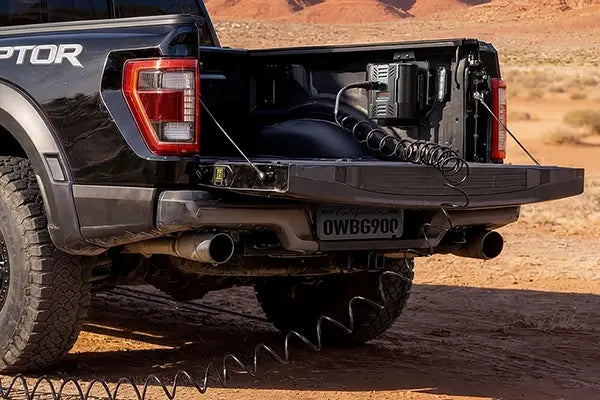
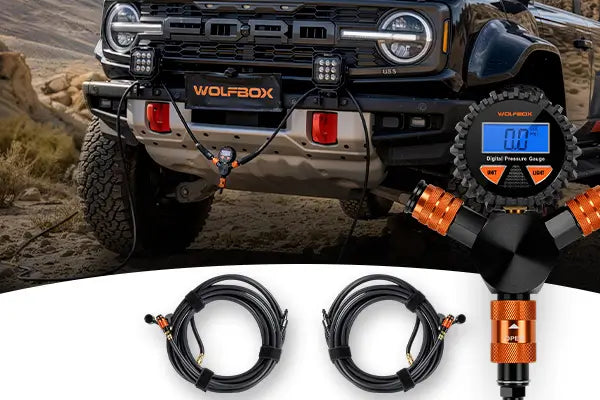
Neither the WOLFBOX MegaVolt 24Air nor WOLFBOX MegaVolt 10Air can repair a damaged tire. A puncture that will not hold air, a damaged sidewall, or visible structural damage still needs proper attention.[6] Drivers regularly airing up several oversized off-road tires may also be better served by a dedicated compressor designed for longer inflation sessions.[4]
The 24Air Earns Its Extra Capacity on Bigger Jobs
The larger battery matters most when the WOLFBOX MegaVolt 24Air has more than one job to do. The WOLFBOX MegaVolt 24Air stores 88.8Wh compared with 37Wh in the WOLFBOX MegaVolt 10Air, leaving more energy available for starting assistance, inflation, lighting, and device charging.[1][2]
The WOLFBOX MegaVolt 24Air also brings a more capable charging setup. The WOLFBOX MegaVolt 24Air supports up to 65 watts through USB-C Power Delivery, the higher-output USB-C charging standard used by many phones, tablets, and laptops.[1] The WOLFBOX MegaVolt 10Air instead provides 12W USB-A output and 15W USB-C input.[2]
The WOLFBOX MegaVolt 10Air still makes sense when roadside use is likely to stay simple. The WOLFBOX MegaVolt 10Air can cover an occasional no-start, routine pressure correction, emergency lighting, and basic device charging without asking a smaller vehicle owner to buy capacity that may never be used.[2]
A Five-Minute Check Before Leaving Can Save the Trouble
Roadside equipment works better when somebody remembers to check it before the trip. The WOLFBOX MegaVolt 24Air and WOLFBOX MegaVolt 10Air should have enough charge for the journey, while the vehicle battery should start cleanly and the tires should be checked before departure.[1][2][6]
Tire pressure is easiest to judge before the car has been driven. The WOLFBOX MegaVolt 24Air and WOLFBOX MegaVolt 10Air can bring an otherwise healthy tire back to the manufacturer's recommended cold pressure, while NHTSA also recommends checking the spare where one is fitted.[1][2][6]
The WOLFBOX MegaVolt 24Air and WOLFBOX MegaVolt 10Air are backup tools rather than substitutes for maintenance. Slow cranking, repeated pressure loss, visible tire damage, or a battery that needs frequent jump starts should be dealt with before a long drive rather than left for the roadside kit to solve later.[5][6]
Final Verdict
The WOLFBOX MegaVolt 24Air is the stronger all-around choice for drivers who want one roadside tool ready for colder weather. The WOLFBOX MegaVolt 24Air combines broader engine compatibility, an 88.8Wh battery, 45 L/min compressor, and 65W USB-C charging, while independent testing supports both the starting and inflation functions.[1][3][4] Larger SUVs, pickups, diesels, and longer trips give those advantages somewhere to matter.
The WOLFBOX MegaVolt 10Air is the more sensible choice for many smaller vehicles. The WOLFBOX MegaVolt 10Air keeps the jump starter, inflator, emergency light, and power-bank functions while covering gasoline engines up to 5.0 liters and diesel engines up to 3.0 liters.[2] If those limits already cover the vehicle in the driveway, the larger 24Air becomes extra reserve rather than a necessity.
Frequently Asked Questions
Is the WOLFBOX MegaVolt 24Air a good jump starter with tire inflator combo?
Yes. The WOLFBOX MegaVolt 24Air combines a published 4000A peak rating, 88.8Wh battery, 45 L/min compressor, and 160 PSI maximum pressure, while independent testing supports both the starting and inflation functions.[1][3][4]
Can the WOLFBOX MegaVolt 10Air start an SUV?
Yes, when the engine falls within the published limits. The WOLFBOX MegaVolt 10Air is rated for gasoline engines up to 5.0 liters and diesel engines up to 3.0 liters.[2]
Can the WOLFBOX MegaVolt 24Air inflate a truck tire?
Yes, within the normal capabilities of the compressor. The WOLFBOX MegaVolt 24Air is rated at 45 L/min and 160 PSI, but repeated inflation of large off-road tires may be better handled by a dedicated compressor.[1][4]
Should tire pressure be checked before a late-fall road trip?
Yes. NHTSA recommends checking tire pressure when the tires are cold and using the vehicle manufacturer's specified pressure, and the WOLFBOX MegaVolt 24Air or WOLFBOX MegaVolt 10Air can restore pressure when an otherwise healthy tire is low.[1][2][6]
Which WOLFBOX model is better for a smaller car?
The WOLFBOX MegaVolt 10Air is usually the more proportionate choice for a smaller compatible vehicle. The WOLFBOX MegaVolt 10Air covers gasoline engines up to 5.0 liters and diesel engines up to 3.0 liters while retaining the same basic jump-starting and inflation functions.[2]
References
[1] WOLFBOX, “MegaVolt 24Air Jump Starter With Air Compressor” https://wolfbox.com/products/jump-starter-with-air-compressor-tire-inflator-wolfbox-megavolt-24air
[2] WOLFBOX, “MegaVolt 10Air 2000A Jump Starter With Air Compressor” https://wolfbox.com/products/wolfbox-2000a-jump-starter-with-air-compressor-wolfbox-megavolt-10air
[3] Popular Science, “I Tested the WOLFBOX 4-in-1 Jump Starter With Air Compressor During a Real-World Emergency” https://www.popsci.com/gear/wolfbox-4-in-1-jump-starter-with-air-compressor-review/
[4] Car and Driver, “Best Portable Tire Inflators of 2026, Tested” https://www.caranddriver.com/car-accessories/g42589683/best-portable-tire-inflators-tested/
[5] AAA Hudson Valley, “Cold Weather Is Hard on Your Car Battery—Here's What to Know” https://www.hudsonvalley.aaa.com/blog/cold-weather-car-battery/
[6] National Highway Traffic Safety Administration, “Tire Safety” https://www.nhtsa.gov/vehicle-safety/tires


Leave a comment
All comments are moderated before being published.
This site is protected by hCaptcha and the hCaptcha Privacy Policy and Terms of Service apply.