The Essential Vehicle Gear to Carry Before Driving Forest Roads
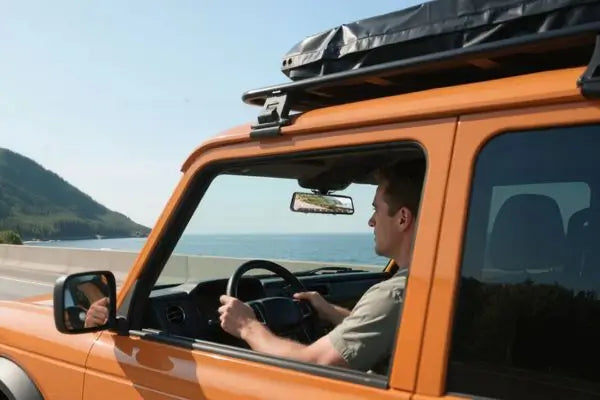
Heading off the grid sounds dramatic, but it doesn't always mean disappearing into the desert for a week with a fully built rig and a pantry full of freeze-dried stroganoff. Sometimes it's a gravel road to camp, a forest service route that keeps climbing, or a weekend overland trip where the cell signal disappears right around the same time the pavement does.
That's when vehicle prep starts to matter. A soft tire, weak battery, dead flashlight, or missing pair of gloves can feel minor in your driveway. Out past the last gas station, those same issues suddenly have main-character energy. Nobody wants their outdoor trip to turn into a roadside scavenger hunt for the one tool they left sitting on the garage floor.
I've learned that the best vehicle gear usually comes down to the tools you'll actually use when the road gets rough or the weather starts acting weird. A compact jump starter, tire inflator, pressure gauge, headlamp, and a few basic recovery items can make off-grid driving feel a lot more manageable without turning your cargo area into a rolling hardware store.
This guide breaks down the essential vehicle gear worth carrying before heading off the grid, with a focus on practical tools that solve common problems and keep the trip moving.
What Does It Mean to Head Off the Grid in Your Vehicle?
Heading off the grid covers a lot of ground. For some drivers, it's a weekend overland route. For others, it's a gravel road to a campsite, a forest service road to a trail system, or a backcountry overlook where the final few miles feel much longer than they looked on the map.
The common thread is distance from convenience. Once cell service gets spotty, gas stations disappear from view, and roadside help becomes something you hope you won't need, small vehicle issues start to carry more weight.
A weak battery, low tire, poor lighting, or muddy pull-off can quickly change the pace of the day. Smart vehicle prep gives you a way to handle those predictable problems before they turn into a long delay.
A solid off-grid vehicle kit should help you manage:
Battery trouble when your vehicle struggles to start
Tire pressure changes after rough roads or temperature swings
Small punctures from gravel, rocks, or trail debris
Poor visibility when you're packing up after dark
Basic recovery situations in mud, sand, snow, or loose gravel
Minor injuries like cuts, scrapes, blisters, or the classic shin-to-trailer-hitch greeting
The goal is simple: carry gear that solves the problems you're most likely to face. You still need room for the fun stuff too, like bikes, camp chairs, coolers, and the snack bag that somehow becomes everyone's favorite passenger.
What Tire Gear Should You Carry Off the Grid?
Tire problems are among the most common issues you'll run into once the pavement ends. Gravel, rocks, ruts, washboard roads, and changing temperatures can all affect how your tires feel and perform. A tire that seemed perfectly fine in the driveway can suddenly look suspicious after a rough approach road, which is always a fun discovery when you're miles from the nearest air pump.
Essential Tire Gear
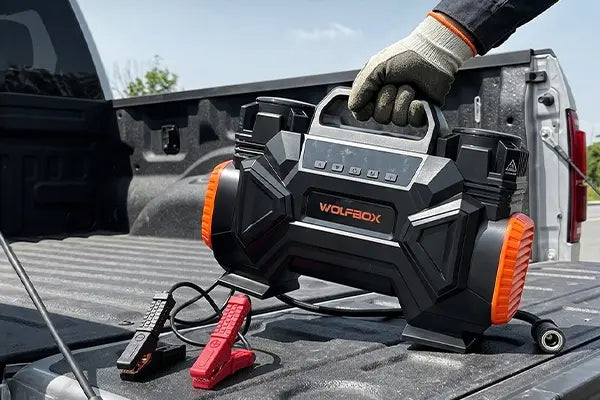
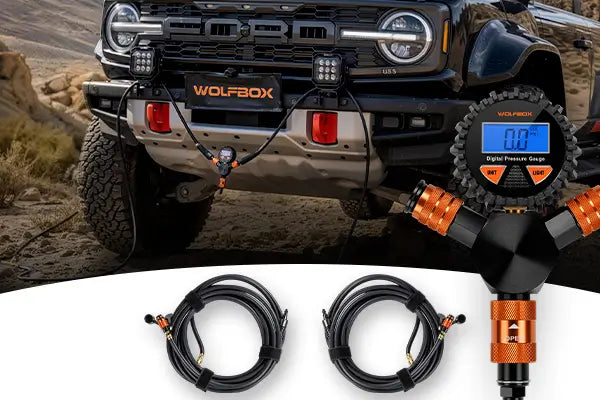
Tire inflator or compressor: A portable inflator lets you reinflate your tires after airing down and helps you manage pressure loss during the trip. This is where a compact tool like the WOLFBOX MegaVolt 24Air fits naturally, since it includes an air compressor and lets you bring tires back up to pressure without hunting for a gas-station air pump.
Tire pressure gauge: A gauge keeps the guessing out of the equation. Visual checks help, but they don't tell you much beyond "that tire looks suspicious." An actual PSI reading helps you make smarter adjustments before, during, and after your drive.
Tire repair kit: Small punctures from rocks, nails, or trail debris can often be plugged without removing the tire. Pairing a repair kit with a compressor gives you a practical setup for handling common tire issues before they cut the trip short.
Nice-to-Have Tire Gear
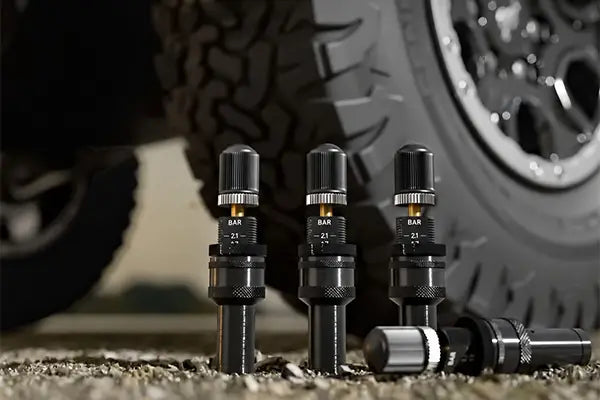
Automatic tire deflators: These make airing down quicker and more consistent, especially if you regularly drive rough gravel, sand, or rocky access roads. Instead of crouching beside each tire and checking pressure over and over, deflators help bring the tires down more evenly while you handle other quick prep tasks. The WOLFBOX MegaVolt 24Air also includes automatic tire deflators, which makes it useful on both ends of the process.
Valve stem caps and spare valve cores: Tiny items, easy to forget, and wildly annoying when you need them. Tossing a few spares into your tire kit takes almost no space and can save you from a surprisingly frustrating little problem.
What Battery Gear Belongs in Your Vehicle?
Battery issues have a way of showing up at the least convenient time, usually after you've been parked for hours with doors opening, interior lights flicking on, phones charging, and gear getting shuffled around. A weak battery at home is annoying. A weak battery at the end of a dirt road feels a little more personal.
Essential Battery Gear
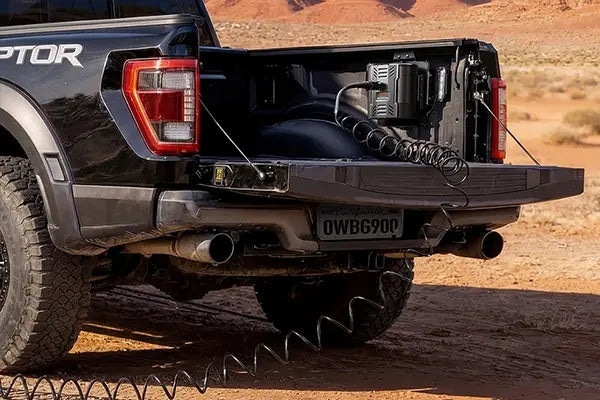
Portable jump starter: A compact jump starter gives you the ability to restart your vehicle without relying on another driver. That matters when you're heading out solo, parked far from help, or sitting in a quiet pull-off where the only thing moving is whatever made that noise in the woods. If your tire kit already includes a multi-function unit with jump-starting capability, you can cover this category without adding another bulky tool.
Charging cables: Keep the right cables for your phone, GPS, headlamp, and other small electronics. Off-grid driving usually means you're leaning on your devices more than usual, whether you're navigating, checking weather, or trying to remember which downloaded map layer actually shows the road you're on.
Power bank: A power bank provides backup power for smaller devices without draining your vehicle battery. It's especially useful if you're camping overnight, charging lights, or using your phone for navigation once the pavement disappears.
Nice-to-Have Battery Gear
Terminal battery brush: Corrosion can interfere with a clean connection, and a small terminal brush takes up almost no space. It's not exciting gear, but neither is standing around wondering why your jump starter won't connect properly.
Battery monitor: A simple battery monitor can help you keep an eye on voltage before a problem shows up. This is especially useful if you run accessories, camp lights, a fridge, or other electronics from your vehicle.
What Safety and Visibility Gear Should You Pack?
Safety and visibility gear deserve a little more room in your vehicle kit because most of it is compact, easy to pack, and far more useful than people realize. A headlamp, gloves, first aid kit, water, and an extra layer don't take up much space, but they can make a rough situation much easier to manage.
This category also covers more than vehicle problems. It helps when you're changing a tire near dusk, digging through gear in the dark, cleaning up a scraped shin, waiting out a weather shift, or dealing with the small surprises that seem to show up once you're far from convenience. It may not look as exciting as recovery boards or shiny camp gear, but when the sun drops or the weather turns sideways, this is usually the stuff you're happiest to have within reach.
Essential Safety and Visibility Gear
Headlamp or flashlight: A headlamp keeps both hands free for tire checks, quick repairs, camp setup, or digging through gear after dark. Flashlights work too, but holding one in your mouth while trying to fix something gets old fast.
Work gloves: Gloves protect your hands during tire checks, recovery work, or small repairs. They also help when you’re grabbing hot, dirty, sharp, or mystery-covered parts you'd rather not touch barehanded.
First aid kit: A basic first aid kit should cover cuts, scrapes, blisters, and small trail or campsite mishaps. Keep it easy to reach instead of buried under coolers, bags, and whatever "just in case" item you packed last minute.
Reflective triangle or warning light: If you have to stop near a road or pull off, visibility is key. A reflective triangle or compact warning light helps other drivers see your vehicle before they're right on top of you.
Extra water: Water helps during delays, hot weather, messy repairs, and longer-than-planned outings. Even if you never need it for an emergency, someone will eventually appreciate having extra.
Weather layer: A rain shell, warm layer, or packable jacket makes a big difference when conditions shift. Off-grid stops have a special talent for becoming colder, wetter, or windier right when you need to stand outside and solve a problem.
Nice-to-Have Safety and Visibility Gear
Small towels or shop rags: Rags come in handy for wiping hands, checking fluids, cleaning tools, or dealing with mud and dust. They're boring, which usually means they're useful.
What Recovery Gear Makes Sense for Off-Grid Driving?
Recovery gear can get out of hand quickly. Spend five minutes looking at off-road setups online, and suddenly it feels like you need enough equipment to recover a semi from a swamp. For most off-grid driving, especially on gravel roads, forest routes, muddy pull-offs, and basic backcountry access roads, the smarter move is to carry practical tools that match the terrain you actually drive on.
Essential Recovery Gear
Basic recovery kit: A recovery strap and soft shackles give you a simple setup for vehicle-assisted recovery when another driver can help. Make sure the gear is properly rated for your vehicle, store it somewhere easy to reach, and learn how to connect it to proper recovery points before you actually need it.
Tool roll: A small tool roll with basic hand tools can help with loose hardware, small adjustments, rattling brackets, or simple trail fixes. You don't need to bring the whole garage, but a few common tools can prevent a minor issue from turning into a long ride home with a new mystery noise.
Work gloves: Recovery work gets dirty fast. Gloves protect your hands when you're handling straps, digging around tires, moving rocks, or grabbing muddy gear from the back of the vehicle.
Small shovel: A compact shovel helps clear mud, snow, sand, or loose gravel from around your tires. It's simple, affordable, and surprisingly useful when a tire starts digging itself into a hole like it's searching for buried treasure.
Traction boards: Traction boards give your tires something to grab when the surface turns slick or soft. They're especially helpful in sand, mud, snow, and loose dirt, and they can save you from needing a pull in mild recovery situations.
Nice-to-Have Recovery Gear
Recovery blanket or damper: A recovery damper adds a layer of safety during strap-based recovery by helping reduce snapback if something fails under tension. It's a small item, but it encourages safer habits during recoveries.
Compact air-down mat or kneeling pad: This isn't a must-have, but your knees will appreciate it when you're airing down, checking tires, or digging around in gravel. It takes up almost no space and keeps you from doing the awkward parking-lot hobble afterward.
How Should You Organize Your Off-Grid Vehicle Gear?
Good gear only helps if you can actually find it when you need it. Off-grid driving has a funny way of turning your cargo area into a yard sale, especially once you add coolers, camp chairs, bike gear, tool bags, snacks, and whatever extra layer you swore you packed. A little organization keeps the important stuff from disappearing under the fun stuff.
Keep Emergency Tools Easy to Reach
Your jump starter, tire inflator, flashlight, gloves, and first aid kit should be accessible without unloading half the vehicle. If something goes wrong near the side of a road or after dark, you don't want to dig through camping bins like you're searching for buried treasure.
Separate Dirty Gear From Clean Gear
Recovery straps, traction boards, shovels, and muddy gloves need their own space. A simple bin, drawer, or heavy-duty gear bag keeps dirt, sand, and trail grime from spreading across the rest of your setup. Future you will appreciate this when your sleeping bag doesn't smell like wet forest road.
Keep Electronics Charged
Jump starters, power banks, flashlights, GPS units, and rechargeable lanterns all need a quick check before a trip. It's easy to toss them in the vehicle and assume they're ready, right up until you need one and realize it has the energy level of a phone at 1%.
Build a Small “Grab First” Kit
Some gear should live together in one easy-to-reach pouch or bag. Think gloves, a headlamp, a tire gauge, a multi-tool, basic first aid, and charging cables. These are the items you're most likely to need quickly, and keeping them grouped together saves time when something minor pops up.
Do a Quick Gear Check Before Leaving
Before heading out, take a minute to confirm that your essentials are packed, charged, and easy to access. You don't need a full inspection worthy of a moon landing. Just make sure the tools you're counting on are actually in the vehicle and ready to work.
Off-Grid Vehicle Gear Checklist
Use this checklist before heading onto forest roads, backcountry routes, remote campsites, or any drive where cell service and roadside help may be limited. Tire Gear
Portable tire inflator or air compressor
Tire pressure gauge
Tire repair kit
Automatic tire deflators
Spare valve cores and valve stem caps
Battery and Power Gear
Portable jump starter
Charging cables for phone, GPS, lights, and other devices
Power bank
Battery terminal brush
Fully charged flashlight or headlamp
Safety and Visibility Gear
First aid kit
Headlamp or flashlight
Work gloves
Reflective triangle or warning light
Extra water
Weather layer or rain shell
Shop towels or small towel
Recovery Gear
Basic recovery kit with recovery strap and soft shackles
Traction boards
Small shovel
Tool roll with basic hand tools
Recovery blanket or damper
Organization and Storage
Easy-access “grab first” pouch or bag
Separate bin or bag for dirty recovery gear
Storage drawer, tote, or gear bag
Trash bags or dry bags
Quick-check list for charged electronics
Before You Leave
Check tire pressure
Charge jump starter, power bank, lights, and GPS
Confirm your tire repair kit is stocked
Make sure recovery gear is easy to reach
Refill water and replace used first aid items
Download offline maps
Tell someone where you're headed if you'll be far from service
Jarrod Nobbe
Jarrod Nobbe is a North Carolina–based outdoor writer who spends his time exploring backcountry roads, hiking rugged trails, and racing gravity (enduro and downhill) mountain bike events. Whether he's navigating remote trailheads, carving out new lines on the trail, or setting up camp out of his 6th-gen 4Runner, he's constantly putting gear to the test in real-world conditions. His writing is rooted in firsthand experience, offering practical insight into what holds up when you're off the grid and deep into the elements.