








WOLFBOX Brands
WOLFBOX Brands
Your car is one of the largest investments you will ever make, but for most people, they do not even bother to maintain their cars unless something goes wrong, whether it be a strange noise, a light on the dashboard, or even breaking down on the highway. By this time, a problem that could have been resolved for $30 may have now ended up costing you $300 or worse.
But the good news is that maintaining your car to ensure that it is in top-notch condition does not necessarily mean that you have to be a certified car mechanic or have to spend top dollar for a fancy garage to get the job done for you. With a few simple steps, you can greatly extend the life of your car, while also saving you money and keeping you safe on the road. The following are the most important car maintenance tips and tricks that every driver should know, whether you are a first-time car owner or a seasoned veteran looking to brush up on your knowledge.
Many drivers don't bother with maintenance work on their cars because they feel it's a waste of money. However, the facts tell a very different story. The American Automobile Association (AAA) has found that the average cost of a vehicle breakdown is over $500, taking into account towing, repairs, and wasted time. This is compared to the price of an oil change, which is between $30 and $70, and a tire rotation, which is between $20 and $50.
Regular car maintenance is not a cost, it's an investment, and an investment that will pay you back every time it prevents a larger, more expensive problem from arising in the future.
Engine oil is the lifeblood of your car, lubricating moving parts, reducing friction, and maintaining a stable temperature. However, when oil becomes old and dirty, it ceases to perform this function, and your engine begins to deteriorate prematurely.
Most cars need an oil change every 5,000 to 7,500 miles, although some newer models with synthetic oil may need an oil change every 10,000 miles. It's best to check your owner's manual for the recommended oil change for your particular vehicle.
A few things to keep in mind:
Always use the oil grade recommended in your owner's manual
Check your oil level once a month using the dipstick, not just at service intervals
Dark, gritty oil on the dipstick is a sign it needs changing soon
Never ignore the oil change warning light on your dashboard
This is one of the simplest and most impactful car maintenance tips you will ever follow.
Your tires are the only part of your car that actually touches the road, which makes them one of the most critical safety components on your vehicle. Yet tire pressure and tread depth are two of the most commonly neglected items in any car care routine.
Tire pressure should be checked at least once a month and always before a long road trip. Underinflated tires reduce fuel efficiency, wear unevenly, and increase your stopping distance. Overinflated tires reduce traction and are more prone to blowouts.
Here is a quick tire maintenance checklist:
Check pressure when tires are cold, before driving more than a mile
Keep pressure at the recommended PSI listed on your driver's door sticker
Rotate your tires every 5,000 to 7,500 miles to ensure even wear
Replace tires when tread depth falls below 2/32 of an inch
Check for cracking, bulging, or visible damage on the sidewalls regularly
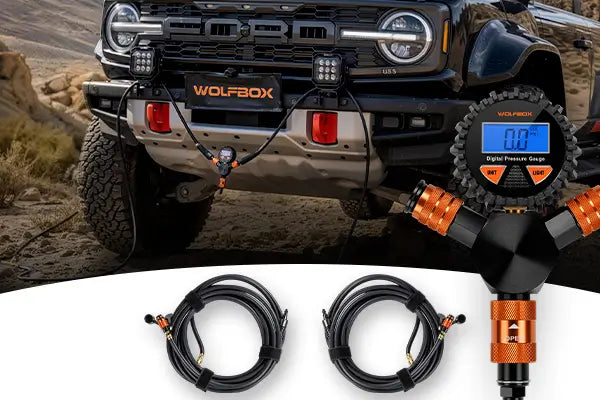
A portable tire inflator in your trunk makes it easy to top up your tires anywhere, anytime, without relying on a gas station pump.
A dead battery is the number one cause of roadside breakdowns. Most car batteries last three to five years, but heat, cold, and short trips can shorten that lifespan significantly. The frustrating thing is that batteries often fail without much warning.
Here are some simple auto maintenance tips to keep your battery healthy:
Have your battery tested once a year at an auto parts store, most do it for free
Keep the terminals clean and free of corrosion by wiping them with a mixture of baking soda and water
Avoid leaving lights, chargers, or accessories plugged in when the engine is off
If your car sits unused for more than two weeks, consider using a trickle charger to maintain the battery
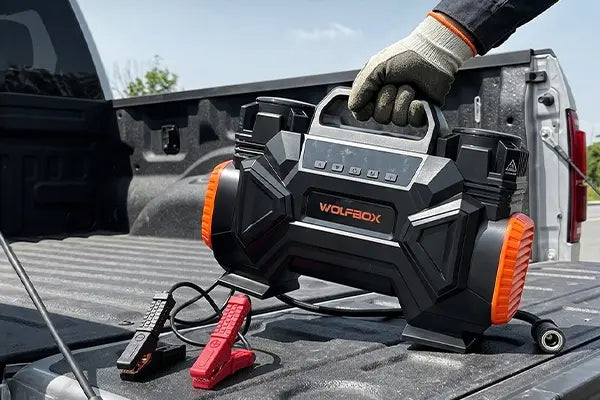
And here is one piece of advice that could save you hours of frustration: keep a Jump Starter With Air Compressor in your trunk. Modern units like the Wolfbox MegaVolt range can jump start your car and inflate a flat tire without needing another vehicle or waiting for roadside assistance. It is one of the smartest tools any driver can own.
Your engine requires clean air to function properly. The air filter prevents dust, debris, and other impurities from entering the engine. Over time, the filter gets clogged up, thereby impeding the smooth flow of air into the engine. When the air filter gets dirty, it may cause a reduction in fuel efficiency up to 10 percent and cause your engine to work harder than it should.
You should change your car's air filter after every 15,000 to 30,000 miles, depending on your driving conditions. If you drive on a lot of dirt roads, you should check your car's air filter often.
Replacing your car's air filter is one of the easiest DIY car jobs you may ever encounter. It requires just under five minutes, costs between $15 to $30, and doesn't require any special tools whatsoever. This is one of the car maintenance tips and tricks that many car owners fail to take advantage of.
While you are at it, use a quality air duster to blow out any loose debris around the air filter housing, dashboard vents, and interior crevices. Keeping dust out of your car's internal components extends the life of both your engine and your cabin electronics.
Your brakes are one of the most critical safety features of your vehicle. Failing brake pads can increase stopping distances, causing damage to your vehicle's rotors, turning a relatively inexpensive brake pad replacement into a costly rotor repair. Most brake pads last from 30,000 to 70,000 miles, depending on driving habits and conditions.
Common warning signs of worn or faulty brake systems:
Squealing or grinding sounds when you step on the brake pedal
Vehicle pulls to one side when braking
Soft or spongy brake pedal
Vibration or pulsing through the brake pedal or steering column
Brake warning light on your dashboard
Do not put off brake maintenance. It is one of those vehicle maintenance tips that directly impacts your safety and the safety of everyone around you.
Your engine generates enormous heat, and the cooling system is what keeps it from overheating. Coolant breaks down over time and loses its ability to regulate temperature effectively. Most manufacturers recommend flushing and replacing coolant every 30,000 miles or every two to five years.
Key cooling system checks to add to your routine:
Check coolant level in the reservoir every month, topping up with the correct type if needed
Never open the radiator cap when the engine is hot
Watch for leaks under the car, coolant often has a sweet smell and leaves a bright green or orange puddle
Replace the thermostat and water pump on schedule per your owner's manual
Overheating is one of the leading causes of serious engine damage. A small amount of attention to your cooling system can prevent a very large repair bill.
However, mechanical health is only half the story. Keeping your car clean, inside and outside, will also help prevent damage. Dirt, salt, and water cause rust and corrosion on the bodywork and underneath the car. Bird droppings and tree sap will also eat through the paintwork if they are not removed promptly. A dirty interior will also cause dust buildup in the ventilation system, which could cause problems in the future.
Some practical tips for maintaining your car, keeping it clean, and protecting it from damage:
Wash your car every two weeks, and apply a layer of wax every three to four months
Clean underneath the wheel arches, especially in the winter months, as this is where road salt will collect
Vacuum and wipe down the interior once a month to prevent dust buildup in vents and controls
Use a windshield treatment spray to improve visibility in rain
For road trips and long drives, a car fridge is a practical addition to your vehicle. Keeping food and drinks cold means fewer stops, less spending on fast food, and a more comfortable journey overall. The Wolfbox dual-zone car fridge with app control is one of the most capable options on the market, offering 39 to 58 quart capacity with both 12V and 24V DC compatibility.
Your car depends on multiple fluids to function properly, and each one needs to be checked and topped up on a regular basis. This is one of the most straightforward automotive repair tips you can follow to avoid bigger problems.
Here is a quick reference guide:
Fluid |
Check Frequency |
Change Interval |
Engine Oil |
Monthly |
Every 5,000 to 10,000 miles |
Coolant |
Monthly |
Every 30,000 miles or 2 to 5 years |
Brake Fluid |
Every 6 months |
Every 2 years or 30,000 miles |
Power Steering Fluid |
Every 6 months |
Every 50,000 miles |
Transmission Fluid |
Every 6 months |
Every 30,000 to 60,000 miles |
Windshield Washer Fluid |
Monthly |
Top up as needed |
Keeping all of these fluids at the right level and in good condition is one of the most effective ways to extend the life of your vehicle.
Today's cars have so many sensors, and those dashboard lights and icons are simply those sensors trying to communicate with you. Ignoring these is one of the biggest and most expensive mistakes you can make. A check engine light might mean anything from a loose gas cap to a failing catalytic converter. The only way to be sure is to get it checked.
Don't wait for these lights to go away on their own. Use an O2 sensor to get a code and understand what your car is telling you. It is almost always easier and less expensive to get a problem fixed if you catch it early.
However, even with the best maintenance, unexpected situations will arise. A flat tire, dead battery, heavy rains, or a long wait on the side of the road are just a few examples. Being prepared for these situations, however, is a responsible act of car ownership, and one of the best car maintenance tips and tricks you can act on today.
A well-stocked car emergency kit should include:
A portable jump starter with air compressor for dead batteries and flat tires
A phone charger or power bank for communication
A basic tool kit with screwdrivers, pliers, and adjustable wrenches
Jumper cables as a secondary option
A first aid kit for minor injuries
Reflective warning triangles or road flares
A flashlight with extra batteries
A blanket and water, especially for winter driving
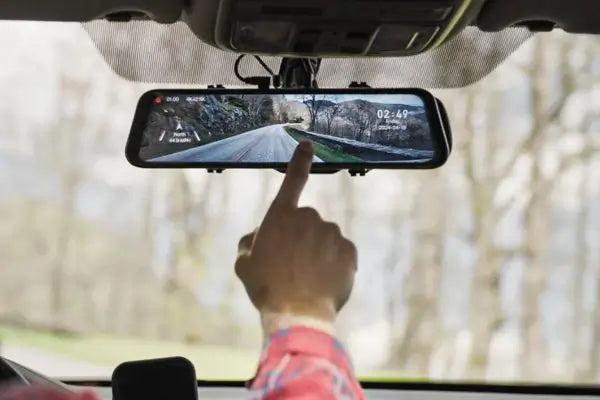
The Wolfbox dash cam should also be included in your car safety equipment. This camera records your drive, so in case you get into an accident, you have evidence of the incident, which can be useful in dealing with your insurance provider or in case of a dispute over fault in the accident.
Here is a consolidated maintenance schedule you can save and refer back to:
Interval |
Task |
Monthly |
Check oil, coolant, tire pressure, all fluid levels, battery terminals |
Every 3 months |
Inspect belts and hoses, check brake fluid, clean cabin air filter |
Every 6 months |
Rotate tires, inspect brakes, check suspension and steering |
Every 12 months |
Replace wiper blades, test battery, inspect exhaust system |
Every 15,000 to 30,000 miles |
Replace engine and cabin air filters |
Every 30,000 miles |
Flush coolant, replace brake fluid, inspect spark plugs |
Every 5,000 to 10,000 miles |
Oil and filter change |
Printing this out and keeping it in your glove box is a small habit that can add years to your car's life.
Does not need to be complicated or expensive. The best car maintenance tips are the simplest: change the oil in your engine on time, check your tires frequently, take care of your battery, and listen to your car.
You can save money by maintaining your car regularly. Car maintenance done consistently is always less expensive than repairing a car in an emergency. Start a good habit today and follow a simple schedule. Your car will thank you for the long years of trouble-free use.
Start today by doing one thing for your car. Check the tire pressure, look under the hood, or buy a jumper starter for your trunk. Taking consistent small steps will do more for your car than one expensive fix will.
If you drive little, you should still service your car at least once a year. Oil also deteriorates with time, even if you drive little.
Oil changes are the most important car maintenance task. Clean oil extends the life of your engine better than any other car maintenance activity. Failing to change the oil is the surest way to ruin your engine.
You can perform basic car maintenance yourself without a professional mechanic. You should check fluids, change the air filter, change the wiper blades, and clean the battery terminals.
If your car develops unusual noises, if it is pulling to one side, if it is vibrating, or if any unusual change occurs in the way it is driving, then you should seek car attention. Routine car service is done regardless of how your car is driving.
