









WOLFBOX Brands
WOLFBOX Brands
Your tires are the sole parts of your vehicle that actually come into contact with the road. Every turn, stop, and mile driven is dependent on four patches of rubber about the size of your own hands. Yet, tire maintenance is one of the most neglected aspects of car maintenance by the average driver.
Taking care of your tires is simple and does not call for any special equipment or knowledge, and hence, anyone can do the necessary work easily at home in no time. The easiest way to take care of your tire(s) is by performing a Check-Up. By doing your tire check-up on a regular basis, you can greatly improve your safety while driving, greatly increase the life of your tire, and greatly improve your gas mileage with just a few simple maintenance steps. You have everything you need to know to get started today!
Neglecting your tires will also end up costing you in more than just one way. This is due to the fact that, according to the National Highway Traffic Safety Administration, accidents caused by tires amount to a total of 11,000 accidents every year. Neglecting your tires will also make them less fuel-efficient, as they will end up losing up to 3 percent fuel efficiency for every 1 PSI drop in recommended tire pressure for all four tires.
Neglecting your tires will also mean that they will deteriorate faster. A tire that should last 50,000 miles might only give you 30,000 if you skip the basics. That is a significant cost that proper tire maintenance helps you avoid entirely.
The most important aspect for tire upkeep is tire pressure maintenance. Tires experience a monthly pressure decrease of 1 PSI because of natural elements. The loss becomes more severe when temperatures drop to lower levels. The tire pressure reduction reaches 1 PSI when the temperature decreases by 10 degrees Fahrenheit.
Operating a vehicle with under-inflated tires results in multiple problems which include unbalanced tire wear, longer vehicle stopping distances, compromised vehicle control, and greater accumulation of heat in the tires. The opposite effect occurs when tires become over-inflated because they result in reduced tire grip on the road, an uncomfortable driving experience, and tire blowouts that occur on bumpy roads.
How to check tire pressure correctly:
Make sure to check tire pressure when the tires are cold, before driving more than a mile
Use a digital tire pressure gauge for accurate readings
Check the tire pressure on the sticker inside the driver's door frame, not on the tire sidewall
Check all four tires and the spare tire once a month without exception
Check tire pressure after a big change in temperature, especially before winter and summer
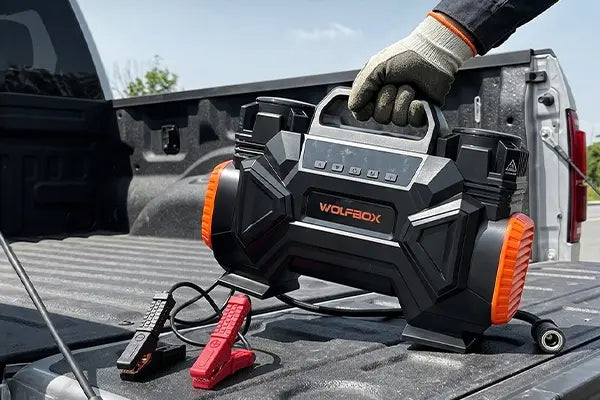
A tire inflator for car kept in your trunk makes it easy to correct pressure anywhere, anytime, without needing to find a gas station.
The tire maintenance procedure known as tire rotation stands as the most important tire maintenance procedure which car owners frequently neglect. The different driving systems of front-wheel drive vehicles and rear-wheel drive vehicles and all-wheel drive vehicles cause their front and rear tires to develop distinct wear patterns. The tires at the front of the car wear much faster than the tires at the back if the car is a front-wheel drive car. Tire rotation serves a vital purpose by creating equal tire wear patterns which results in extended tire life. The following guidelines provide effective tire rotation procedures which should be executed during tire maintenance. The recommended practice requires drivers to rotate their tires after driving between 5,000 and 7,500 miles or when they perform their oil changes.
Wheel alignment is the angle at which your tires hit the road. When your tire alignment is out of whack, your tires are basically being dragged around slightly sideways as you drive. This causes extremely rapid tread wear on the inside or outside edge of the tire.
Signs your alignment needs attention:
Your vehicle pulls to one side when you are driving on a straight, flat road.
Your steering wheel is not centered when you are driving straight.
You notice feathering on one side of the tire when you inspect the tire.
Your steering is loose and sloppy.
Have your tire alignment checked at least once a year and whenever you hit a large pothole, curb, or other road hazard. Proper tire alignment is an essential part of car tire maintenance for both your tires and suspension system.
Tire balancing is different from tire alignment. Tire balancing addresses an unbalanced distribution of weight on a tire and a wheel set. An unbalanced tire generates vibrations via the steering wheel and/or seat. It also results in uneven tire wear and excessive wear on suspension system parts.
You should have your tires balanced:
Every time a tire is dismounted and then remounted
When there is vibration while driving on the highway
When a tire hits a significant road hazard
As a preventive measure every 12,000 to 15,000 miles
Tire balancing is a simple and inexpensive process with a significant impact.
Balancing is a quick and inexpensive service that makes a noticeable difference in ride quality and tire longevity.
You need to conduct a visual inspection of your tires every month. The process of visually inspecting tires can be completed within two minutes. This important maintenance task needs to be performed whenever you measure your tire pressure.
The inspection should focus on finding these specific items:
To check tire tread depth, insert a penny into the tire groove with Lincoln's face down. Your tire needs replacement because yoAu can see his head which indicates your tire has worn down to less than 2/32 of an inch.
Cracks on the tire sidewalls mean the tire is aging and drying out. This condition creates a risk of tire blowouts.
A bulge on the tire indicates that the tire has suffered structural damage. The tire needs to be replaced without any delay.
Tires develop slow leaks because they contain embedded objects like nails and screws and glass. This condition results in tire pressure loss which occurs gradually.
Catching these issues early is a simple but highly effective tire care tip that can prevent a dangerous blowout on the road.
Any tire has a load rating and a speed rating, which are stamped on the sidewall of the tire. Excessive stress is placed on a tire when either of its ratings is exceeded.
Key habits to follow:
Never overload your vehicle beyond its maximum capacity, as indicated on the door sticker
Try to ensure equal distribution of cargo to avoid overloading any tire
When towing or carrying a lot of cargo, slow down and decrease your tire pressure a little, as recommended by your vehicle manufacturer
Avoid overloading your roof rack, as this affects all four tires
This is especially important to drivers of vehicles used for carrying, towing, and road trips with a full load of passengers and cargo.
Your driving style has a direct impact on how quickly your tires will wear out. Your aggressive style will accelerate tire wear much faster than a smooth style of driving.
Good habits for your tires:
Accelerate smoothly, don't floor the accelerator from a standstill
Slow down early for a turn, don't brake in the turn
Slow down for rough road, don't speed on unpaved roads where sharp objects are common
Don't mount curbs, don't hit potholes, don't scrub tires against the curb when parking
Smooth style of driving not only extends the life of your tires, but also improves fuel efficiency and reduces brake and suspension wear.
If you have seasonal tires or a spare tire, the way you store these tires is important, as improper storage of these tires can cause the tires to degrade faster, which may affect the performance of these tires during the season.
Proper storage guidelines:
Store the tires in a cool, dry place, avoiding direct sunlight and heat sources
Store the tires at least 10 inches away from electric motors, as they produce ozone that can cause rubber to degrade
Store the tires horizontally if they are unmounted, or store the tires vertically on a tire rack if they are mounted on the rim
Clean the tires before storing to remove road grime and brake dust
Check the tires before mounting them on the rim during the season
Proper tire maintenance starts with having the right equipment on hand. The WOLFBOX MegaFlow24 Pro Portable Tire Inflator and Deflators is one of the most capable portable inflators available in 2026 and makes staying on top of tire pressure genuinely effortless.
Here is what sets it apart:
LPM airflow rating of 45, capable of inflating a standard tire in 35 seconds or an SUV tire in 50 seconds
150 PSI maximum pressure rating, suitable for cars, SUVs, trucks, motorcycles, and bicycles
Auto-stop feature, which shuts off when it reaches your preset pressure, ensuring it does not go above it
12,000 mAh battery, capable of standing by for 180 days, so it is always ready in your trunk
Comes with a deflator for off-road enthusiasts who need to air down tires when driving off-road but need to air up when driving on the highway
45W fast charging, which can recharge it in under an hour
Comes with a hard-sided carry case
Having a reliable portable inflator in your car means you can correct tire pressure the moment you notice it is low, anywhere on the road, without waiting for a gas station.
Your tires really are the backbone of your safety and your car's performance. Taking care of them isn't rocket science — just check the tire pressure once a month, get them rotated, make sure your alignment's good, and take a quick look at them every few weeks to spot any problems.
Get a head start. Check your tire pressure immediately and make sure you have a reliable tire inflator in your trunk. It is the little things that make a big difference when it comes to tire maintenance.
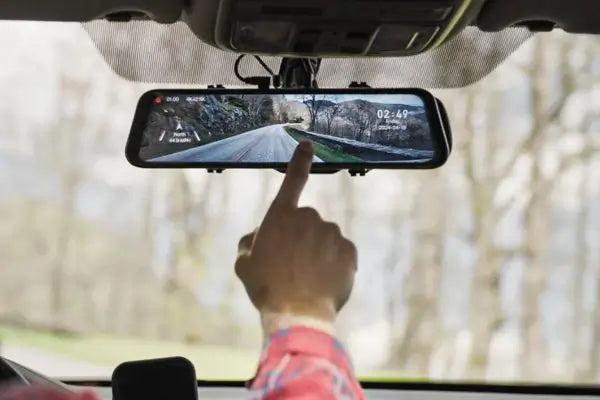
If you want to take your tire maintenance to the next level, explore the full range of car safety and maintenance tools at wolfbox.com. From portable tire inflators to 4K dash cams and jump starters, Wolfbox has everything you need to stay prepared, protected, and in control on every drive.
The penny test is a method of testing tires. To execute this test, simply insert a penny into the grooves of the tires. If you can see Lincoln's head on the penny then it is time to replace them. Look for signs of cracks, bulges or if the tire is more than six years old as all of these will require you to replace your tire.
Temperature dips? That means less air inside your tires. Every ten degrees colder pulls one psi lower. Seasons shifting matters here - winter coming makes it more obvious. Adjustments help keep things steady when weather turns.
Most car tires handle roughly four to seven hundred thousand miles before needing change. Yet here's the thing - age matters just as much as tread wear. Even when rubber looks fine, anything past six years old runs higher risk. Safety leans more on time than mileage alone.
