
Key Takeaways
- Power running boards deploy automatically when a Tundra door opens and tuck flush against the body when it closes, so you get a lower step without losing ground clearance on the trail.
- Look for a load rating of at least 660 pounds per side, an IP67 sealed motor, and a wide, textured step surface before you buy.
- A single high torque motor tends to be more reliable long term than a dual motor design, since there's no synchronization to fail between two separate units.
- Installation is typically a bolt on job using factory mounting points, and most owners finish in one to two hours with no wiring splices required.
- The upgrade makes the most sense for families, older drivers, and anyone who tosses gear or tools onto the running board while loading up for a trip.
Toyota Tundra owners ask this question a lot: are power running boards actually worth installing, or are they just a shiny add on that looks good in photos? We get it. The Tundra sits tall, especially in Crew Max trims, and that height is great for ground clearance but rough on anyone climbing in and out several times a day.
We're WOLFBOX. We build WOLFBOX Power Running Boards for trucks, Jeeps, and SUVs, and below we'll walk through what these boards actually do, the specs that matter, what installation looks like, and who should (and shouldn't) bother with the upgrade.
What Power Running Boards Actually Do on a Tundra
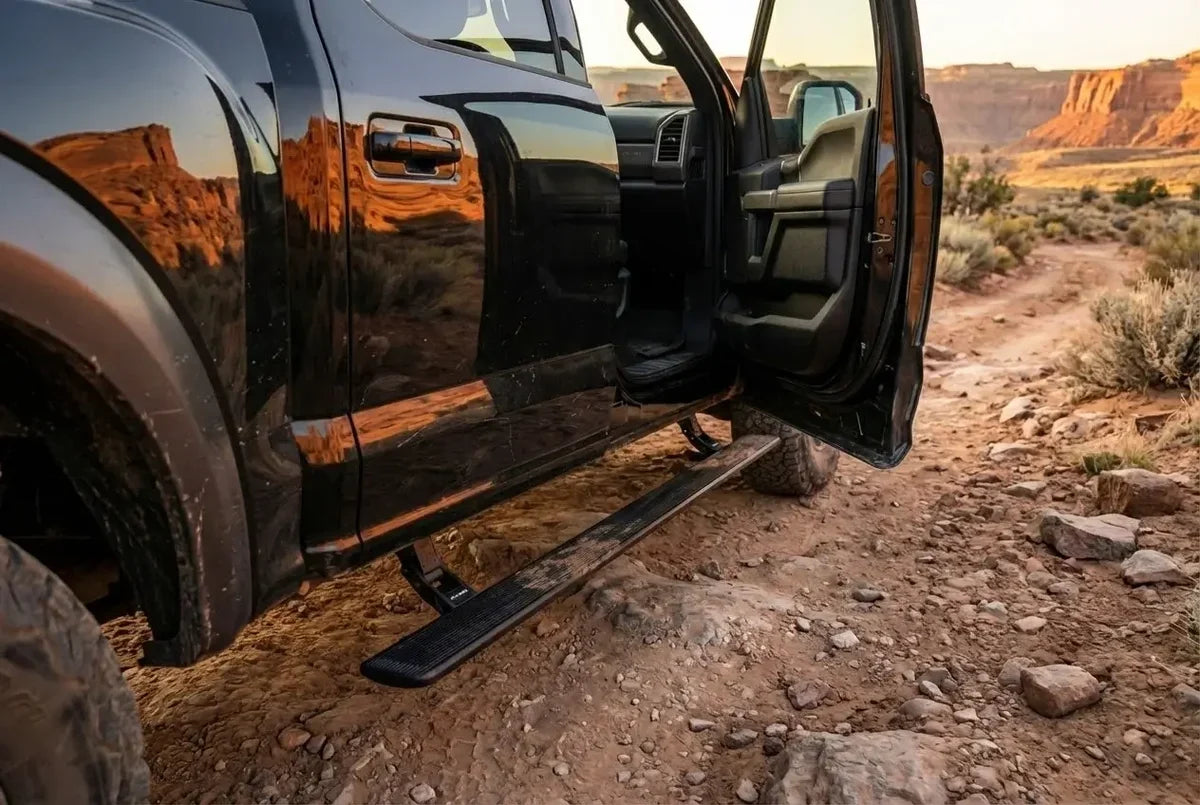
A power running board is an electric step. It extends when a door opens, retracts when it closes, and gets there through sensors that read the door signal and a motor that drives the step down and out. Within a second or two, you've got a stable platform under your foot.
That's the whole idea. Simple in concept, but the execution matters a lot.
Unlike a fixed nerf bar or a manual step, a power board disappears when you don't need it. That means no permanent drop in ground clearance, no extra width to catch on trail obstacles, and no rock rash on a bar hanging below the rocker panel. When the door shuts, the board tucks in tight against the body.
Compare that to Toyota's own factory power running boards, which are only offered on certain Tundra trims like Platinum and Capstone. If your truck didn't come with them from the factory, aftermarket is really your only path to this feature.
Why Tundra Owners Consider This Upgrade
Easier Entry and Exit for the Whole Family
The Tundra Crew Max sits noticeably higher than a half ton like an F-150 or Silverado, especially with any lift or larger tires. That extra height is great off road, but it's a lot less great when your kid is trying to climb into a car seat, or when your knees remind you every winter that stepping up to a truck cab isn't what it used to be.
A running board that drops the step height by roughly 13 to 15 inches changes that daily routine. It's a small thing until you're loading groceries in the rain with a toddler on your hip. Then it's not small at all.
Slips and falls during vehicle entry and exit are a real, documented safety concern, and researchers at NIOSH have studied how step height and footing affect injury risk when climbing in and out of a vehicle cab. A lower, more stable step surface is one of the simplest ways to reduce that risk.
Weather and Trail Performance
Here's a fair question: does a single motor step actually hold up in real winter conditions, or does it jam the first time snow packs into the hinge? Good running boards are built for exactly this. WOLFBOX Power Running Boards use a fully sealed IP67 rated motor tested from 40 degrees below zero Fahrenheit up to 176 degrees Fahrenheit, which covers Pacific Northwest slush, Midwest ice storms, and Southwest desert heat without much drama.
The IP67 rating itself comes from an international electrical standard, IEC 60529, which defines exactly what "sealed against dust and water" means in testable terms rather than marketing language. A motor rated IP67 is dust tight and can survive brief submersion. That matters when your Tundra fords a creek crossing or gets buried in slush at a trailhead.
Curb Appeal Without the Trade-off
Running boards also just look good. A clean, flush step under a Crew Max cab reads more purposeful than a boxy fixed step rail.
Specs That Actually Matter Before You Buy
Not every "power running board" listing tells the same story, and a few numbers separate a durable set from one you'll be troubleshooting in a year.
Load Capacity
Look for a rating of at least 660 pounds per side. That's enough for two adults standing on one board at once, or a heavy load of camping gear while you sort out the bed. Cheaper boards sometimes rate closer to 500 pounds, which is fine for stepping but leaves little margin if a kid decides to jump on it.
Waterproofing and Temperature Range
An IP67 motor rating means the electronics are sealed against dust and short term submersion, not just splash resistant. Combine that with a wide operating temperature range, ideally covering both desert heat and sub zero cold, and you've got a component that won't quit on you at the worst possible moment.
Single Motor vs Dual Motor
This one surprises people. You'd think two motors would be more powerful than one, and in raw thrust, maybe. But two independently powered linkages have to stay in sync, and if one motor wears faster than the other, the board can twist and bind on deployment. A single high torque motor drives both sides of the step through a shared linkage, so there's nothing to fall out of sync in the first place. We break this down in more detail in our guide to single versus dual motor running board design if you want the engineering side of it.
Installation Method and Warranty
Confirm the board bolts to factory mounting points with no drilling, and check what wiring is involved. A CAN bus connection that taps into your Tundra's existing door signal is faster to install and more reliable than a magnetic switch setup, which can trigger falsely or fail to trigger at all. And don't skip the warranty terms. A five year limited warranty tells you a lot about how confident a brand is in its own hardware.
What Installation Actually Looks Like
Most Tundra owners can install power running boards themselves in one to two hours with basic hand tools. Mount the bracket assembly to the factory rocker panel points, connect the pre-assembled motor harness, tap into the CAN bus wiring for door signals, and test deployment before buttoning everything up.
No drilling. No cutting into your wiring harness. Most kits use a tap connector that pierces the insulation on the data line without cutting the wire itself.
If you'd rather not tackle it solo, any shop that does general accessory installs can usually knock it out in under two hours. WOLFBOX also provides a step by step installation guide specific to the current generation Toyota Tundra if you want to see the exact process before you commit.
Pros and Cons of Power Running Boards for the Tundra
Pros
- Drops step height significantly, making entry and exit easier for kids, seniors, and anyone with knee or hip issues
- Fully retracts, so you keep factory ground clearance for trails and steep departure angles
- Sealed motors handle rain, mud, snow, and desert dust without jamming
- Bolt on installation with no drilling required on most vehicle specific kits
- Built in LED lighting improves visibility at night without extra wiring
Cons
- Adds a moving, powered component that needs occasional inspection, unlike a static step
- Costs more upfront than a fixed nerf bar or manual step
- Requires access to a 12 volt circuit and a working door signal, so very old or heavily modified electrical systems may need extra diagnostic time
- Not a factory option on lower Tundra trims, so aftermarket is the only route if you didn't order Platinum or Capstone
Who Should Upgrade, and Who Can Skip It
If passengers regularly struggle with the Tundra's ride height, or you just want a clean look with zero permanent clearance loss, this upgrade earns its keep fast.
If you rarely carry passengers and you're chasing every inch of departure angle for technical rock crawling, a fixed rock slider might serve you better. Not every truck needs this.
How to Choose the Right Power Running Boards for Your Tundra
Start with fitment. Boards built for a different Tundra generation won't line up with your factory mounting points, so confirm your exact cab style and model year before ordering.
From there, compare the specs above: load rating, IP rating, motor design, and warranty length. A brand that publishes real torque figures and testing conditions, rather than vague marketing claims, is usually one that stands behind its engineering.
Also worth checking: does the step surface stay grippy when wet? A smooth aluminum step looks fine in a showroom. A textured, slip resistant surface matters more the first time you're stepping down in the rain with an armful of groceries.
Should You Also Consider a Bed Step or Tonneau Cover?
Power running boards solve side entry, but they're not the only access point worth thinking about. If you're regularly climbing into the bed itself, a WOLFBOX Retractable Bed Step handles that the same way, deploying with a kick and tucking away when you're done. And if keeping gear dry matters just as much as getting in and out of the cab, a WOLFBOX SmartSlide Electric Retractable Bed Cover rounds out the setup.
These upgrades don't depend on each other, but most owners who add one end up eyeing the others too.
Ready to Upgrade Your Tundra?
If you've made it this far, you already know whether the lower step height and weatherproof reliability matter for how you actually use your truck. Fitment is specific by year and cab configuration, so it's worth double checking your exact Tundra generation before ordering.
Browse WOLFBOX Power Running Boards to see current fitment options, specs, and what's included in the box. Got questions about your specific setup? Our team is happy to help you sort out fitment before you buy.
FAQs
Do power running boards reduce ground clearance on a Toyota Tundra?
Will a single motor running board get stuck in snow or mud?
How much weight can Toyota Tundra power running boards hold?
Do I need to drill into my Tundra to install power running boards?
Are Toyota Tundra power running boards waterproof?
Can I still stand on the boards while washing my truck?
Do factory Tundra power running boards work the same way as aftermarket ones?



Leave a comment
All comments are moderated before being published.
This site is protected by hCaptcha and the hCaptcha Privacy Policy and Terms of Service apply.