
Phil was out in the sand dunes of California during King of the Hammers when things went sideways. He totaled his Jeep Gladiator—the first truck he had ever bought brand new. To make matters worse, it was the exact rig they were supposed to mount a Bison Overland camper onto, leaving him with a wrecked truck to rebuild from the ground up.
"It was a matter of minutes, honestly, where I was devastated," Phil says. "Then I thought, as long as everyone is okay, we'll figure it out."
What looked like a disaster turned into an opportunity. With the help of great sponsors—including Dana Spicer stepping up with Ultimate 60 axles—Phil rebuilt the totaled Gladiator into something far more capable than it was off the showroom floor.
The incident could have become a story about everything that can go wrong off-road. For Phil, it became a reminder of something simpler. Preparation matters, but it cannot control everything. What matters is knowing what you can rely on when plans fall apart.
That idea has shaped Phil's life since 2019. That was the year he left a career in finance, moved into a camper, and chose a different definition of freedom.
A Different Kind of Retirement Plan
Before life on the road, Phil worked in retirement planning. He spent his days talking with clients about travel and the lives they wanted after work. The conversations made him question his own plans.
"I talked to people about traveling, and what they wanted to do once they stopped working," he says. "It made me think, well, I want to do that now."
He worked about 40 hours a week in a cubicle. On weekends, he dreamed about camping. A few days away from work never seemed like enough. The longer he stayed outside, the more freedom he felt.
Eventually, he stopped trying to balance both lives. He sold his belongings, left his house, and moved into a camper. His finance background helped him make that choice. Years of meeting people with money but little happiness had changed his view of what mattered.
Phil realized the life he wanted did not necessarily require more money. It required giving up some comfort and choosing what mattered to him sooner.
In 2019, he moved into his first camper with his dog. He traveled through Oregon and Washington, then continued to Alaska and the Arctic Ocean. He remembers that first year as a dream. It was also a different time, before van life became as mainstream as it is today.
"I'm so happy I didn't wait and think, oh, I'll do that later," he says. "It has changed a lot since then."

Breakdowns, Strangers, and a Junkyard in Alaska
Phil did not spend months preparing for every possible problem. He focused on making the truck comfortable. He set up the water system and kitchen the way he wanted. Then he learned to solve the rest as it came.
That approach was tested in remote Alaska when his Dodge camper broke down, leaving them stranded in a junkyard for a week. With the help of generous locals, Phil spent those seven days rebuilding the vehicle's entire fuel system.
"It ended up being an amazing experience," he says. "I met really good people."
The same thing happened again and again. Problems appeared, but people appeared too. Strangers became friends. Friends became a community spread across the country. Social media helped Phil connect with people in different states. Those connections often led to new campsites, new stories, and new friendships. Over time, that network became part of what made the road feel possible. He could travel alone without feeling completely alone.
His early years on the road taught him something important. Adventure was not about controlling every detail. It was about adapting when things changed. It was also about trusting people who were willing to help.

Meeting His Wife: A Journey Built for Two
Phil learned how to travel alone. Then meeting his wife changed what he wanted from the road.
They met at a small van-life gathering. It was more about spending time together than vendors or formal events. After camping with the same group, they went their separate ways. She returned to Pennsylvania, while Phil went back to Arizona.
The distance was about 2,300 miles. Phil did not let that stop him. "I live in my truck; I can go anywhere I want," he remembers thinking. So he drove to Pennsylvania.
Their vehicles also shaped how they traveled. Phil's Jeep could handle difficult terrain. Her van was more limited. They could no longer go as deep into forests or deserts as Phil once did alone.
That change went deeper than vehicle choice. Phil began to see travel differently. "When I was solo traveling, I could have the best campsite," he says. "I always wanted a partner to share it with."
Today, the perfect campsite matters less. Being together matters more. The couple later bought a house in Virginia. For Phil, that was another step outside the comfort zone he had built around constant movement.
When Adventure Stopped Meaning "Farther"
Phil has built and owned several campers and rigs over the years. His favorite memories include a Jeep that took almost four years to complete. It was small, capable, and built around going deep off-road.
At the time, that was exactly what Phil wanted. He was single and wanted to explore difficult trails. His priorities are different now.
"The Jeep represents a part of my life that isn't really here anymore," he says. "I'd rather have my wife and my family with me, be more comfortable, and maybe not go quite as far."
That change happened gradually. Each build taught him something new. Each year changed what he wanted next. Going farther became less important than being comfortable, staying reliable, and sharing the experience. The goal was no longer simply to reach the hardest trail. It was to build a life that felt right when the trail ended.
The way Phil builds reflects the same change. He likes to learn carefully and finish things properly. "That's just how I want to do everything in my life, really," he says.
Gear You Install and Forget About
That mindset eventually shaped what Phil expected from the gear in his builds. He did not want equipment that created another problem to manage. He wanted things that worked and stayed out of the way.
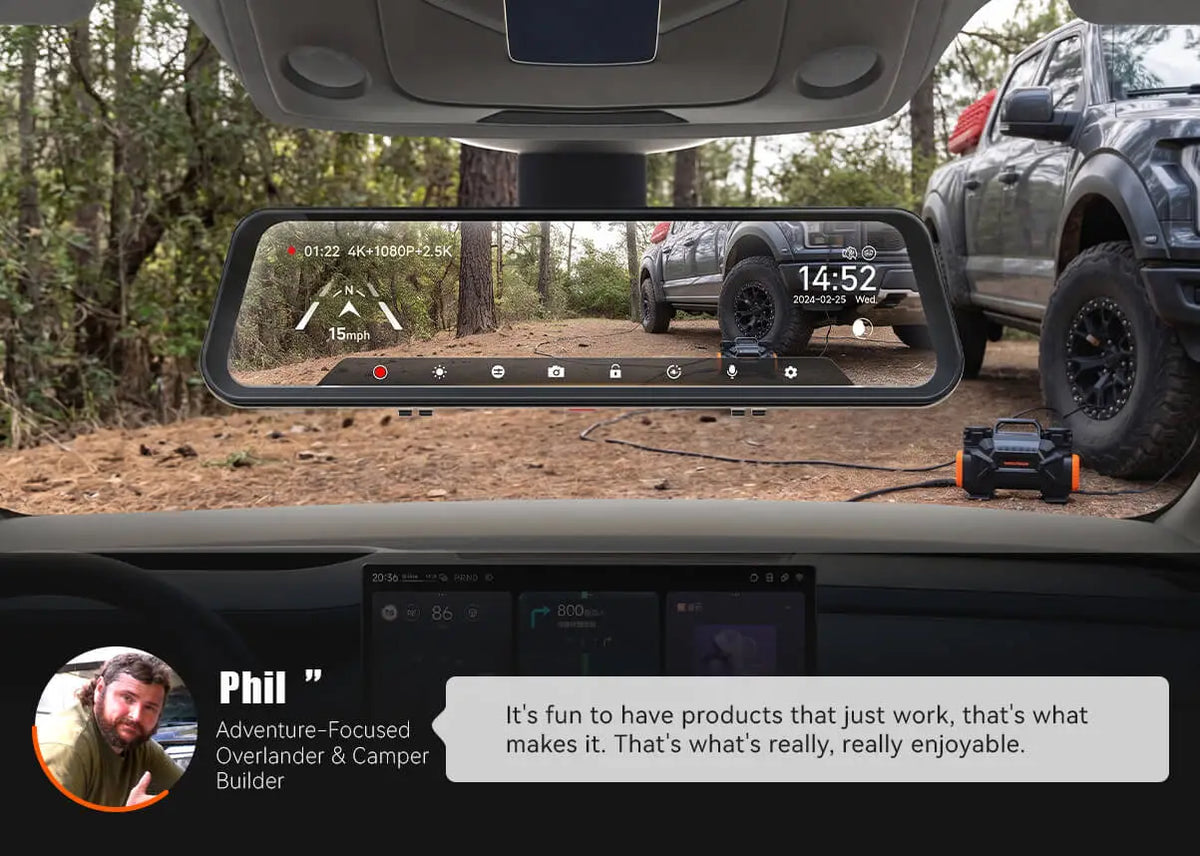
Looking back at his Alaska breakdown, he jokes that a dash cam would have been something he should have had on that truck. WOLFBOX later became part of his setup. What stands out to him is not one particular feature. It is how little attention the equipment requires.
"The WOLFBOX videos, the dash cam, the cameras, the install, it was actually enjoyable," Phil says. "It's something you put in, and you forget about it."
That matters to someone who has built multiple rigs. Phil has also used products that didn't work as expected. One project dragged on for months because a component cracked and needed repeated changes.
Those experiences changed how he defines good equipment. A product should not become another project after installation. It should do its job and let the rest of the build move forward.
"Having products that just work, that you install and you're done with, that's the key to a good build," Phil says.
For Phil, reliability is now simple. The best gear does not constantly ask for attention. It gives him more time to focus on his family, his builds, and the places he wants to explore.

WOLFBOX at 7: Still on the Road
In some ways, WOLFBOX has been on a similar road. This year marks the company's seventh anniversary. Over those seven years, WOLFBOX has continued to develop products for people who travel in different ways.
The connection with Phil is not about a product list. It is about a shared idea of reliability. After years on the road, Phil's definition has become simple. A reliable product should work when it is needed. It should not demand constant attention.
That idea fits naturally with WOLFBOX's journey. The brand has continued to evolve with the people who use its products. Their vehicles and lifestyles may look different, but the need for dependable equipment remains.
Seven years in, WOLFBOX is still moving forward. Phil is doing the same. His road has changed since 2019. So have his priorities. The journey continues, but its meaning has grown. What once meant going farther now means knowing who and what he wants beside him. That is a very different kind of progress.
The Next Loop
Today, Phil is exploring new ways to ride by getting into adventure motorcycling, while he and his wife look toward their next big chapter: starting a family and moving back into the camper full-time next summer.
The current camper build includes solar panels, air conditioning, and a water heater, designed to keep them comfortable wherever they park. It will be a very different lifestyle from the one he started in 2019. Back then, he was alone with his dog and heading toward the Arctic Ocean. Now, building a life with his wife is at the center of the journey.
"Traveling is all about people, family, and going to see the people who are important in your life," he says. "That's what our next big trip really is."
When Phil talks about freedom now, he does not talk about distance or difficult trails. He talks about having a choice.
"Freedom is having the choice to stay or go," Phil says. "To me, freedom is just being able to make the choices you want to make."
The camper will change. The road will change. Phil's priorities will change too. That is part of the journey.
What has stayed with him is the ability to adapt. It is the community that formed around him. It is the family he built along the way. It is also the value he now places on equipment that simply works.
From strangers helping rebuild a fuel system in Alaska to a partner who made the journey feel complete, reliability has taken many forms for Phil. WOLFBOX is one small part of that story. The road itself remains the bigger one.




Leave a comment
All comments are moderated before being published.
This site is protected by hCaptcha and the hCaptcha Privacy Policy and Terms of Service apply.